Identifying Wingtip Devices on Modern Airliners
Wingtip devices are a key identifier for aircraft enthusiasts.
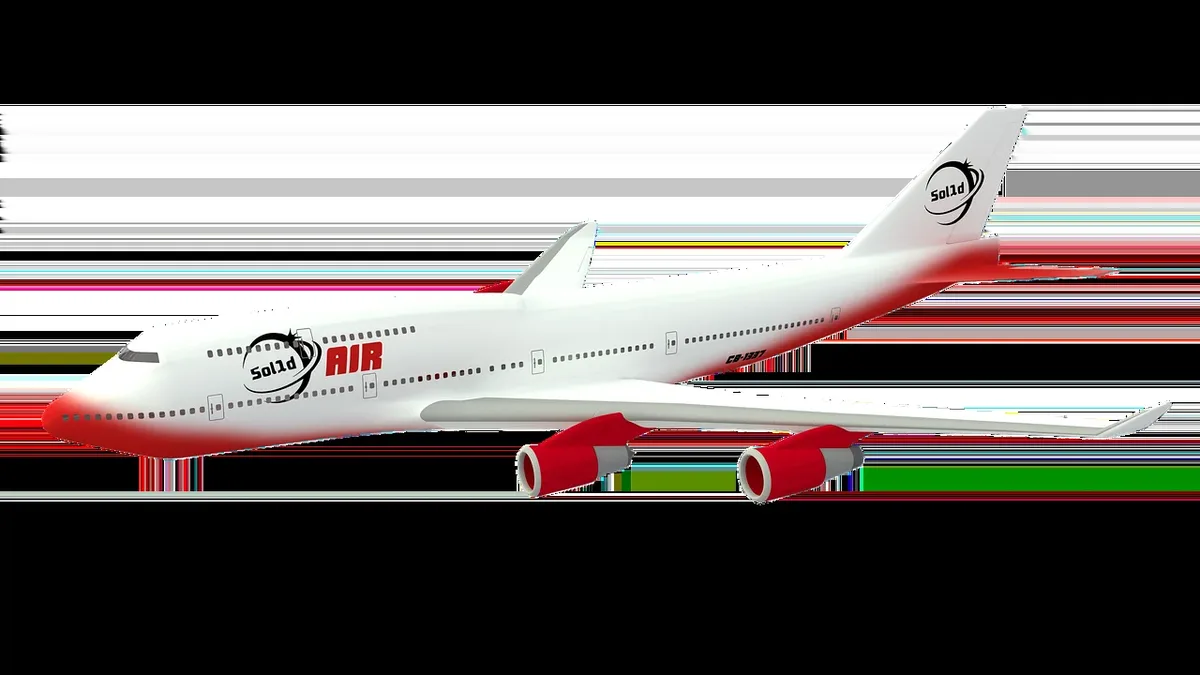
A Boeing 747-400 and Airbus A330 are among the many aircraft that feature classic winglets, a type of wingtip device that has been popularized by Boeing since the 1980s and 1990s.
Wingtip devices are aerodynamic surfaces added to the ends of an aircraft's wings, primarily to reduce induced drag created by wingtip vortices. This results in improved efficiency, allowing the aircraft to burn less fuel, fly further, and climb more efficiently.
However, for plane spotters, wingtip devices serve another function: they are excellent identifiers. By examining the wingtip devices, spotters can quickly tell apart different aircraft families, sub-variants, and even retrofitted models.
The Main Types of Wingtip Devices
There are several types of wingtip devices, each with its own distinct characteristics.
Classic winglets are the most common type, and can be found on Boeing 747-400s and Airbus A330s, as well as some business jets. Blended winglets, on the other hand, have a smooth, curved transition from the wing to the winglet, and are most commonly found on Boeing 737 NGs, 757s, and 767s retrofitted with winglets.
Split scimitar winglets, introduced in the 2010s, add a downward-pointing fin beneath the blended winglet, creating a dual-fin look. Airbus Sharklets, introduced on the A320neo family, are taller and sleeker than Boeing's winglets, with a gentle curve and a slightly swept-back design.
Raked wingtips, found on Boeing's 787 Dreamliner, 777-300ER, and 747-8, are extensions of the wing that taper smoothly outward and backward. Wingtip fences, found on the original Airbus A320 family, are small, squared-off fins extending both above and below the wing.
How They Help in Aircraft Recognition
For aviation enthusiasts, wingtip devices are more than just technical add-ons. They are spotting tools that help quickly identify aircraft families, sub-variants, and even retrofitted models.
For example, looking at the winglets vs sharklets can help distinguish between a 737 and an A320. Blended winglets on 767s are often a giveaway for cargo conversions still flying today. Raked wingtips on the 787 Dreamliner are a clear identifier for this aircraft.
Next time you're at your local airport or flipping through your spotting log, take a closer look at the wingtips. With practice, you'll be able to tell apart a 737NG from a MAX, or an A320ceo from a neo, at a glance.