Blackhawk Displays Upgraded PC-12, TBM 700
At EAA AirVenture Oshkosh 2026, Blackhawk Aerospace displayed two upgraded legacy turboprops: a Pilatus PC-12 and a newly STC-approved TBM 700.
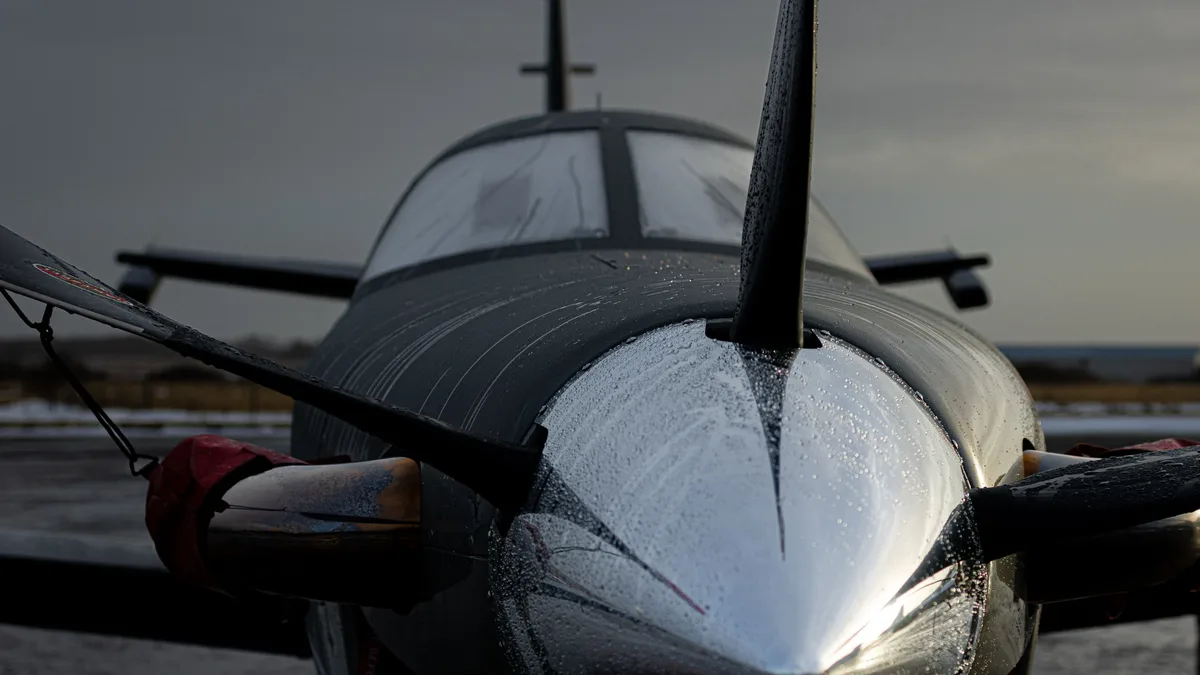
Blackhawk Aerospace displayed two engine-upgraded legacy turboprops at EAA AirVenture Oshkosh in 2026. The company's president, Edwin Black, highlighted a modified Pilatus PC-12 and a newly certified TBM 700 upgrade at the event, which drew a record 734,000 attendees.
According to Black, who spoke with Plane + Pilot editor-in-chief Cayla McLeod, the upgrades show how older aircraft can remain competitive. The display featured two distinct aircraft, each representing a different customer story for the modification specialist.
Perry the Pilatus
One aircraft on display was a Pilatus PC-12 owned by modifier Mark Patey, known affectionately as "Perry." Black stated the company enjoyed working with Patey's team to install the Finnoff engine upgrade on this aircraft.
The upgrade replaces the PC-12's standard Pratt & Whitney Canada PT6A-67B engine, rated at 1,200 shaft horsepower, with an uprated PT6A-67P. This change was achieved by certifying the engine for higher interstage turbine temperature limits.
| Parameter | Stock PT6A-67B | Upgraded PT6A-67P |
|---|---|---|
| Takeoff Temperature | 800°C | 850°C |
| Climb/Cruise Temperature | 760°C | 820°C |
The modification provides roughly 142 additional thermodynamic horsepower. Importantly, the upgraded engine can maintain full rated power up to 25,000 feet. A stock PC-12 begins losing power above 15,000 feet under standard conditions.
This performance gain directly impacts climb rates and safety margins for pilots operating in high terrain. For an aircraft designed to access remote strips, the extra power is a key enhancement. Owners can find more detailed performance stats on our site.
TBM 700 Upgrade Program
The second aircraft was a TBM 700, whose owner first approached Blackhawk at the previous year's Oshkosh event. Blackhawk's recently approved XP66D program was installed on this airplane.
The program swaps the TBM 700's original 700 hp PT6A-64 engine for an 850 hp PT6A-66D. This is the same engine used in the factory-built TBM 850. The Federal Aviation Administration granted a supplemental type certificate for the upgrade just months before the 2026 show.
Blackhawk claims the 150 horsepower increase yields substantial performance improvements. An upgraded TBM 700 can now climb to Flight Level 310 in approximately 22 minutes, compared to about 28 minutes for a stock airplane. Cruise speeds can reach up to 303 knots true airspeed, a gain of around 25 knots.
Edwin Black explained the goal is to match the performance of the newer TBM 850. This effectively closes the gap between two airframes built more than a decade apart. "That's what we like to do at Blackhawk," he said. "We upgrade some of these older airplanes and give people more performance in their older legacy aircraft and bring them up to modern factory standards."
Oshkosh 2026 Backdrop
The display almost faced disruption from wildfire smoke drifting from Canada before the event. The haze was thick enough that Wittman Regional Airport's approach controllers had to run the field under instrument flight rules. Winds eventually cleared the skies in time for the show's opening. The event remains a key annual fixtures for the aviation community.
When asked to choose a favorite between the two aircraft, Black avoided picking one. "My favorite one is always the last one that we just approved," he said. "That would be the TBM 700 series."
He described the satisfaction of following up with owners after an upgrade. "One of the best things I get to do is after we upgrade an aircraft, I'll call the owners and say, 'Hey, what do you think?' And that upgrade has not disappointed," Black stated. "All the owners are thrilled with the performance."
Black connected this owner enthusiasm to the broader spirit of the Oshkosh event. He noted the mix of historic warbirds and new technology on display under the Wisconsin blue skies. From P-51 Mustangs flying overhead to Perry the Pilatus parked nearby, the setting illustrated how old and new aircraft can coexist as different stages in an airplane's lifecycle.