Air National Guard receives first operational F-15EX jets
The Oregon Air National Guard has become the first unit to receive operational Boeing F-15EX Eagle II fighters, marking a historic reversal of the Air
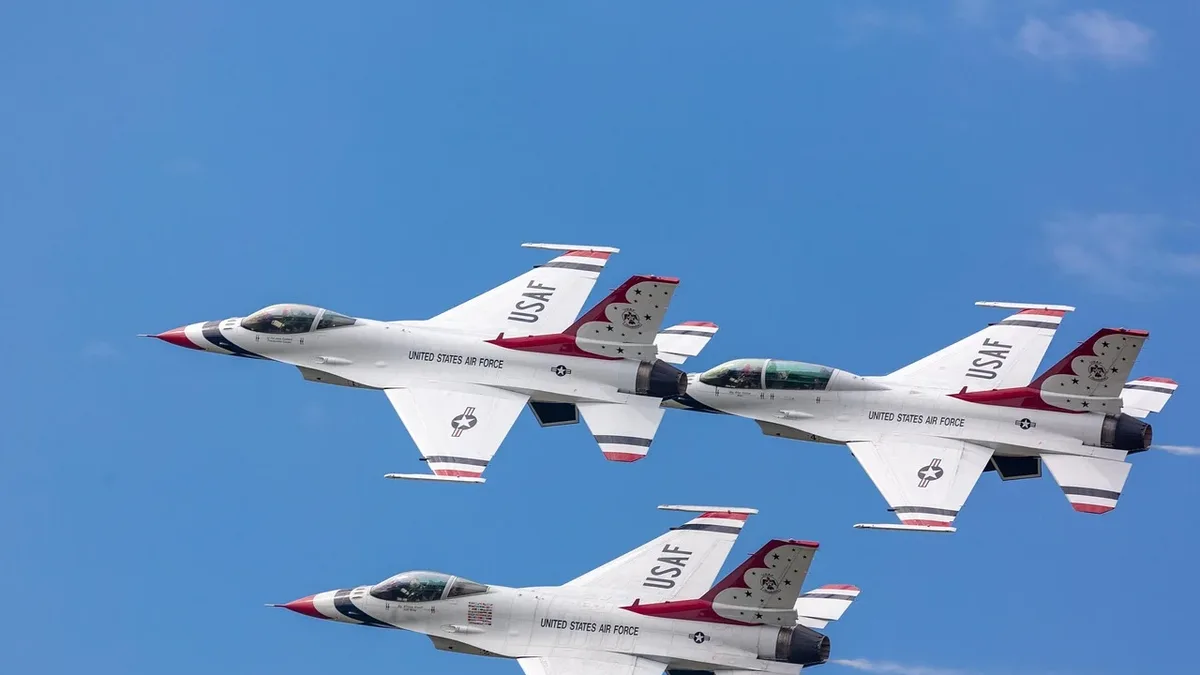
The Oregon Air National Guard's 142nd Wing unveiled the first two operational Boeing F-15EX Eagle IIs on July 12, 2024. This made it the Air Force's first mission-ready F-15EX unit, ahead of any active-duty wing, in a historic break from acquisition custom.
Two more Air National Guard units, in Fresno, California, and Belle Chasse, Louisiana, are next on the delivery schedule. Active-duty squadrons at Kadena Air Base, Japan, are still waiting for their jets.
A Fleet Running Out Of Airframe
Metal fatigue is the primary driver. More than 75% of the Air Force's remaining F-15C/D fleet is now performance-limited, restricted in top speed or G-loading due to structural fatigue. A November 2025 Air Force report to Congress detailed the issue. These jets, built in the late 1970s and early 1980s, were designed for roughly 4,000 flight hours but averaged more than double that figure.
Cannibalization of parts has risen sharply as production stopped for the 1972 design. The Air Force has described new F-15EX purchases as urgent because of how fast the C/D fleet is being forced out of service. The last active-duty F-15Cs left Kadena Air Base on January 24, 2025.
The Mission That Wouldn't Wait
The Guard squadrons received priority because they perform the continuous alert mission for North American Aerospace Defense Command. The 142nd Wing's 123rd Fighter Squadron flies the Western Air Defense Sector's air sovereignty mission around the clock. Louisiana's 159th Fighter Wing keeps armed jets on a minute's notice to defend the Gulf Coast, and the 144th Fighter Wing in Fresno has performed the alert mission for over a decade.
These are the aircraft the nation scrambles against real-world threats. A former Air Force pilot told Air & Space Forces Magazine that raw speed to intercept position is what the mission demands, a margin eroded by fatigue-based restrictions. This made the Guard's F-15C/D squadrons the leading edge of the retirement plan.
What The Eagle II Actually Adds
The F-15EX introduces major upgrades. It is the first Eagle variant built with digital fly-by-wire controls, a touch-screen glass cockpit, and an Open Mission System architecture for rapid software upgrades. Its AESA radar, derived from the F-22 Raptor, provides long-range detection and multi-target tracking. The jet is equipped with the EPAWSS electronic-warfare suite.
For kinetic power, the F-15EX has two additional weapon stations, bringing its total payload to roughly 29,500 lb across 12 hardpoints. This allows a single aircraft to carry up to 12 AIM-120 or AIM-9X missiles. Twin F110-GE-129 engines push the jet past Mach 2. The airframe carries a rated service life of 20,000 flight hours, roughly double an F-15C's design life.
| Feature | F-15EX Eagle II Specification |
|---|---|
| Flight Controls | Digital fly-by-wire |
| Cockpit | Touch-screen glass cockpit |
| System Architecture | Open Mission System |
| Radar | AESA (derived from F-22) |
| Electronic Warfare | EPAWSS suite |
| Weapon Stations | 12 hardpoints |
| Max Payload | ~29,500 lb (13,380 kg) |
| Air-to-Air Loadout | Up to 12 AIM-120 or AIM-9X missiles |
| Engines | 2 x F110-GE-129 |
| Top Speed | Mach 2+ |
| Rated Service Life | 20,000 flight hours |
The Logic Behind The Base Choices
The Department of Defense weighed mission requirements, infrastructure, cost, and local support. Portland's 142nd Wing was named the preferred first unit as early as August 2020. Fresno's 144th Fighter Wing was announced as a preferred location on April 18, 2023, after local leaders lobbied to keep its roughly 1,100 personnel in the city.
Louisiana's 159th Fighter Wing was selected the same month to receive 18 F-15EXs. Its commander framed the decision as recognition that the wing is a premier organization defending the Gulf Coast. All three conversions explicitly replace jets approaching or exceeding 40 years in age.
A Program Whose Case Isn't Uncontested
The homeland-defense justification coexists with debate over whether the Air Force should purchase more F-35s instead. Initially, both aircraft had similar prices. The Air Force contended that F-15C squadrons could transition to the F-15EX in weeks, versus months for the F-35. Cost parity has since diminished.
The F-15EX's flyaway price climbed from an initial Boeing estimate near $80 million to about $90 million in its second production lot, and $97 million in the third. These figures now exceed the F-35A's average flyaway cost of about $85 million. The Heritage Foundation warns the decision could burden the Air Force for decades, arguing the F-15EX costs more to acquire and operate while providing insufficient fourth-generation capability against a peer adversary.
Proponents argue the comparison undervalues the F-15EX's role. Its 20,000-hour airframe life is roughly double a typical F-35A's. Its payload and combat radius suit missions where stealth is not decisive, and its ability to pass long-range radar tracks to stealth aircraft allows it to complement the F-35.
**What Comes Next For The Guard**
Growth will likely collide with a training system still catching up. As the expanded 267-aircraft order proceeds, more Guard, Reserve, and active-duty basing choices will be made. Legislation would allow the Air Force to purchase up to 329 aircraft.
The Air Force cannot deliver Fresno's jets until it expands training capacity beyond Seymour Johnson Air Force Base. Secretary Ashworth promised to fix this bottleneck but has not given a start date.