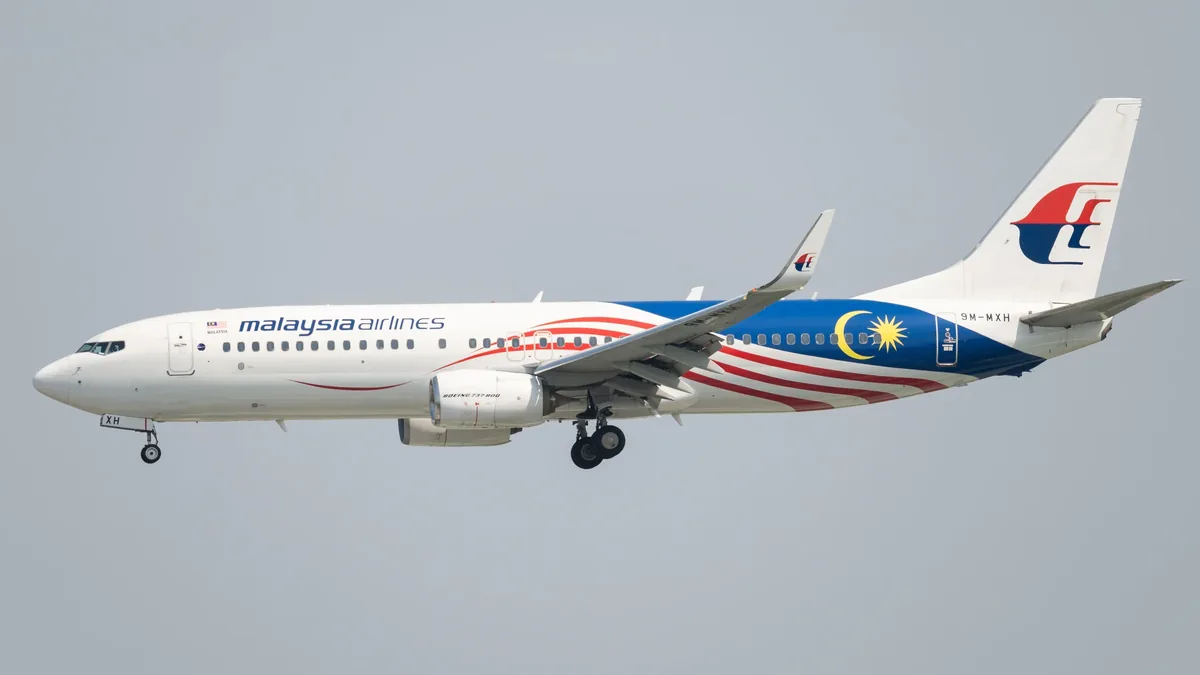
737Ng
| Aircraft family | Boeing 737 Next Generation (737-600/-700/-800/-900) |
|---|---|
| Country of origin | United States |
| First created | 1990s (first flight 1997) |
| Original use | Narrow-body short- to medium-haul airliner |
| Engines | Two high-bypass turbofans (e.g., CFM56-7 series) |
| Typical seating | 126 to 189 passengers (varies by model and configuration) |
| Wingspan | 34.3 meters (112 ft 7 in) |
Origin and history
The 737 Next Generation, commonly abbreviated as 737NG, is a family of narrow-body jet airliners developed in the United States. It is the direct successor to the Classic 737 series (-300/-400/-500) and was launched by Boeing in the 1990s as a major modernization of the long-running 737 line. The program was a competitive response to the new Airbus A320 family, which offered advanced technology and lower operating costs. Development focused on retaining commonality with previous 737s while incorporating new wings, avionics, and more efficient engines. The first variant, the 737-700, conducted its maiden flight in the late 1990s and entered service shortly thereafter. The 737NG series became one of the most successful and ubiquitous commercial aircraft families in aviation history.
What it is designed for
The 737NG is designed as a short-to-medium-range narrow-body airliner for high-frequency, point-to-point routes. Its primary mission is to provide cost-effective and reliable service for airlines operating both high-density domestic flights and thinner international routes. The design emphasizes operational commonality with earlier 737 models, allowing airlines to mix fleets and reduce pilot training costs. It is engineered for quick turnarounds at gates, which is critical for the hub-and-spoke and high-utilization business models of major carriers. The aircraft is configured to carry between approximately 126 and 189 passengers in typical two-class layouts, depending on the specific variant. Its design parameters target efficiency on stages from 30 minutes to over 5 hours, making it exceptionally versatile for airline network planning.
Development and versions
The 737NG development program was officially launched in 1993, culminating in the introduction of three main passenger variants derived from a single airframe type certificate. The 737-700 was the first and baseline model, directly replacing the 737-300. The stretched 737-800, which became the most popular variant, was launched shortly after to replace the 737-400. The largest model, the 737-900 and later the 737-900ER (Extended Range), was developed to replace the 757 on certain routes and offer increased capacity. A business jet variant, the Boeing Business Jet (BBJ), was also offered based on the -700 and -800 airframes. All variants feature a completely redesigned wing with increased span and area for better fuel efficiency and performance, alongside modernized CFM56-7 engines and a glass cockpit suite with LCD displays.
737Ng specs
Specifications vary between the 737NG models, with the -800 serving as a common reference point. Its overall length is approximately 39.5 meters, with a wingspan of 35.8 meters including winglets, which are a standard or popular retrofit. The typical two-class seating capacity ranges from 162 to 189 passengers, depending on airline configuration. Maximum takeoff weight (MTOW) for standard models is around 79,000 kilograms, with higher gross weight options available for longer routes. The aircraft is powered by two CFM International CFM56-7B turbofan engines, each providing between 20,000 and 27,000 pounds of thrust. The maximum range with standard tanks is approximately 5,435 kilometers for the -800, with the -700 and -900ER capable of longer distances.
737Ng seat map
A typical 737NG cabin is arranged in a single-aisle, six-abreast layout, designated as 3-3. The forward section is typically reserved for first or business class, often in a 2-2 configuration with wider seats and more pitch. The majority of the cabin is economy class, with the standard 3-3 seating extending to the rear galley and lavatories. Overwing exits are located on both sides of the aircraft, creating rows with limited recline and sometimes extra legroom. The specific seat count and arrangement are determined by the airline; a high-density layout can accommodate up to 189 passengers in an all-economy configuration. Common features include built-in overhead video monitors in older configurations, later replaced by personal device entertainment systems, and lavatories located at the front and rear of the cabin.
Overview
The 737NG is a third-generation development of the Boeing 737, representing a comprehensive overhaul of its predecessor while maintaining significant lineage. It successfully bridged the gap between the older Classic series and the future 737 MAX, dominating the narrow-body market for nearly two decades. The family is known for its operational reliability, dispatch availability, and deep integration into global airline fleets and maintenance ecosystems. Its design philosophy prioritized incremental improvement and pilot commonality, which contributed to its widespread adoption. Thousands of 737NGs were built, forming the backbone of many major airline fleets worldwide. The type has proven to be a versatile workhorse, operating in environments ranging from major international hubs to shorter, challenging regional airfields.
What to know
The 737NG is certified for operation by a two-pilot crew and utilizes a conventional control system without fly-by-wire, unlike its primary competitor, the Airbus A320 family. A significant design characteristic is its low-to-the-ground airframe, which allows for easier servicing without specialized ground equipment but contributes to its distinctive engine nacelle shape. The aircraft's popularity means a vast aftermarket for parts, training, and maintenance support exists, which influences operating costs. While newer models like the 737 MAX and A320neo offer improved fuel burn, the 737NG remains highly competitive due to its lower capital cost and proven track record. Several high-profile incidents involving the aircraft have led to increased scrutiny of certain systems, notably the rudder control units in earlier models and angle-of-attack sensor discrepancies. Its production officially ended in the 2010s as Boeing transitioned to the 737 MAX, though it remains in widespread active service.
Common questions
A common question is the difference between the 737NG and the newer 737 MAX, with the key distinctions being the MAX's larger, more efficient LEAP-1B engines and associated aerodynamic changes like split-tip winglets. People often ask about the meaning of "NG," which stands for "Next Generation," denoting it as the successor to the 737 Classic series. Passengers frequently inquire about which variant they are flying, which can be identified by the number of exit doors; the -800 has four main cabin doors, while the -700 has three and the -900ER has five. Many wonder about its safety record, which is statistically strong, though specific accidents have led to targeted airworthiness directives and training updates. A recurring operational question concerns its range capabilities, with the -800 being able to operate transcontinental routes within the United States and the -700 and -900ER capable of longer overwater segments. Maintenance crews commonly deal with issues related to aging aircraft, such as corrosion in certain bilge areas and repetitive inspections for fatigue on high-cycle airframes.
Pros and cons
Pros: The 737NG offers exceptional operational reliability and high dispatch availability, which is critical for airline scheduling. It benefits from massive fleet commonality, reducing costs for training, maintenance, and spares across an operator's fleet. The aircraft has predictable handling characteristics and is generally well-regarded by pilots for its robustness. Its lower acquisition cost compared to new-generation aircraft makes it attractive for leasing companies and cost-conscious airlines. The design allows for quick turnarounds at gates, supporting high utilization rates. A deep and global support network ensures readily available technical expertise and parts. Cons: The cabin is often criticized for being narrower and having less overhead bin space than its direct competitor, the Airbus A320 family. Its older design lineage results in higher fuel burn per seat compared to newer generation aircraft like the A320neo and 737 MAX, impacting operating costs on longer routes. The low ground clearance of the engines can lead to foreign object damage (FOD) risk at less-prepared airfields. Some airlines regret the earlier configurations with limited in-flight entertainment, now seen as a competitive disadvantage. A common mistake for operators is underestimating the maintenance costs as the fleet ages, particularly for corrosion and structural fatigue issues. Passengers on longer flights often regret the choice due to the narrower cabin and typical high-density seating configurations.
Who it suits
The 737NG ideally suits established network carriers that require a reliable, proven workhorse for high-frequency domestic and regional routes. It is perfectly matched for airlines with large existing 737 Classic fleets, as it minimizes transition costs and training overhead. Low-cost carriers benefit from its quick turnaround capability, high dispatch reliability, and the availability of affordable used aircraft on the leasing market. Cargo operators utilize the converted 737-800BCF (Boeing Converted Freighter) variant for regional package freight, given its right size and range. It suits operators serving airports with shorter runways or less advanced infrastructure, where its rugged design and lack of requirement for specialized ground equipment are advantages. The aircraft is less suited for airlines seeking the absolute lowest fuel costs on long, thin routes or those prioritizing maximum passenger cabin comfort and space as a brand differentiator.