777
Origin and history
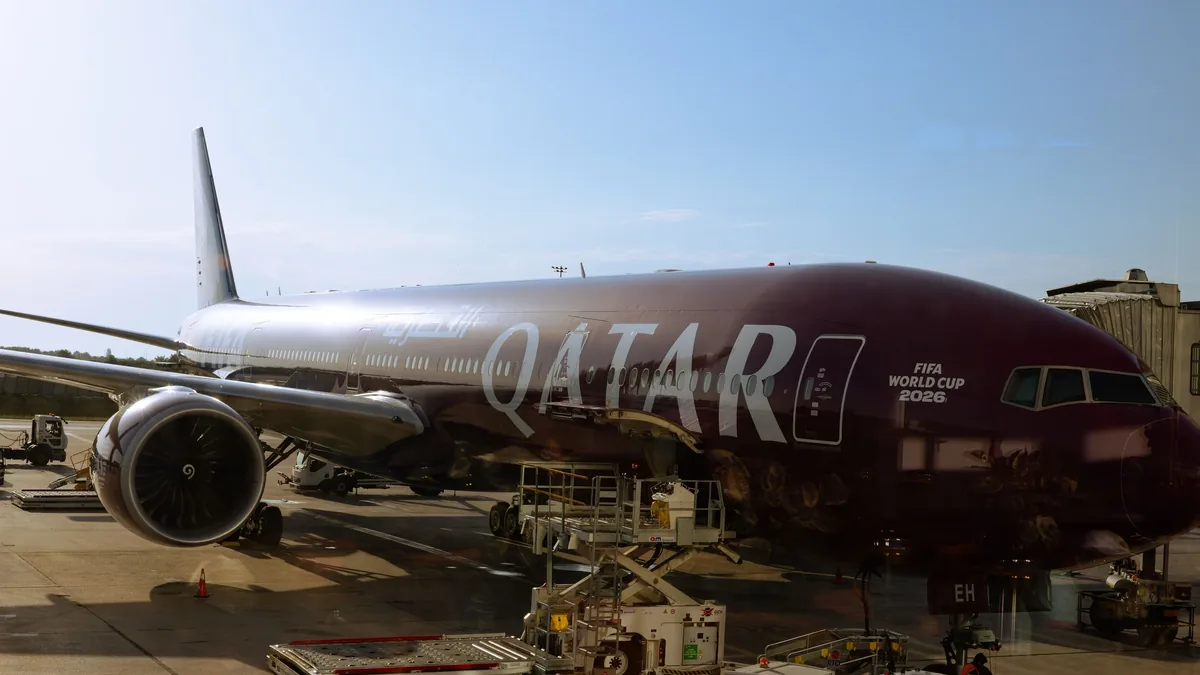
The Boeing 777 is a long-range wide-body twin-engine airliner originating from the United States. Its development was launched by the Boeing Commercial Airplanes division in the late 1980s, with the program officially announced in October 1990. This aircraft was developed in response to market demand for an aircraft sized between the company's 767 and 747 models. The first 777 model, the 777-200, conducted its maiden flight in June 1994 and entered commercial service with United Airlines in 1995. The program represented a significant collaborative effort with a consortium of international aerospace companies and major airline customers. Its development marked a major shift in commercial aircraft design through the extensive use of digital tools and paperless design techniques.
What it is designed for
The 777 was primarily designed for long-haul, high-capacity routes, specifically to replace older wide-body trijets and early 747 models. It was engineered to serve as a more fuel-efficient and cost-effective alternative for airlines operating on intercontinental sectors, such as transatlantic and transpacific flights. The design focus was on providing twin-engine efficiency and reliability that could match or exceed the range and payload of larger four-engine aircraft under Extended-range Twin-engine Operational Performance Standards (ETOPS) regulations. It targeted a market segment requiring an aircraft capable of carrying between 300 and 400 passengers over distances of up to, and eventually beyond, 7,000 nautical miles. The cabin was designed to offer greater passenger comfort and flexibility in configurations compared to previous generation aircraft. Its design also prioritized lower operating costs per seat-mile, which became a critical factor in airline fleet planning.
Development and versions
The 777 development program was notable for its "Working Together" philosophy, involving extensive consultation with a group of eight major airlines during the design phase. The initial version was the 777-200, which was followed by the longer-range 777-200ER (Extended Range) variant. The first major stretch resulted in the 777-300, which offered significantly higher passenger capacity. A pivotal advancement came with the 777-200LR (Longer Range) and 777-300ER models, featuring new General Electric GE90-115B engines and structural enhancements for vastly improved range and payload. The 777F is a dedicated cargo freighter version derived from the 777-200LR airframe. The latest generation is the 777X family, comprising the 777-8 and 777-9, which feature new GE9X engines, composite wings with folding tips, and a redesigned cabin, with service entry anticipated in the mid-2020s.
777 specs
The 777 is a low-wing cantilever monoplane with a conventional tail unit and a tricycle landing gear with six wheels on each main truck. Its wingspan is approximately 60.9 meters (200 feet) for classic models, with the 777X featuring a larger wingspan of 71.8 meters that includes folding wingtips. The overall length varies from approximately 63.7 meters for the 777-200 to 76.7 meters for the 777-9. Typical maximum takeoff weight (MTOW) for the 777-300ER is around 351,500 kilograms (775,000 pounds). The aircraft is powered exclusively by high-bypass turbofan engines, with the GE90-115B on the 777-300ER being one of the most powerful jet engines ever built. Range capabilities vary significantly by model, from roughly 5,240 nautical miles for the original 777-200 to over 8,555 nautical miles for the 777-200LR.
777 seat map
A typical 777 seat map in a three-class configuration (First, Business, Economy) commonly features a forward First Class cabin arranged in a 1-2-1 layout for direct aisle access. The Business Class cabin often follows, frequently in a 2-2-2 or 1-2-1 configuration, located between the forward and mid aircraft doors. The large Economy Class section occupies the remaining cabin space, typically laid out in a 3-3-3 or 3-4-3 configuration across ten-abreast seating, extending to the rear of the aircraft. The exact layout, including the number of lavatories, galleys, and exit doors, is highly customizable to airline specifications. Some high-density layouts, particularly on shorter regional routes, can configure the aircraft in an all-economy ten-abreast layout seating over 400 passengers. The 777's wide cabin diameter allows for such varied configurations, though ten-abreast economy is often criticized for reduced seat width compared to the original nine-abreast design standard.
Overview
The Boeing 777 is a family of long-range wide-body twin-engine jet airliners known for its significant cargo capacity below the main deck. It introduced several industry-first technologies, including a fully digital fly-by-wire control system and an extensive use of composite materials in its construction for the time. The aircraft established a new benchmark for ETOPS reliability, with early models receiving 180-minute ETOPS approval at entry into service. It has been a cornerstone of many international airline fleets, serving as the primary workhorse on major long-haul routes across the globe. The 777 family has consistently evolved, with the 777-300ER becoming one of the most successful variants due to its balance of capacity and range. Its design and operational success directly influenced the development of subsequent aircraft, including the 787 Dreamliner and the forthcoming 777X.
What to know
The 777 is often referred to as the "Triple Seven" in aviation circles. Its development was a landmark in computer-aided design, being the first commercial aircraft to be designed entirely using 3D CAD software. Pilots transitioning to the 777 from other Boeing types, like the 767, benefit from a common type rating, which reduces training time and costs for airlines. The aircraft's systems are highly automated, featuring an Electronic Flight Bag (EFB) and large LCD displays in the cockpit, which were advanced for its introduction era. Maintenance programs for the 777 are heavily reliant on centralized fault diagnosis systems that guide technicians to potential issues. It is important to distinguish between the classic 777 models (200, 200ER, 300) and the later, more capable variants (200LR, 300ER, Freighter), as their performance and engine types differ substantially.
Common questions
A common question is how the 777 differs from the Airbus A330 and A350, with the key distinctions being the 777's generally larger size, greater payload capacity, and historically more powerful engines. Many ask about the safety record of the 777, which has been statistically strong, though it has been involved in a small number of high-profile accidents, most notably Malaysia Airlines Flight 17 and Malaysia Airlines Flight 370. Passengers frequently inquire about the typical seating configurations, particularly why some airlines use ten-abreast seating in economy while others use nine-abreast, which is a specific airline choice that affects seat width. Another frequent question concerns the distinctive circular engine nacelles on the GE90-powered variants, which are the largest-diameter jet engines in service. People often ask about the future of the 777 family, which is currently transitioning to the new 777X models with folding wingtips and next-generation engines. There is also regular inquiry about the 777's cargo capability, with the 777F being a dominant aircraft in the long-haul freight market due to its volume and range.
Pros and cons
A significant advantage of the 777, particularly the 777-300ER, is its exceptional range-payload capability, allowing airlines to operate very long routes with a full passenger and cargo load profitably. Its twin-engine design offers substantially lower fuel consumption per seat compared to four-engine aircraft like the 747, leading to lower direct operating costs. The reliability of its engines and systems has resulted in excellent dispatch reliability and high ETOPS approval times, minimizing route restrictions. A notable disadvantage is the high acquisition cost and substantial maintenance expenses, especially for the advanced GE90-115B engines, which can be a barrier for smaller airlines. The common ten-abreast economy configuration in later models is widely criticized by passengers for offering a seat width narrower than the original design intent, leading to reduced comfort on long flights. Some airlines have regretted early orders for certain variants, like the 777-200LR, due to its niche market and higher operating costs per seat compared to the more versatile 777-300ER, making it less economically flexible for network changes.
Who it suits
The 777 classic and 777-300ER models are best suited for major network carriers operating dense, long-haul routes between major hub airports, such as transatlantic or transpacific flights. It is an ideal aircraft for airlines requiring high passenger capacity combined with the ability to carry significant belly-hold cargo, maximizing revenue potential on each flight. The 777F freighter variant is particularly suited for integrated express carriers and cargo airlines needing long-range heavy freight capacity without the size of the 747-8F. The original 777-200 and 200ER models have found secondary roles with airlines requiring less capacity or operating long but thinner routes, sometimes being replaced by newer twin-aisle aircraft. The forthcoming 777X family is targeted at the same tier of global airlines looking for next-generation efficiency and capacity to replace aging 777-300ER and 747-400 fleets. It is generally less suited for regional or short-haul operations due to its large size and operating economics, which are optimized for long-stage lengths.