Boeing 787 Production Pause And Inspections
| Aircraft type | Boeing 787 Dreamliner |
|---|---|
| Component in focus | Airframe (fuselage join) |
| Programme status | In production |
| Safety action type | Production pause and inspections |
| Trigger | Quality control non-conformance |
| Primary concern | Structural integrity verification |
| Regulatory authority | Federal Aviation Administration (FAA) |
| Inspection scope | Supplier-manufactured fuselage sections |
Origin and history
The Boeing 787 Production Pause and Inspections refer to a series of quality control halts and regulatory actions concerning the 787 Dreamliner airframe, originating from the United States in the early 2020s. These actions were initiated by the Federal Aviation Administration (FAA) and undertaken by The Boeing Company following the discovery of manufacturing defects. The issues were identified after a period of accelerated production and were unrelated to the aircraft's flight performance or fundamental design principles. The process stems from a mandatory regulatory oversight framework designed to ensure continued airworthiness before aircraft are delivered to customers. It represents a significant event in the commercial aviation industry, highlighting the intersection of manufacturing processes, quality assurance, and regulatory compliance. The history of these pauses is directly tied to the FAA's heightened scrutiny of Boeing's production systems following earlier incidents involving other aircraft types.
What it is designed for
The production pause and inspection regimen is designed to identify, document, and rectify specific manufacturing non-conformities in undelivered 787 Dreamliner airframes. Its primary purpose is to ensure that each aircraft meets all certified design standards and regulatory requirements before entering commercial service. The process specifically targets issues related to airframe joinery, such as gaps or shims at fuselage sections, which could affect long-term structural integrity if not addressed. It is a corrective action plan intended to prevent potential future airworthiness concerns, thereby safeguarding the operational safety of the fleet over its decades-long service life. The inspections are not an in-service maintenance program but a pre-delivery factory-floor quality assurance escalation. The ultimate design of this process is to restore confidence among regulators, airlines, and the flying public in the manufacturing quality of new 787 aircraft.
Development and versions
The inspection requirements and production pauses evolved through several distinct phases as new issues were identified and regulatory engagement deepened. The initial version of the pause in late 2020 focused on fuselage skin flatness and shimming issues at the rear of the aircraft. A subsequent and more extensive halt in 2021 was instituted to address a separate set of non-conformities, primarily concerning gaps at forward fuselage sections. The FAA did not issue an airworthiness directive for in-service aircraft but mandated a specific inspection and rework protocol for all undelivered 787s, which became the de facto standard. Boeing developed detailed engineering and repair instructions, which were approved by the FAA, constituting the working "version" of the correction process. This protocol was not a one-time event but a continuous verification process applied to each individual aircraft coming off the production line. The development was marked by a stop-start delivery schedule as Boeing and the FAA worked to align on inspection standards and documentation.
Pros and cons
A primary pro of this intensive inspection phase is the thorough identification and remediation of manufacturing defects before aircraft enter revenue service, potentially preventing costly future repairs or operational disruptions for airlines. It also led to a strengthened quality management system within Boeing's production facilities and more rigorous FAA oversight, which may improve long-term manufacturing consistency. A significant con is the substantial financial cost incurred from the pauses, including compensation to airlines for delayed deliveries, storage of completed aircraft, and the rework labor itself, which impacted Boeing's financial performance. For airlines, the major drawback was the extensive delivery delays, which disrupted fleet renewal plans, route network expansion, and operational efficiency targets, causing strategic and financial regret for those relying on timely 787 delivery. A common mistake in assessing the situation is to conflate these manufacturing quality issues with the 787's advanced composite design or its systems' reliability, which are distinct and generally well-regarded. The process also revealed vulnerabilities in supply chain quality control and the pressures of production rate ramp-up, which are systemic cons that extend beyond the immediate inspection findings.
Who it suits
This specific production pause and inspection process suits, and is mandated for, the regulator, the FAA, in fulfilling its responsibility to ensure all aircraft certificated in the United States meet safety standards. It suits Boeing's internal quality assurance teams who require a structured, regulatory-backed framework to justify and execute comprehensive factory-floor rework and process improvements. The ultimate outcome of the process suits airline customers who prioritize long-term airframe integrity and operational reliability over short-term delivery schedules, as they receive aircraft with meticulously verified structures. It does not suit airlines with immediate, acute capacity shortages or those who have retired older aircraft in anticipation of on-time Dreamliner deliveries, as the delays forced costly interim solutions. The process also suits aviation safety analysts and industry observers who advocate for robust manufacturing oversight, providing a concrete case study in contemporary quality control challenges. Finally, it suits the flying public indirectly, as the heightened scrutiny aims to ensure the continued safety of the aircraft type they may fly on for decades.
Latest Boeing 787 Production Pause And Inspections news
Latest reporting
Boeing wins US Navy F/A-XX sixth-generation
Boeing secured the US Navy's F/A-XX sixth-generation carrier-based fighter contract on September 29, 2026, a deal worth over $20 billion for...
Alaska Airlines Boeing 737 MAX 10
Boeing has completed flight testing for the 737 MAX 10, with FAA certification expected by the end of September 2026.
AIDC delivers final two T-5 Brave Eagle trainers to ROCAF
Taiwan's Aerospace Industrial Development Corporation has completed its seven-year production run of 66 T-5 Brave Eagle advanced jet trainers with the

Boeing Union Urges Members to Accept New Contract Offer
SPEEA union leaders are recommending Boeing's latest contract proposal to 17,000 members, aiming to avert a strike after a previous offer was...
Southwest Explores First Class Amid Boeing 737 Galley
Southwest Airlines is considering adding a domestic first class cabin to its all-Boeing 737 fleet, but faces significant retrofitting challenges due...
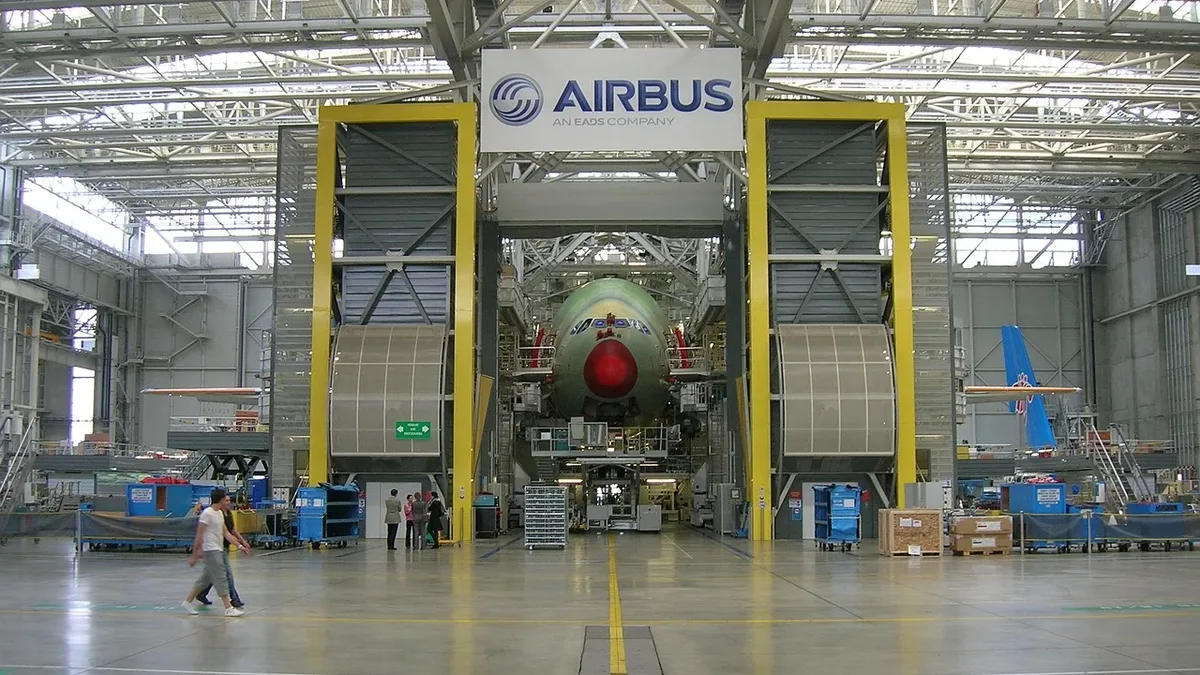
Airbus Revives A380 Wing Plant for A321neo Production
Airbus is investing $200 million to convert its former A380 wing factory in Broughton, UK, to produce wings for the backlogged A321neo.