Southwest 737 MAX flew 44 times with undetected rudder damage
The NTSB found undetected storm damage to a Southwest Boeing 737 MAX's rudder mounting structure led to a Dutch roll event after 44 flights, revealing gaps in maintenance procedures for extreme wind exposure.
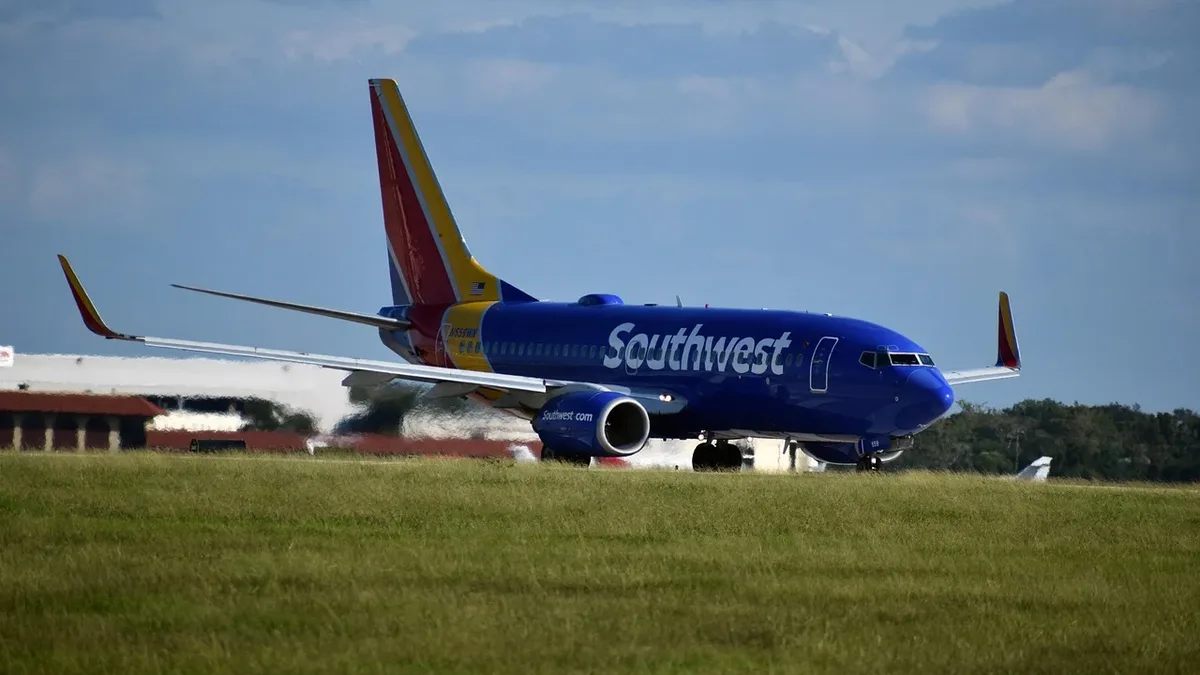
A Southwest Airlines Boeing 737 MAX 8 flew 44 times with critical rudder damage that went undetected after a thunderstorm, culminating in a Dutch roll incident. The National Transportation Safety Board concluded that missed inspections following 84 mph wind gusts at New Orleans allowed the aircraft, registration N8825Q, to operate for nine days before the event on Flight 746.
The damage occurred on May 16, 2024, while the aircraft was parked overnight at Louis Armstrong New Orleans International Airport during a tornado watch. Gusts reached 73 knots, damaging the mounting structure for the standby rudder power control unit and its connection to the vertical stabilizer. The jet flew the next morning without a required inspection and completed 38 flights over the following week with no reported rudder issues.
Scheduled maintenance in Houston on May 23 included a standby hydraulic system test. Hangar footage showed the rudder moved right but not left during this test, yet no mechanic was present at the tail to verify the movement. Maintenance records were signed off as passed despite this irregularity. The NTSB could not determine if the test worsened the existing damage. The aircraft returned to service.
On the fourth flight the next day, the crew disconnected the yaw damper because it appeared to overcorrect in turbulence. The jet flew one more leg with the yaw damper inoperative. On May 25, during Southwest Flight 746 from Phoenix to Oakland, the captain noticed rudder pedal stiffness during taxi. At 34,000 feet, the pilots felt the pedals move and the aircraft entered a Dutch roll oscillation, which recurred after a descent to 32,000 feet. Flight data showed a 20-second rudder and pedal oscillation episode. All 175 passengers and six crew members were uninjured. The aircraft landed safely in Oakland and was removed from service.
Maintenance failures allowed damage to persist
Southwest's maintenance procedures failed to detect the damage. The airline lacked a process to notify maintenance control when parked aircraft were exposed to extreme winds. While the Boeing 737 maintenance manual required a special inspection after an extreme wind event, it did not specify a wind speed threshold. The Houston maintenance check on May 23 was incorrectly signed off as passed even though the rudder was visibly out of position. The NTSB report identified this as a systemic verification failure.
Regulatory response and fleet-wide inspection
In response, Boeing revised the 737 maintenance manual in May 2025 to mandate a special inspection for aircraft exposed to winds of 65 knots or greater. The New Orleans storm gusts of 73 knots exceeded this new threshold. For comparison, Airbus requires an inspection when ground winds exceed 80 knots.
| Manufacturer | Inspection Wind Threshold | Threshold in mph |
|---|---|---|
| Boeing (revised) | 65 knots | 75 mph |
| Airbus | 80 knots | 92 mph |
Southwest inspected its entire fleet of 231 737 MAX aircraft between June 17 and 20, 2024, finding no similar damage. The airline has since implemented new weather monitoring protocols to trigger inspections for winds above 65 knots. Southwest also added a requirement for individual mechanic sign-offs during hydraulic tests to ensure physical verification of rudder movement.
Southwest's implementation of individual mechanic sign-offs for hydraulic tests and new weather-triggered inspections for 65-knot wind thresholds aims to close the procedural gap revealed by the incident.