Airbus A350 2028 Production Target In Doubt Over Kinston
Airbus faces significant challenges in reaching its goal of producing 12 A350s per month by 2028, with new delivery delays linked to integration problems
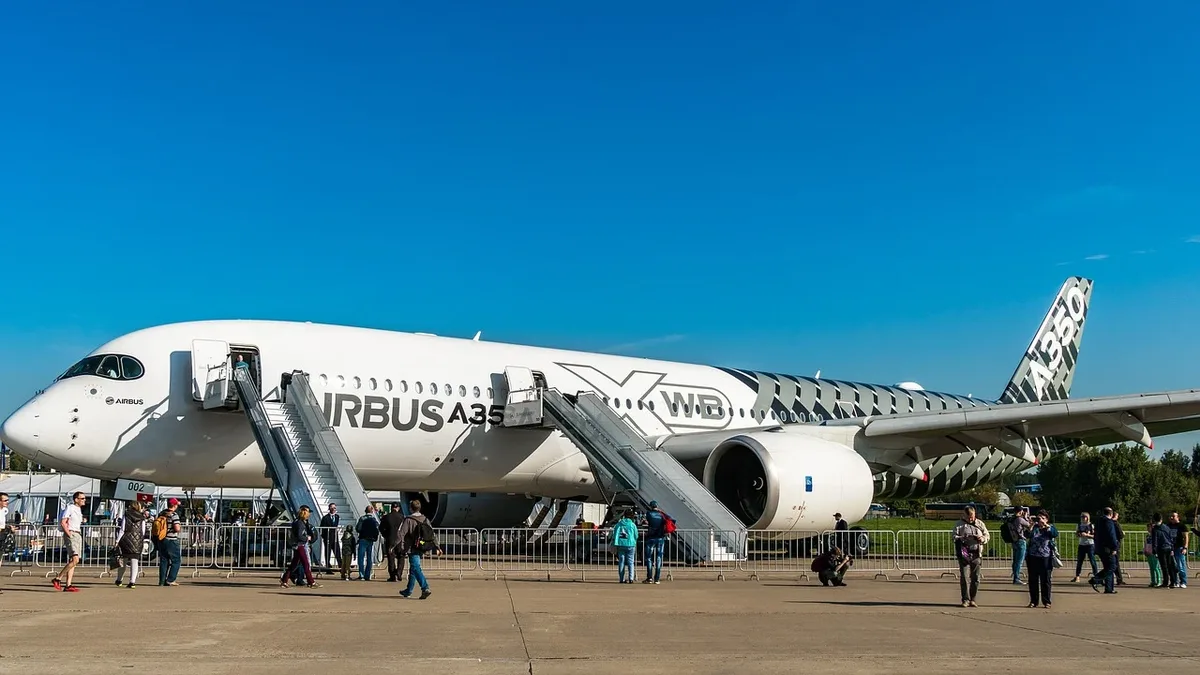
Airbus has reaffirmed its target of building 12 A350 aircraft per month by 2028, but a new round of delivery delays has cast serious doubt on achieving that goal. The manufacturer has told some customers to expect additional A350 delays later this decade, with industry sources pointing to ongoing difficulties at a recently acquired facility in Kinston, North Carolina.
Kinston Has Become The Critical Bottleneck
The most immediate concern centers on Airbus Aerosystems Kinston, the North Carolina facility that Airbus took over from Spirit AeroSystems in December 2025. The 500,000-square-foot site now employs about 1,000 people and serves as a Center of Excellence for advanced composite manufacturing. Its work includes A350 fuselage panels and wing spar structures, which are shipped onward for integration into aircraft in France. A shortage or interruption at this point can leave other production stages waiting for parts.
In May, Airbus informed some customers of further delivery delays later in the decade, attributing the problems primarily to difficulties securing critical fuselage components from Kinston. Staffing issues during the transition were also identified, with some former Spirit employees choosing to return to operations associated with Boeing after Spirit's commercial aircraft business was divided between the two manufacturers.
Airbus has presented a more measured assessment. When the company began operating the site, it emphasized that the facility was central to its industrial ramp-up. In April 2026, Airbus executives also discussed the logistical complexity of sending European specialists to support the operation. The company has not publicly confirmed individual customer delivery dates.
The 12-Per-Month Goal Requires A Steep Ramp
Airbus raised its A350 production target to 12 aircraft per month in 2024, responding to strong demand for long-haul aircraft. The company has not abandoned that objective. At its 2026 annual results presentation, Airbus said it still targets 12 A350s per month in 2028. Chief Executive Guillaume Faury acknowledged that the company was in a steep ramp-up toward that rate and said Airbus had strong demand for the aircraft.
The difficulty is the amount of industrial coordination required. A widebody aircraft depends on thousands of components arriving from a global network of suppliers and Airbus-owned facilities. Increasing output therefore requires more than additional final-assembly positions. Suppliers must increase their own rates, logistics networks must absorb greater volumes, tooling must support higher utilization, and quality systems must remain stable while production accelerates.
The timing leaves Airbus with little room for prolonged disruption. Reaching 12 aircraft per month in 2028 requires the industrial system to become progressively more reliable before the target date. If Kinston continues to constrain fuselage structures during the ramp, Airbus may have to spend part of the remaining period resolving today's problems rather than preparing for tomorrow's higher rate.
The A350F Adds Another Layer Of Pressure
The passenger A350 is not the only version affected. Airbus is also developing the Airbus A350F freighter, which uses the same basic aircraft family but introduces additional production requirements. The freighter has already faced delays, giving Airbus another program milestone to manage alongside the passenger variants. Airbus-manufactured cargo doors in Spain were experiencing disruptions.
Airbus nevertheless said in May that the freighter's first flight, expected later in 2026, and first delivery, planned for 2027, remained on track. The A350F therefore shows why Airbus' 12-aircraft target should be viewed as a family-wide industrial objective rather than simply a passenger-aircraft number. Airbus has said the 12-per-month rate includes A350 passenger aircraft and freighters.
For the wider A350 program, the freighter creates another demand on engineering, certification, supplier coordination, and final assembly resources. Airbus can manage those requirements if the industrial network is stable. It becomes more difficult when a major upstream facility is simultaneously undergoing integration and production recovery.
Spirit's Legacy Is Still Being Felt
The Kinston problem also illustrates a broader industrial dilemma created by Spirit AeroSystems' breakup. When Boeing moved to reacquire most of Spirit's operations, Airbus chose a different solution for the work dedicated to its aircraft. It took ownership of selected facilities and production packages, including Kinston.
Under the definitive agreement announced in April 2025, Airbus was due to receive $439 million from Spirit, subject to adjustments, while taking ownership of selected industrial assets. Airbus said the transaction was designed to stabilize supply and create a more sustainable operational and financial structure for critical work packages. The acquisition solved one problem while creating another. Airbus gained direct control over work that had previously depended on an external supplier. However, ownership also meant inheriting the site's workforce, equipment, processes, facilities, and operational history.
Airbus' own financial reporting also indicates the cost of the transition. The company recorded a €188 million ($208 million) adjustment related to the acquisition.