Boeing 777X's Wingtip Safety Systems Prevent Folded Takeoff
The Boeing 777X is physically and electronically prevented from taking off with its folding wingtips retracted, a critical safety feature mandated for
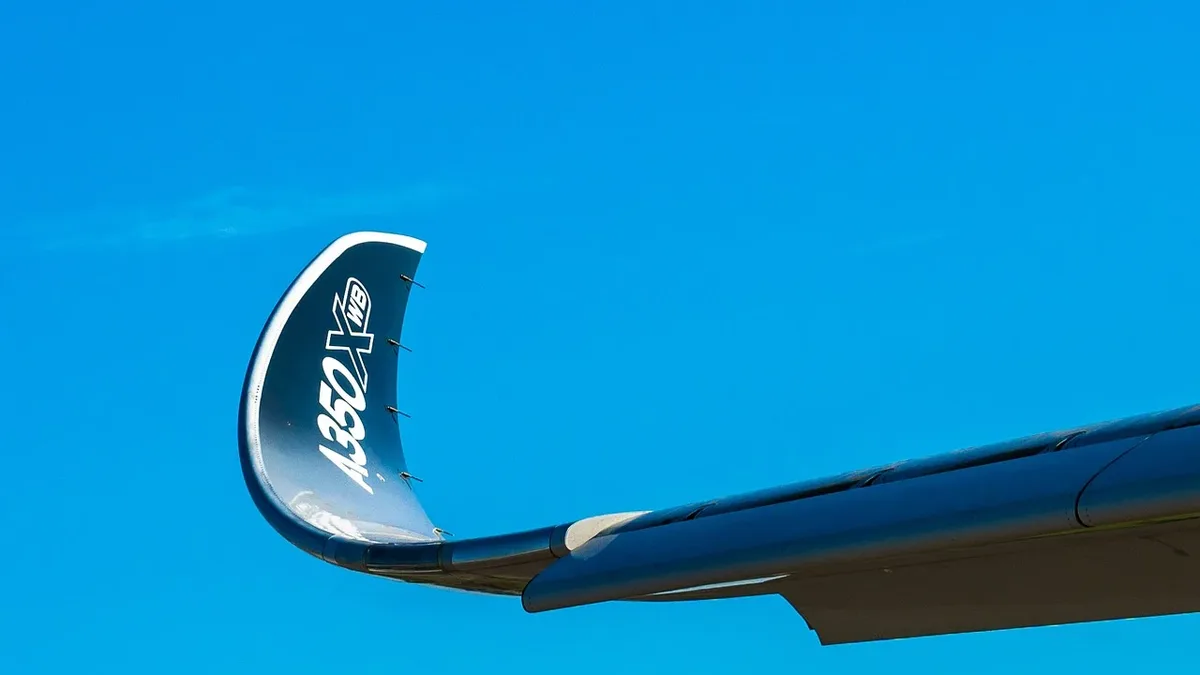
The Boeing 777X cannot take off with its wingtips folded due to critical aerodynamic and safety requirements. Federal Aviation Administration (FAA) certification mandates systems that effectively prevent a takeoff in this configuration.
Boeing integrated multiple fail-safes into the flight systems. If the wingtips are not extended and locked, the aircraft's takeoff warning system triggers a loud alarm when the pilot adds power. An electronic checklist will also show as "incomplete" until the wingtips are extended.
The Folding Wing Mechanism
The 777X uses a revolutionary wingtip folding system designed and manufactured by Liebherr-Aerospace in Lindenberg, Germany. This is a first for commercial aviation.
The 3.5-meter (approximately 11 feet) wingtips are operated by a complex actuation system. The full transition between folded (vertical) and extended (horizontal) positions takes about 20 seconds. Once extended, the wingtips are secured by latch-pin and secondary-lock actuators and are mechanically locked during flight.
Aerodynamic and Efficiency Gains
Extended wingtips are essential for the 777X's designed lift and fuel efficiency. A wider wingspan moves wingtip vortices further from the fuselage, reducing downwash and allowing the wing to generate more lift with less drag.
This results in a roughly 10%-12% improvement in fuel efficiency compared to previous generations and competitors. The aircraft also achieves a 20% lower fuel consumption rate than the legacy 747 it is designed to replace. The carbon-fiber reinforced plastic wings are thinner and lighter than traditional aluminum, enabling the large span without a prohibitive weight penalty.
The 777X integrates advanced aerodynamics with digital flight controls. The extra span enables faster climbs and cruising at higher, more efficient altitudes. It also features Smooth Ride Technology, an advanced fly-by-wire system adapted from the 787 Dreamliner, designed to actively neutralize turbulence.
Safety Systems and Load Management
The folding mechanism is not designed to handle the massive aerodynamic loads of takeoff and flight while folded. Attempting a flight with them folded could lead to mechanical failure or the tips breaking off.
Boeing implemented escalating warning systems. If pilots begin a takeoff roll without extending the wingtips, the avionics will no longer trigger an aborted takeoff once the plane reaches 50 knots ground speed. The source states the company had to prove to the FAA that its new commercial mechanism could withstand aerodynamic loads equivalent to a fixed wing.
Military Heritage and Design Evolution
Boeing's 1997 merger with McDonnell Douglas integrated naval aviation expertise. For the 777X, Boeing automated the wing-folding process to reduce pilot workload; the tips automatically fold when ground speed drops below 50 knots after landing. Unlike naval aircraft where a significant portion of the wing folds, the 777X only folds the outer 3.5 meters.
Boeing had already explored folding wingtips for the original 777 in the mid-1990s, patenting a design. That version was heavy and complex and was rejected by airlines. The 777X's mechanism is placed further out on the wing, minimizing impact on fuel capacity and adding less weight.
The 11-foot folding wingtips reduce the wingspan to within ICAO Code E limits on the ground, allowing use of most existing airport gates. This avoids costly infrastructure upgrades. The 777X program has faced significant delays and is not expected to enter full-rate production until 2027. Boeing CEO Kelly Ortberg said this year the company has "a mountain of work" ahead for certification.