Five airports use single runway
Five of the world's busiest airports handle up to 45 million passengers annually using only one active runway, leaving them vulnerable to total shutdowns
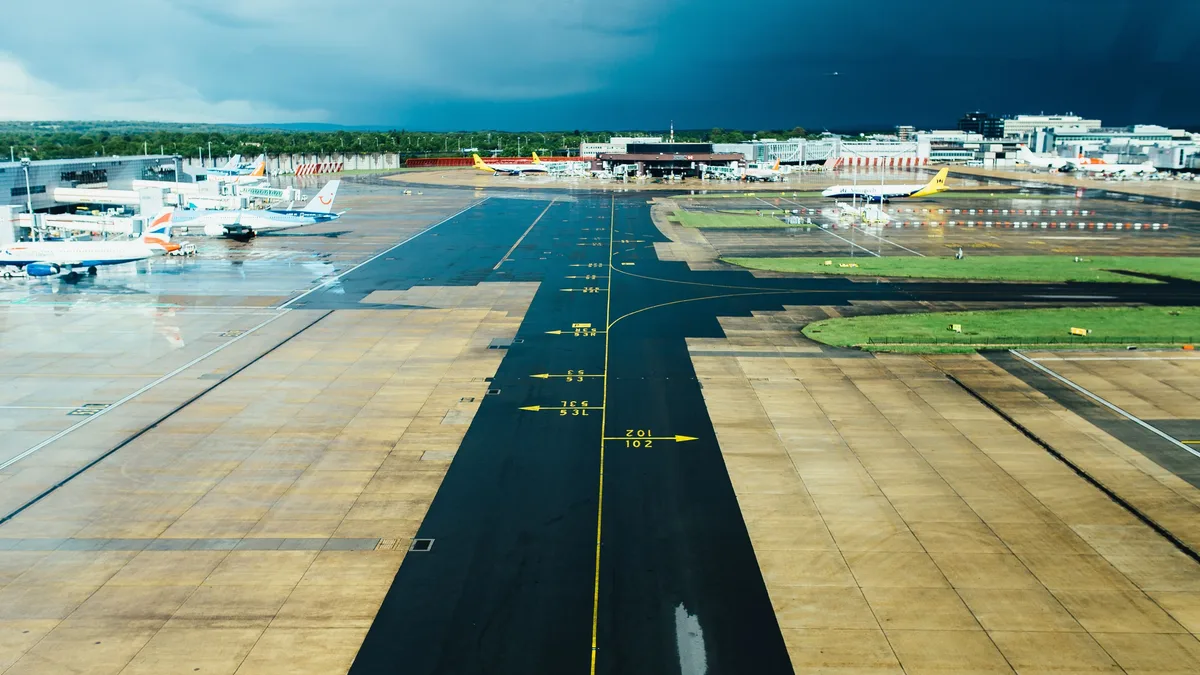
Five major international airports handle between 25 million and 45 million passengers each year on a single active runway. Any closure of that runway for maintenance, weather, or an incident halts all commercial operations at these facilities with no fallback option.
Most large airports have multiple runways for redundancy. Dallas/Fort Worth has six others if one closes. Atlanta has four. The airports listed have no such margin. They are the busiest single-runway facilities in the United States, Europe, and the world.
San Diego International Airport (SAN)
San Diego International Airport (SAN) is the busiest single-runway commercial airport in the United States. It served a record 25.24 million passengers in 2024 using only Runway 09/27. The airport is bordered by San Diego Bay, a Marine Corps base, a major interstate, and residential neighborhoods. There is no physical space to add a second runway, a topic discussed since the 1960s.
Southwest Airlines holds the largest market share, with Alaska Airlines operating a hub there. The new Terminal 1 opened its first phase in late 2025, adding gates. A second phase will finish by 2028. This investment addresses passenger capacity but does not change the runway constraint. A closure would shut down aviation for the San Diego metropolitan area's 3.3 million people. The nearest alternatives are Tijuana's airport across the Mexican border and John Wayne Airport 80 miles north.
Xiamen Gaoqi International Airport (XMN)
Xiamen Gaoqi International Airport (XMN) is China's busiest single-runway airport. It handled 29.19 million passengers in 2025. The airport sits on an island, surrounded by water and urban development, making expansion impossible. It is a main hub for XiamenAir.
Unlike others on the list, Xiamen Gaoqi has a definitive end date. The airport will close entirely in late 2026 when the new Xiamen Xiang'an International Airport opens on Dadeng Island. The replacement will have two parallel runways with capacity for 45 million passengers annually. This will end 43 years of single-runway service on Xiamen Island.
Lisbon Humberto Delgado Airport (LIS)
Lisbon Humberto Delgado Airport (LIS) is Portugal's primary international gateway and the busiest single-runway airport in mainland Europe. It handled 35.1 million passengers in 2024, exceeding its designed capacity of 34 million. The single runway is surrounded by urban areas where hundreds of thousands of residents report noise issues.
There is no second airport serving the Lisbon metropolitan area. Porto's airport is 190 miles north and Faro Airport is 165 miles south. Neither can absorb Lisbon's traffic. Portugal has planned a replacement airport for decades. The current proposal, Luis de Camoes Airport, is estimated to cost EUR7.9-8.9 billion. The government targets an opening between 2035 and 2037. Until then, the airport operator is investing EUR400 million in interim upgrades to increase throughput.
London Stansted Airport (STN)
London Stansted Airport (STN) handled a record 30 million passengers in 2025 on its single runway. It is Ryanair's largest base in the world, connecting over 150 destinations. The terminal is undergoing a GBP1.1 billion expansion.
In December 2025, local authorities approved raising Stansted's annual passenger cap from 43 million to 51 million over 20 years. The airport's owner stated this would be achieved using larger aircraft, not by building a second runway. A proposal for a second runway was withdrawn in 2010. A closure would uniquely disrupt Ryanair's network, as many routes are served only from Stansted. Other London airports lack the spare capacity to absorb its traffic on short notice.
London Gatwick Airport (LGW)
London Gatwick Airport (LGW) is the busiest single-runway airport in Europe. It handles over 45 million passengers per year on its main runway. The airport has a second, standby runway positioned close to the main one. Due to their proximity, they cannot be used simultaneously for independent arrivals and departures under standard international separation rules.
This configuration means Gatwick effectively operates as a single-runway airport for scheduling purposes. The report notes that any closure of the active runway halts all operations. The airport's owner has stated there are no current plans to build a second, fully independent runway.
| Airport | Code | Annual Passengers (approx.) | Runway Length (feet) | Status of Second Runway |
|---|---|---|---|---|
| San Diego International | SAN | 25.2 million | 9,401 | No space, not planned |
| Xiamen Gaoqi International | XMN | 29.2 million | 11,155 | Replacement airport opening 2026 |
| Lisbon Humberto Delgado | LIS | 35.1 million | 12,484 | Replacement planned for 2035-2037 |
| London Stansted | STN | 30 million | 10,000 | Proposal withdrawn in 2010 |
| London Gatwick | LGW | 45 million | 10,879 | Standby runway cannot be used independently |
The operational reality for these airports is defined by a single point of failure. Their growth and passenger numbers continue to rise, but their fundamental infrastructure lacks redundancy. Expansion plans are either non-existent or decades away from completion.