US Air Force Uses B-1B Digital Twin to Accelerate Repairs
The US Air Force completed a major B-1B Lancer fuselage repair 3.5 months early using a digital twin, part of a $200 million effort to sustain the bomber
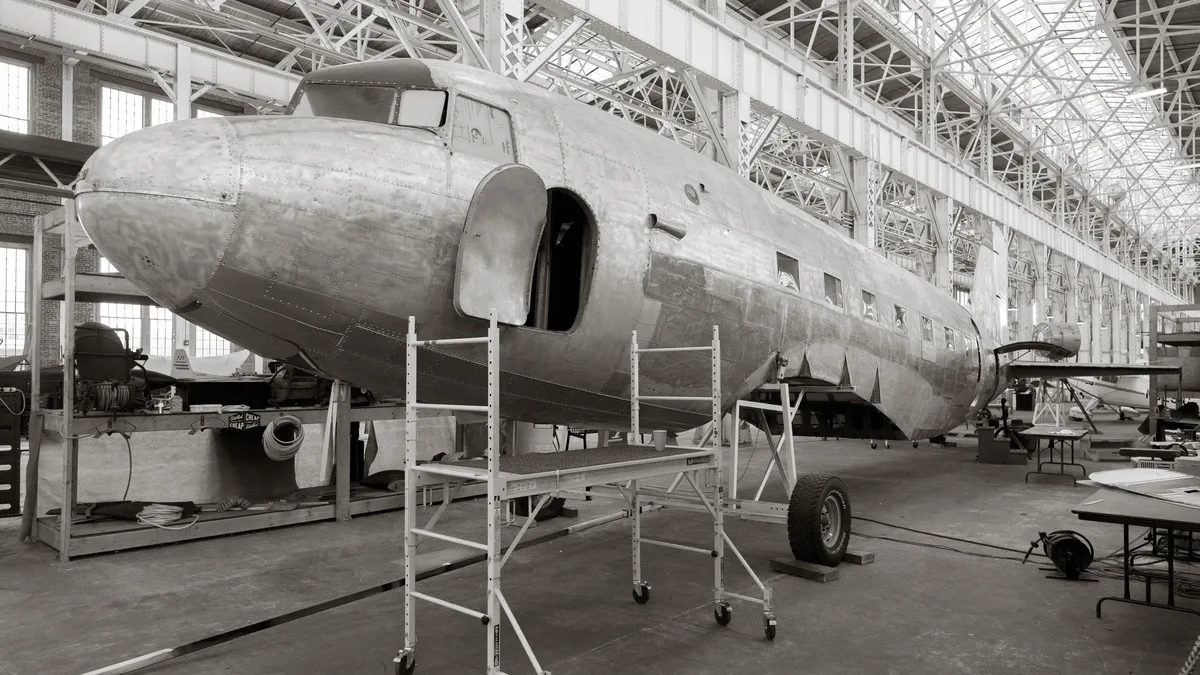
A US Air Force B-1B Lancer returned to service three and a half months early in May 2026 after a complex structural repair was accelerated using a fully digitized replica of the airframe. The 33-foot upper fuselage section replacement at Wichita State University's National Institute for Aviation Research (NIAR) was the first operational success of a six-year, $200 million program to create digital twins of the supersonic bombers.
The Air Force is investing heavily in sustaining its B-1B fleet as a bridge to the future Northrop Grumman B-21 Raider. The program involves scanning and digitally reconstructing retired B-1B airframes, known as BONEs, to predict fatigue and validate repairs virtually before technicians work on operational jets.
From Boneyard to Digital Model
NIAR began scanning its first retired B-1 hulls in 2020, sourced from the 309th Aerospace Maintenance and Regeneration Group at Davis-Monthan Air Force Base. The process intensified with the arrival of another retired B-1B in January 2024. Once an aircraft arrives, teams of research engineers and students systematically disassemble it down to individual nuts and bolts. Every component is reverse-engineered using 3D laser scanners, capturing microscopic wear and exact dimensions.
The scanned parts are digitally reconstructed inside Dassault Systèmes' 3DEXPERIENCE platform. Engineers then apply virtual flight loads and finite element models to the digital twin. Lt. Col. Joseph Lay, the B-1 program manager, explained the aims in 2024. "Through the scanning process, we will discover all the places that saw structural failure or damage," he said. "It will create a living health record for the B-1."
Addressing a Legacy Fatigue Problem
The digital twin effort aims to solve a structural fatigue problem inherent in the Cold War-era design. The B-1B's blended wing/body and low-level flight profile subject it to stresses not fully modeled for a multi-decade conventional bombing career. Since 2012, the Air Force has run a physical structural fatigue test on a retired airframe, pausing whenever a new crack is found to design a fix.
Cracks on the fuselage's dorsal and shoulder longerons were among the serious failures that halted testing. The digital twin is meant to predict where cracks are likely to form before the physical test finds them, closing a knowledge gap. The bomber's specifications highlight its demanding role:
| Specification | Detail |
|---|---|
| Engines | 4 x General Electric F101-GE-102 turbofans |
| Thrust | ~30,780 lb (13,962 kg) with afterburner |
| Top Speed | Mach 1.2 |
| Max Takeoff Weight | ~477,000 lb (216,364 kg) |
| Payload Capacity | Largest conventional payload in USAF inventory |
Proving the Concept with BackBONE
The repair process was validated by the BackBONE Project. In September 2025, a B-1B landed at McConnell Air Force Base for a preemptive replacement of its Forward Intermediate Fuselage, a known fatigue point. Engineers used the digital twin to design the repair and validate it on a prototype before cutting into the operational jet.
The result was a repair completed in roughly eight and a half months instead of the budgeted year, returning the bomber to Dyess Air Force Base early. This success has been followed by increased investment. Air Force budget documents from spring 2026 revealed plans to spend nearly $1.7 billion over five years to modernize the B-1B and B-2 fleets, with $342 million earmarked for B-1 modernization between 2027 and 2031.
Sustaining a Shrinking, Modernizing Fleet
The operational B-1B fleet has shrunk significantly. Congress authorized the retirement of 17 of 62 aircraft in 2021 to concentrate resources on the most capable airframes. By 2025, the fleet stood at 42 aircraft following a crash at Ellsworth Air Force Base. Despite the smaller fleet, the Air Force is investing in new capabilities.
The Fiscal Year 2026 budget included $50.26 million for a Load Adaptable Modular (LAM) external pylon program. This would enable the B-1B to carry hypersonic weapons like the air-launched rapid response weapon and the Hypersonic Attack Cruise Missile, potentially raising its total missile loadout to 36 weapons.
This investment positions the Lancer as a lead platform for hypersonic weapons testing, a role previously held mostly by the B-52. It is a calculated bet that the digital twin program will provide the structural assurance needed to extend the airframe's life. The Congressional Budget Office has previously flagged the B-1B as less reliable and costlier to operate than expected, estimating that retiring the fleet could save around $18 billion. The Air Force argues that sustaining the B-1 and B-2 buys critical time to build up B-21 production and maintenance infrastructure before retiring the older bombers. The success of that strategy now hinges on the digital twin program, which the service says is running unusually far ahead of schedule.