USAF Updates B-2 Spirit Payload to 60,000 Pounds
The U.S. Air Force has quietly revised the B-2 Spirit's official payload capacity from 40,000 to 60,000 pounds, placing it closer to the B-52
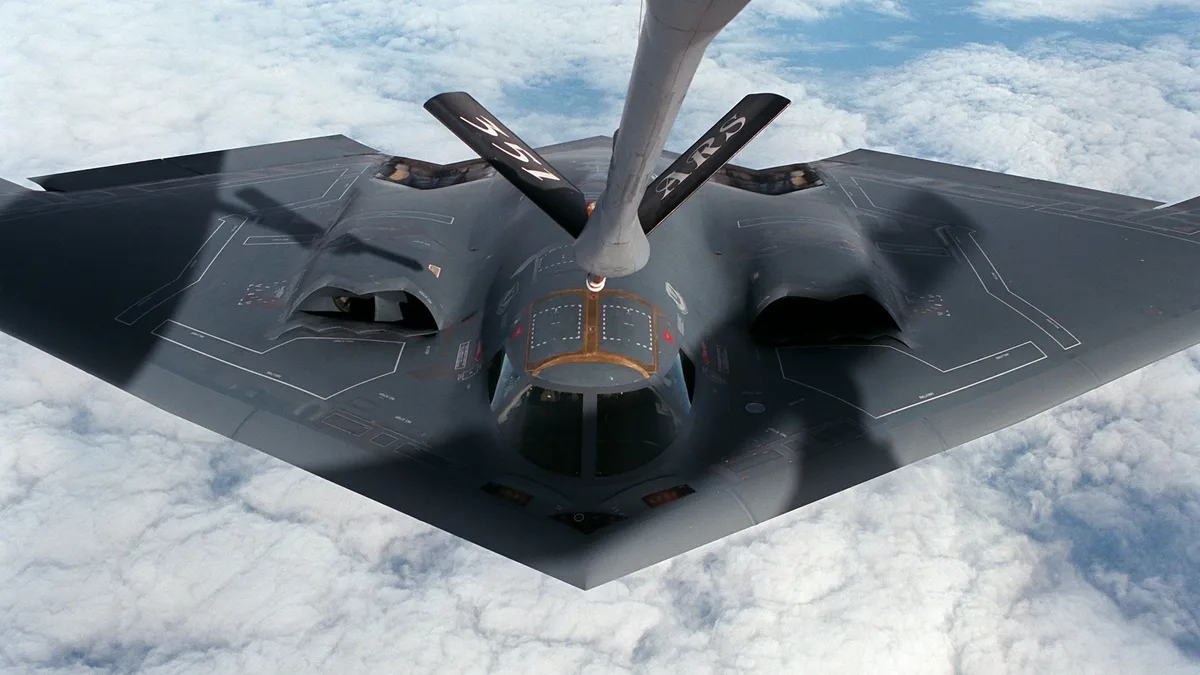
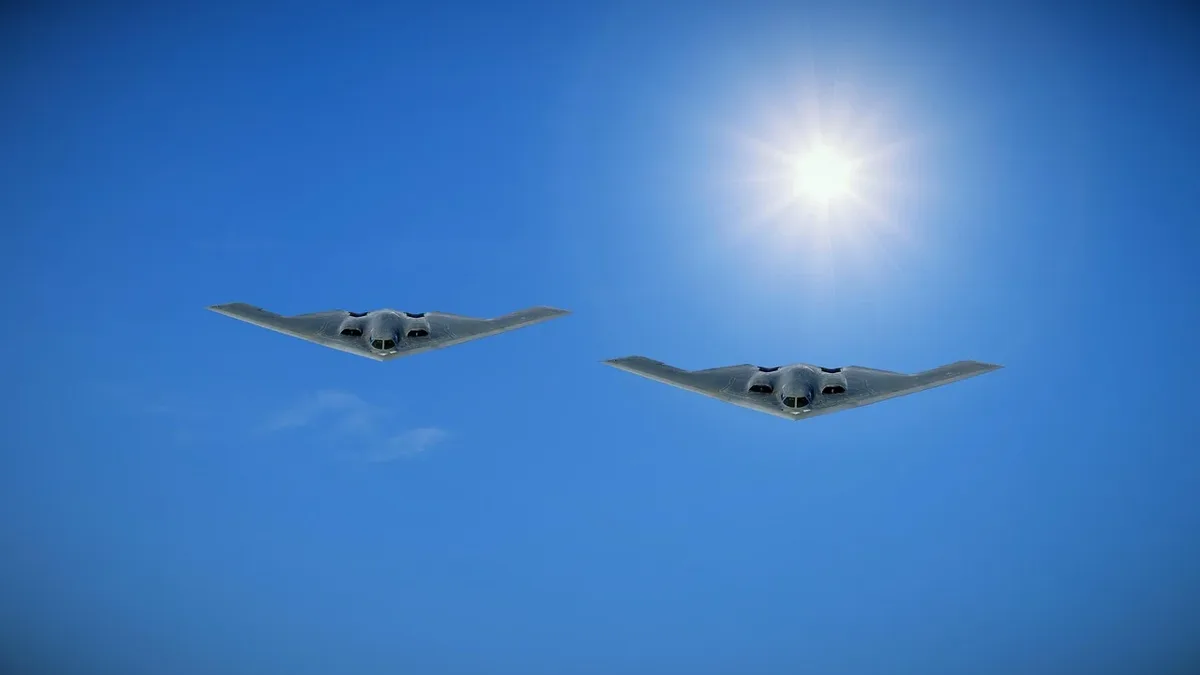
The U.S. Air Force has updated the official payload capacity for the Northrop Grumman B-2 Spirit stealth bomber from 40,000 pounds to 60,000 pounds. This revision, made without a public announcement earlier this year, places the B-2's capacity closer to the Boeing B-52 Stratofortress's 70,000-pound maximum.
For years, the Air Force's public fact sheet listed the B-2's payload at 40,000 pounds. The service quietly rewrote that figure to 60,000 pounds in May. The most likely cause is operational doctrine, not a physical upgrade to the aircraft. Speculation about strategic deception has circulated, but the change appears linked to a real-world mission.
Why The B-2's Payload Figure Changed
Nothing about the B-2 itself changed. What changed was that the Air Force got caught understating it. On June 21 and 22 last year, seven B-2 Spirits conducted Operation Midnight Hammer, striking Iranian nuclear facilities. Air and Space Forces Magazine reported that each aircraft carried a pair of GBU-57A/B Massive Ordnance Penetrators, which are 30,000-pound bunker-buster bombs.
The planes that took off had a combined payload of 60,000 pounds per aircraft. This loadout revealed a 20,000-pound discrepancy with the Spirit's long-standing unclassified maximum, prompting the fact sheet revision. Northrop Grumman continues to describe the capacity more conservatively as "more than 40,000 pounds." The National Museum of the US Air Force also cites typical combat loads around the older figure.
The 40,000-pound number likely reflects a standard maximum-fuel, maximum-range mission profile. The 60,000-pound figure represents what the airframe can physically carry when fuel load is reduced. Payload and range trade against each other.
Comparing Bomber Payloads
The report clarifies the payload rankings within the USAF bomber fleet. The supersonic Rockwell B-1 Lancer has the highest capacity.
| Aircraft | Maximum Payload Capacity |
|---|---|
| B-1 Lancer | 75,000 pounds |
| B-52 Stratofortress | 70,000 pounds (31,500 kg) |
| B-2 Spirit | 60,000 pounds (27,216 kg) |
Two Different Ways To Carry Ordnance
The B-52's 70,000 pounds and the B-2's 60,000 pounds do not measure the same kind of capacity. The Stratofortress carries ordnance both internally on a rotary launcher and externally on underwing pylons. This external carriage is what a stealth design cannot tolerate, as it destroys radar cross-section reduction.
The B-2 carries everything inside two internal bays fitted with rotary launchers and bomb-rack assemblies. These bays can hold up to 80 precision-guided 500-pound JDAMs, or 16 2,000-pound JDAMs. The aircraft can also accommodate up to 16 B61 or B83 nuclear bombs, or two of the 20.5-foot-long GBU-57 MOPs.
The B-52's conventional design buys raw carrying capacity and mission flexibility by accepting a large radar signature. The B-2 buys survivability by constraining every weapon to fit inside its internal volume.
Operational Roles And Future Plans
The B-52's payload advantage has translated into raw bomb tonnage delivered against permissive air defenses. During Operation Desert Storm, B-52s delivered 40% of all weapons dropped by coalition forces. The B-2 exists for missions where the B-52 cannot survive, like Midnight Hammer. General Dan Caine, Chairman of the Joint Chiefs of Staff, said afterward that "Iran's fighters did not fly, and it appears that Iran's surface-to-air missile systems did not see us throughout the mission." Reportedly, zero shots were fired.
The B-2 has been adding standoff reach to its penetrating role. Northrop Grumman disclosed in 2022 that the aircraft had successfully test-launched the AGM-158B JASSM-ER, a stealthy cruise missile with a range over 500 miles. The B-52 already carries the baseline JASSM and JASSM-ER on its external pylons and remains the fleet's primary standoff-missile truck.
Neither bomber force is stagnant. The 76-strong B-52 fleet is undergoing the Commercial Engine Replacement Program, swapping its eight Pratt & Whitney TF33 engines for Rolls-Royce F130 turbofans. The upgraded aircraft will be redesignated the B-52J. The first two re-engined aircraft are scheduled to begin testing at Edwards Air Force Base later this year.
The B-2 is receiving a lifetime extension as it is being replaced. The B-21 Raider will replace both the B-1 and the B-2, with initial operational capability targeted for 2028. The B-21 is expected to have a smaller payload than the B-2. As the US military pivots toward the Pacific, the B-52J is seen as a needed missile truck to support the future fleet of B-21s. The B-52J will likely have a 150%, or greater, payload compared to a B-21.