United CEO Kirby Says Boom Overture Will Miss 2029 Service Target
United Airlines CEO Scott Kirby stated Boom Supersonic's Overture airliner will not enter service in 2029, contradicting the manufacturer's schedule and casting doubt on United's order for 15 aircraft.
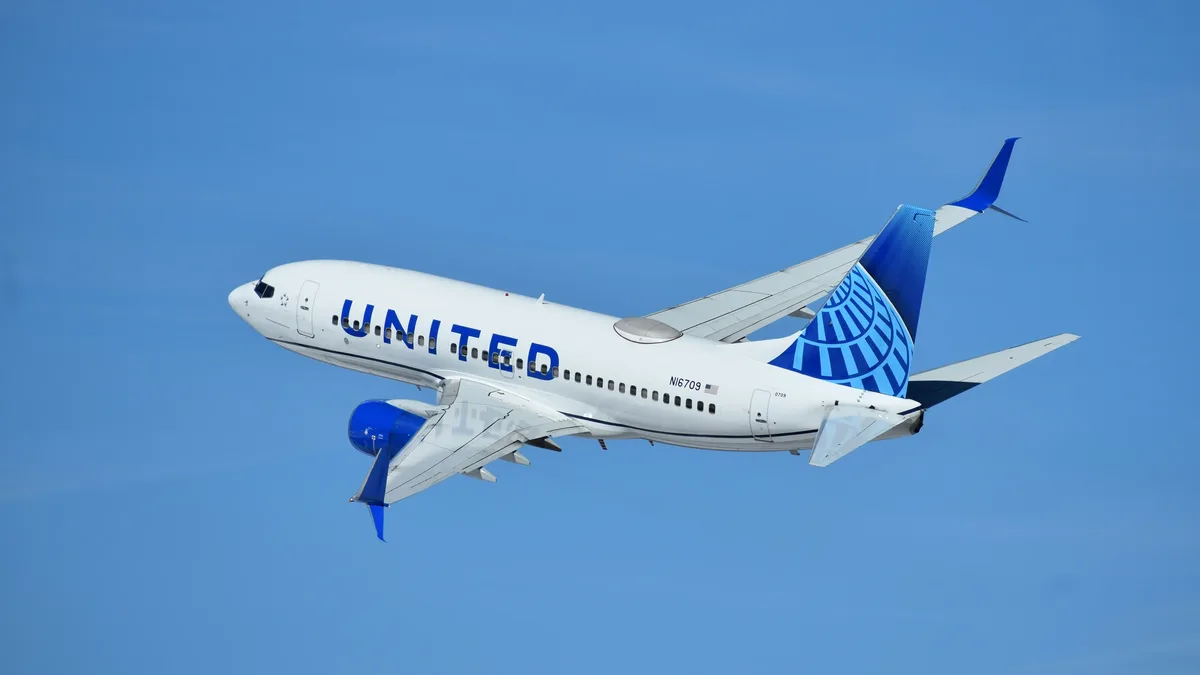
United Airlines CEO Scott Kirby has declared that Boom Supersonic's Overture will not enter service in 2029. Kirby made the statement on October 28, 2026, directly contradicting the company's official schedule which targeted passenger service that year.
"It’s not going to happen in ’29. It’s going to take longer," Kirby said. This casts significant doubt on the timeline for United's planned purchase of 15 Overture aircraft, with options for 35 more, which was announced in June 2021. The airline's agreement is conditional on the aircraft meeting safety, operating, and sustainability requirements. Kirby had previously assessed in March 2026 that Overture had only a 50-50 chance of ever entering commercial service.
Boom's order book, which also includes conditional agreements with American Airlines and Japan Airlines, totals 130 orders and pre-orders. The company's original 2021 projection outlined a rollout in 2025, first flight in 2026, and passenger service in 2029. None of the engine development milestones set in a December 2022 schedule for the Symphony powerplant have been met on time.
The Overture is designed as a supersonic airliner cruising at Mach 1.7 over a range of 4,250 nautical miles, with seating for 60 to 80 passengers. Its development follows the collapse of Aerion's AS2 program in 2021 and comes as NASA tests its X-59 quiet supersonic research aircraft. The FAA aims to finalize new noise-based rules for supersonic overland flight by mid-2027.
Production infrastructure advances despite aircraft timeline uncertainty
Despite the aircraft's uncertain schedule, Boom has completed major manufacturing facilities. Its Overture final assembly plant at Piedmont Triad Airport in Greensboro, North Carolina, was finished in 2024 with over $50 million in state taxpayer funds. That facility has been mostly idle since completion.
Separately, Boom unveiled a nearly 200,000-square-foot turbine manufacturing campus in Centennial, Colorado, on October 22, 2026. This $150 million investment is for producing 42-megawatt Superpower gas turbines, primarily for artificial intelligence data centers. The Colorado plant is still under construction but is already manufacturing parts. Boom aims to use revenue from this energy business to fund aircraft engine development.
The company has outlined an aggressive production ramp-up plan for the Superpower turbine.
| Target Year | Planned Superpower Production |
|---|---|
| Mid-2027 | Initial customer deliveries |
| 2028 | 25 units per year |
| 2029 | 50 units per year |
Engine development continues with Sprint Core testing
Boom's engine program is moving forward with ground testing. The company completed its first prototype turbine core, called the Sprint Core, on October 22, 2026. This experimental core includes a compressor, combustor, and high-pressure turbine and is outfitted with more than 1,000 sensors.
Initial firing of the Sprint Core is scheduled before the end of November 2026 at the company's Colorado test site. This core technology is intended to support both the Symphony engine for the Overture and the ground-based Superpower turbine. The engine development proceeds after Rolls-Royce ended its partnership with Boom in 2022 and following the loss of a $1.25 billion deal with data center developer Crusoe for 29 turbines in September 2026.
Boom plans to begin delivering its first Superpower turbines to customers in mid-2027.