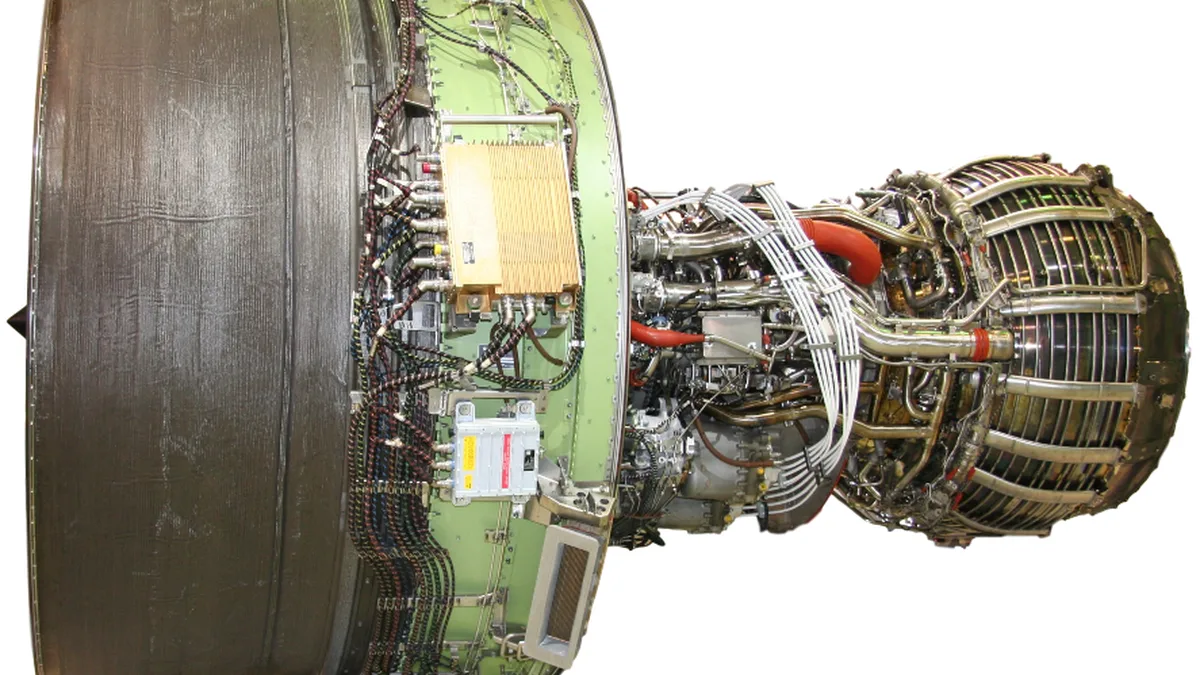
Genx
| Engine type | High-bypass turbofan |
|---|---|
| Manufacturer | GE Aerospace |
| Thrust class | 53,000–76,000 lbf |
| Application | Commercial wide-body aircraft |
| Programme status | In production |
| Airframes served | Boeing 787, Boeing 747-8 |
Origin and history
The Genx engine is a high-bypass turbofan engine developed in the United States. Its development was initiated in the late 1990s as a next-generation powerplant for new wide-body aircraft. The program was launched by General Electric Aviation as a successor to the CF6 and GE90 engine families. It was designed to address the evolving market requirements for improved fuel efficiency and reduced operating costs. The engine's first run occurred in the mid-2000s, leading to its entry into service later that decade. Its development represented a significant investment in advanced materials and aerodynamic design to meet stringent performance targets.
What it is designed for
The Genx engine series is primarily designed to power next-generation, twin-engine, wide-body commercial aircraft. Its core design mission is to provide substantial improvements in fuel burn and economic efficiency over preceding engine models. A key design focus is the reduction of environmental impact through lower nitrogen oxide (NOx) emissions and noise levels compared to previous technology standards. The engine is engineered to offer enhanced reliability and durability, aiming to reduce maintenance costs over its operational lifecycle. It is specifically tailored for aircraft such as the Boeing 787 Dreamliner and the Boeing 747-8, providing the thrust required for long-haul routes. The design also incorporates features to support more electric aircraft systems, reducing the reliance on traditional pneumatic and hydraulic power extraction.
Development and versions
Development of the Genx engine family involved extensive testing and incorporation of technologies from GE's military and earlier commercial programs. Two main thrust variants were developed from the outset: a higher-thrust version for the Boeing 747-8 and a different thrust variant optimized for the Boeing 787. These are commonly designated as the Genx-1B for the 787 and the Genx-2B for the 747-8, each with distinct fan diameters and internal adaptations. The development process included significant use of composite materials, such as carbon fiber fan blades and cases, to reduce weight. Subsequent product improvements have led to versions like the Genx-1B76/77/78 and -2B67, offering incremental thrust and efficiency upgrades. Continuous development has focused on addressing early operational issues and introducing performance enhancement packages (PEP) to improve fuel consumption and durability.
Pros and cons
A primary advantage of the Genx engine is its significant improvement in fuel efficiency, which translates directly into lower operating costs for airlines. Its design also achieves quieter operation and lower emissions, which are critical for meeting modern environmental regulations and community noise restrictions. However, the engine has experienced notable technical issues, including premature wear of certain turbine components and durability problems with the fuel nozzle heat shields in early service cycles. Some operators have regretted the initial selection due to these early reliability problems, which led to unscheduled shop visits and increased maintenance burdens. A common mistake in assessing the engine is focusing solely on its advertised fuel burn without fully accounting for the potential maintenance costs associated with its complex, high-tech systems. While later modifications have mitigated many initial flaws, the early operational history serves as a cautionary example of the risks inherent in introducing a new generation of engine technology.
Who it suits
The Genx engine suits airlines operating modern twin-engine wide-body fleets, particularly those focused on long-haul routes where fuel efficiency is a paramount concern. It is a fit for operators of the Boeing 787 and Boeing 747-8 who prioritize the latest technology for environmental compliance and noise reduction over older engine types. Airlines with the technical capability and support infrastructure to manage a modern fleet, and who value the long-term economic benefits of lower fuel consumption, are its natural customers. The engine also suits lessors and owners who require assets with strong residual value tied to modern efficiency standards. Ultimately, it is a powerplant for forward-looking carriers making fleet decisions based on total cost of ownership over a multi-decade service life.