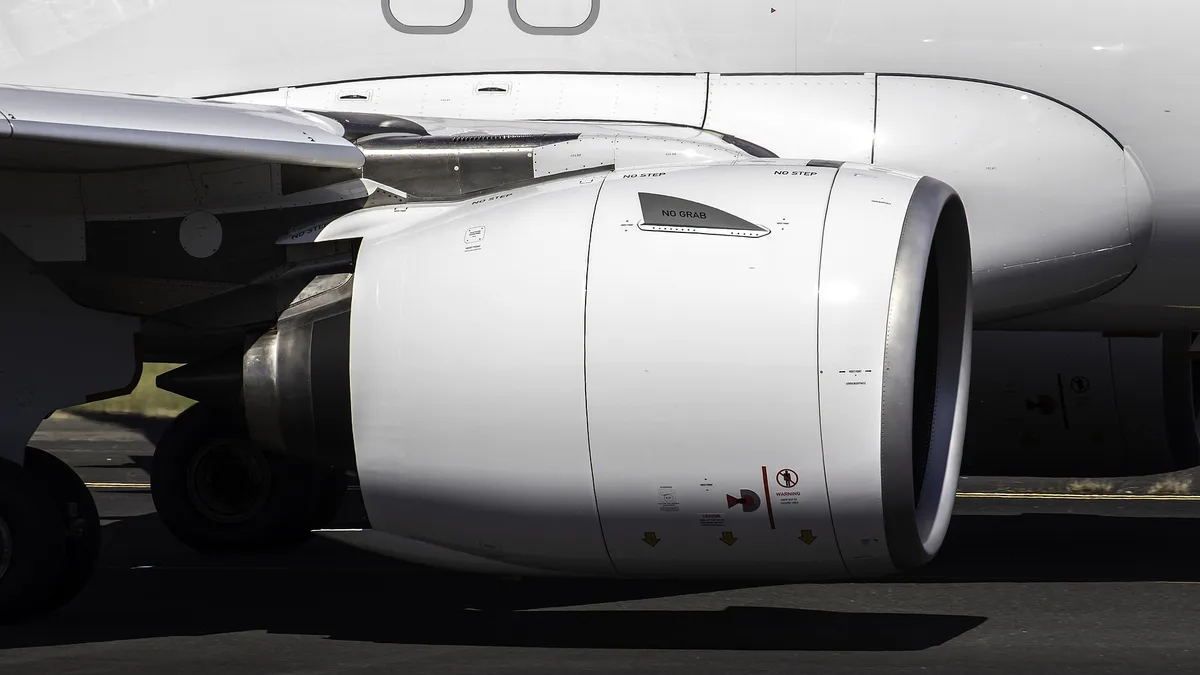
Pw1100G Gtf
| Engine type | High-bypass geared turbofan |
|---|---|
| Original use | Commercial airliner propulsion |
| Country of origin | United States |
| First created | 2010s |
| Thrust class | 24,000–35,000 lbf range |
| Application | Airbus A320neo family |
| Programme status | In production and service |
Origin and history
The Pratt & Whitney PW1100G-JM, commonly referred to as the PW1100G GTF, is an aircraft engine originating from the United States. Its development was publicly launched in the first decade of the 21st century as the lead engine for the Airbus A320neo family. This engine is the foundational model within Pratt & Whitney's broader Geared Turbofan (GTF) engine family, which represented a major technological departure for the company. The program was initiated to respond to airline demands for significantly improved fuel efficiency and reduced noise. Its first commercial service entry occurred in the 2010s, marking a pivotal moment for next-generation narrowbody aircraft propulsion. The engine's development involved extensive international collaboration, with major components manufactured by global aerospace partners.
What it is designed for
The PW1100G GTF is designed exclusively as the powerplant for the Airbus A320neo family of aircraft, which includes the A319neo, A320neo, and A321neo variants. Its primary design goal is to deliver a substantial reduction in fuel consumption and carbon dioxide emissions compared to previous-generation engines on the A320ceo family. A core design requirement was to achieve a double-digit percentage improvement in fuel efficiency, which directly lowers operational costs for airlines. It is also engineered to drastically reduce noise emissions, both for cabin occupants and communities surrounding airports, helping aircraft meet stringent noise regulations. The engine is designed to provide high reliability and durability while operating on high-cycle, short-to-medium-haul routes typical of the A320neo's mission profile. Furthermore, its design incorporates provisions for easier maintenance access and modular construction to support airline maintenance operations.
Development and versions
Development of the PW1100G-JM involved overcoming significant engineering challenges, particularly in the design and reliability of its signature planetary gear system that allows the fan and low-pressure turbine to operate at optimal speeds. The engine entered service following a rigorous flight test and certification program that included thousands of hours of ground and air testing. Since its initial service entry, the engine program has undergone continuous product improvement packages to address issues identified during early operations and to enhance performance. Specific versions have been developed for different airframes within the A320neo family, with distinct thrust ratings and minor configuration changes for the A321neo's higher thrust requirements. Development has also focused on expanding the engine's capability for longer-range operations, such as the A321LR and A321XLR variants. The maturation program has included updates to key components like the combustor and high-pressure compressor to improve durability and time on wing.
Pros and cons
A primary advantage of the PW1100G GTF is its proven significant reduction in fuel burn and carbon emissions, which translates directly into lower operating costs and environmental impact. Its noise signature is markedly lower than previous-generation engines, benefiting both passenger comfort and community noise footprints. However, the engine's early service years were marred by well-documented reliability issues, including premature removal of parts like the combustor liner and high-pressure turbine blades. Operators have faced substantial maintenance disruptions and costs related to unscheduled shop visits, leading to aircraft grounding and spare engine shortages. A common point of regret for some early-adopting airlines was the unexpected operational instability and the high initial maintenance burden, despite the promised fuel savings. The geared architecture, while innovative, introduced new maintenance complexities and required a steep learning curve for maintenance crews compared to traditional direct-drive turbofans.
Who it suits
The PW1100G GTF best suits airlines that prioritize fuel efficiency and noise reduction on dense, short-to-medium-haul networks and can manage the associated technical support requirements. It is a strong fit for cost-conscious carriers operating the A320neo family in competitive markets where fuel costs constitute a major portion of expenses. The engine suits airlines with strong technical departments or maintenance partnerships capable of handling its specific maintenance needs and implementing the latest product improvements. It is less suited to operators with limited technical resources or those who prioritize absolute dispatch reliability over long-term efficiency gains, especially in remote operating areas. Airlines that frequently operate from noise-sensitive airports or have stringent corporate sustainability targets find the engine's environmental benefits particularly compelling. Ultimately, it is a strategic choice for operators willing to accept initial technical growing pains for the promise of superior economics over the total life cycle of the aircraft.