Airbus A220's Hybrid Fly-By-Wire System Blends Airbus
The Airbus A220's unique fly-by-wire system, designed by Bombardier before Airbus took over the program, combines Airbus-style sidestick controls with
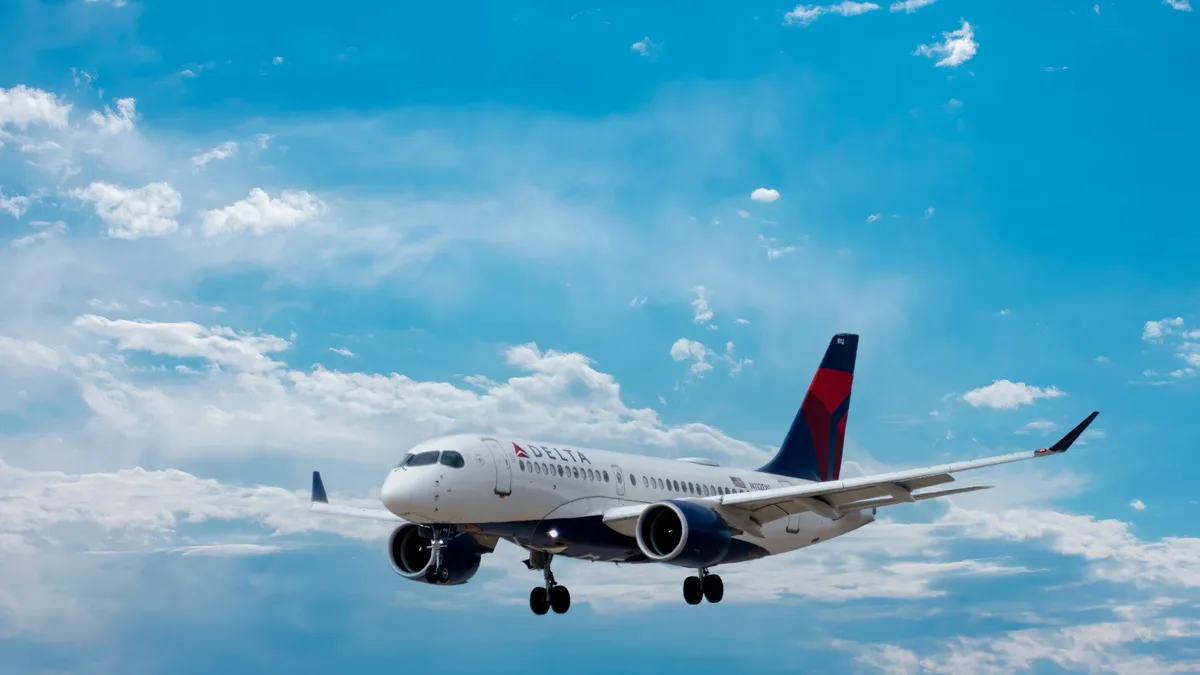
The Airbus A220 flies with a sidestick and envelope protection like an Airbus, but it requires manual trimming and provides speed stability like a Boeing. The fly-by-wire system running on the aircraft's triplex flight control computers was designed by Bombardier's CSeries engineering team in Montreal before Airbus acquired the program in 2018. Chief test pilot Chuck Ellis said the result "behaves like the Cessna 152 the pilot trained on."
That system is a key legacy of the CSeries program, which Bombardier spent approximately $6 billion developing before exiting commercial aviation entirely in February 2020. The A220's fly-by-wire system remains one of the most distinctive in commercial aviation, a design that belongs to neither the Airbus nor Boeing philosophy and that Airbus inherited rather than created.
A Hybrid Control Philosophy
The Bombardier team studied the Airbus A320 and Boeing 777 fly-by-wire systems and deliberately chose not to copy either. The result uses Airbus-style sidestick controllers and envelope protection but pairs them with Boeing-style speed stability and manual trim requirements. On the A320, a pilot commands a flight path angle and the computers maintain it without trim input. The A220 requires the pilot to trim for a desired speed, and the aircraft holds that speed when the stick is released.
Chuck Ellis, the CSeries chief test pilot, described the handling. He said it puts a pilot's muscle memory in the right mode if he gets in trouble and has to rely on direct FBW mode. The Bombardier team combined that conventional feel with Airbus-style protection, producing a system that keeps pilots' manual flying skills current while preventing them from exceeding the aircraft's limits during normal operations.
Speed Stability in Practice
The A220's flight control computers run a control law designated CU, with the U standing for speed stability. When the pilot releases the A220's sidestick to neutral, the computers return the aircraft to 1g flight, and the nose seeks the pitch attitude that maintains the trimmed airspeed. If the aircraft slows below the trimmed speed, the nose drops. If it accelerates above, the nose rises. The pilot must use the trim switch on the sidestick to set a new reference speed.
On the A320, releasing the sidestick holds the last commanded pitch attitude regardless of what happens to the airspeed. The aircraft holds attitude, not speed. The practical difference is most apparent during the approach. On the A220, a headwind gust that increases airspeed produces a slight nose-up pitch response because the speed stability function resists the speed change. The pilot feels speed changes through the pitch axis the same way a pilot flying a 737 or a Cessna 172 would.
Envelope Protection With Pilot Authority
The A320 uses hard envelope protection. The flight control computers will not allow the pilot to exceed certain angle-of-attack, bank angle, or speed limits regardless of how much force the pilot applies to the sidestick. Boeing's 777 and 787 take a different approach, providing increasing stick forces as the aircraft approaches an envelope limit but not preventing the pilot from exceeding it.
The A220 includes envelope protection that guards against excessive angle of attack, bank angle, and structural loads. The Bombardier team implemented them using what Leeham News described as "a clever principle" that differs from the A320's hard-limit approach. The system provides protection during normal operations while preserving a design philosophy that treats the pilot's control inputs differently than the A320 does at the boundary.
From CSeries to A220
Bombardier officially launched the CSeries program on July 13, 2008, at Farnborough with two variants. Development costs nearly doubled from approximately $3.4 billion to roughly $6 billion by the time the CS100 entered service with SWISS in July 2016.
| Variant | Original Designation | Seating | Entered Service |
|---|---|---|---|
| CS100 | A220-100 | 100-130 | July 2016 (SWISS) |
| CS300 | A220-300 | 130-160 | December 2016 (airBaltic) |
In April 2017, Boeing filed a dumping petition seeking tariffs of approximately 300% on CSeries imports into the United States. The petition threatened to shut the aircraft out of the largest single-aisle market in the world. Bombardier's response was to give away control of the program. In October 2017, Airbus acquired a 50.01% controlling share of the newly created Airbus Canada Limited Partnership at no acquisition cost.
On July 1, 2018, Airbus took formal control and renamed the aircraft. The CS100 became the A220-100, and the CS300 became the A220-300. Cumulative net orders increased 64% in the first 18 months under the Airbus name, reaching 658 aircraft by January 2020.