Icelandair's Hand-Painted Boeing 757 Scrapped After 31 Years
Icelandair's iconic Boeing 757-200, famous for its hand-airbrushed Northern Lights livery, has been dismantled for parts and scrap.
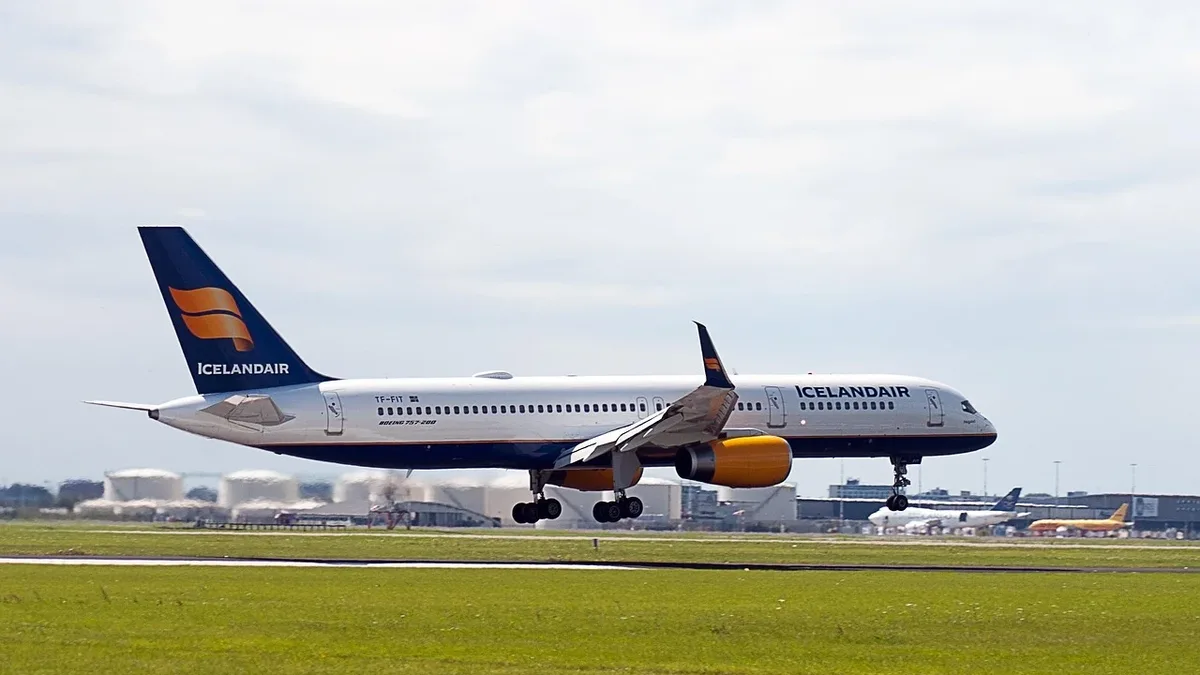
Icelandair's most famous Boeing 757-200 has been stripped and scrapped. The aircraft, registered TF-FIU and celebrated for its hand-painted Northern Lights livery, was dismantled in a teardown facility after its final flight on October 12, 2025.
An airframe that carried millions of passengers across the North Atlantic over 31 years is now gone. Its destruction marks the end for what the source calls the single most effective flying billboard in transatlantic aviation history.
From European Workhorse to Icelandic Icon
Built in July 1994, the jet began its career with Spanish carrier Iberia. For a decade it flew European routes under the registration EC-609. Icelandair acquired the twinjet in 2004, deploying it on demanding transatlantic routes from its Keflavík International Airport hub.
By late 2014, airline executives saw greater potential for the reliable aircraft. They selected it for a unique artistic conversion. A team of international airbrush artists hand-painted three layers of shimmering green, purple, and blue paint across its fuselage. Inside, a bespoke LED lighting system projected dancing auroras on the cabin ceiling.
The transformed jet, named Hekla Aurora, made its maiden flight in this livery on February 4, 2015. It immediately became the centerpiece of Icelandair's tourism marketing. The source states it turned routine airport taxiways into social media spectacles.
The Unsustainable Cost of Art
Maintaining the hand-painted masterpiece became a significant burden. The delicate paint required touch-up work after every heavy maintenance check to prevent peeling. This was due to exposure to high-altitude ultraviolet radiation, subarctic ice, and abrasive jet fuel exhaust.
As the airframe neared 30 years of age, the financial calculus shifted. The cost of maintaining both the artwork and the aging mechanics became unsustainable for the airline. The decision to retire the jet was ultimately driven by economics.
Economics Seal the Fate
For a 30-year-old 757-200, a major structural check and engine overhauls represent a multi-million-dollar investment. When these costs exceed an aircraft's residual market value, retirement is the typical commercial choice. Fuel burn was the decisive factor.
Modern aircraft like the Boeing 737 MAX 8 and Airbus A321LR consume up to 30% less fuel per seat on similar routes. As Icelandair phased out its other 757s, operating a single aircraft of the type became highly inefficient for pilot training and spare parts logistics.
Harvesting Parts for the Fleet
After its final flight, TF-FIU was sent not to a museum but to a teardown facility. Technicians first harvested high-value components to support the remaining global fleet of active 757s.
The two Rolls-Royce RB211-535E4 engines, landing gear, and auxiliary power units were carefully removed for distribution. These parts will continue flying in other aircraft. Once all certified components were stripped, the remaining aluminum airframe was cut into scrap metal for recycling.
Filling the Capability Gap
The Boeing 757-200 occupies a unique niche, combining powerful engines and high-lift wings to operate from short runways over long distances. Icelandair is turning to Airbus to replace this capability, ordering A321LR and A321XLR aircraft.
The A321LR offers a range of 4,000 miles, while the longer-range A321XLR will enable expansion to the U.S. West Coast. These modern jets surpass the 757 in fuel efficiency and cabin quietness. However, the source notes that no standardized factory jet can replicate the unique marketing power of the hand-airbrushed flagship. The permanent loss of TF-FIU leaves Icelandair without an aircraft that captivated passengers worldwide, even as more efficient replacements arrive.