Southwest Explores First Class Amid Boeing 737 Galley
Southwest Airlines is considering adding a domestic first class cabin to its all-Boeing 737 fleet, but faces significant retrofitting challenges due to its
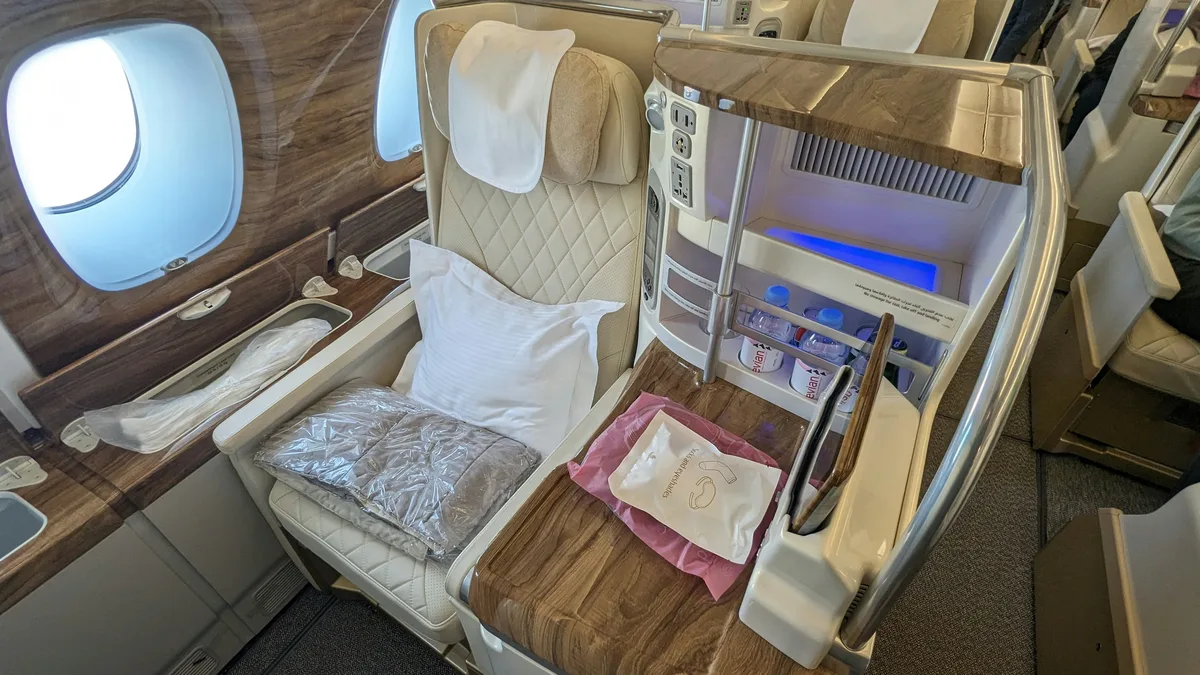
Southwest Airlines is examining the introduction of a true domestic first class cabin, a move that would mark a significant shift for the carrier long known for its single-class, all-economy service. CEO Bob Jordan has commented that the carrier is looking at a true domestic first class and possibly even lie-flat seating, although he stopped short of confirming any plans.
With first class demand high, an airline that doesn't offer it is leaving money on the table. This is why, in addition to the US legacy carriers, a comparable product is being planned by Frontier and is already offered by Breeze Airways, while JetBlue is planning its own domestic first class. Airlines also use premium cabins to drive frequent flyer engagement and credit card partnerships, which are major profit centers.
The Galley Retrofit Challenge
American, Delta, and United all sell domestic first class on Boeing 737s, but Southwest's fleet lacks a key component: onboard ovens. The carrier currently only serves beverages and small snacks. Installing ovens for hot meals is solvable, but the larger issue is galley size.
Southwest does not install full-size forward galleys on its 737s. Its 737-700s feature small rear galleys, while its 737-800s and 737 MAX 8s have full-size rear galleys. To accommodate enhanced first class service with additional trolleys, the airline would need to retrofit its aircraft with full-size forward galleys. The 737-700s may also require full-size rear galleys.
Southwest originally opted for smaller galleys to maximize seating density. Installing larger galleys would force a reduction in the total number of seats on its planes, moving its layouts closer to those of legacy carriers. This would increase per-seat costs and could also necessitate a reduction in pitch for its popular extra legroom seats.
The Lie-Flat Seat Question
When asked about lie-flat seating, CEO Bob Jordan did not rule it out. Such seats come with their own complications. They are large and heavy, requiring a significant cut to economy capacity. Also, they demand comprehensive meal service, necessitating those larger galleys with ovens.
Generally, the only US domestic routes that generate enough revenue to justify lie-flat seats are transcontinental flights between key coastal cities. Southwest has avoided serving these markets, which rely heavily on corporate contracts the airline lacks. While Southwest is reportedly planning nonstop routes to Reykjavik with its 737 MAX 8s, the stage lengths involved do not always support lie-flat seats.
Alternative Premium Cabin Models
Southwest could look to other models instead of a dedicated recliner seat. In Europe, short-haul business class often consists of an economy seat with added legroom, a blocked middle seat, and enhanced service. This allows for dynamic cabin sizing. A similar product is sold in the US by Frontier as 'Upfront Plus'.
The benefit is space efficiency. These seats have the same pitch as an extra legroom economy seat, resulting in only a slight capacity decrease. For Southwest, which may already need to remove seats for larger galleys, this could be appealing. The drawback is that these seats are less spacious than a standard recliner and could represent poor value unless priced at a discount.
Ground Experience Investments
Alongside its in-flight premium push, Southwest is investing heavily in its ground experience. The carrier has secured lounge spaces in several key airports.
| Location | Lounge Space Size | Status/Notes |
|---|---|---|
| Honolulu | 12,241 sq ft (1,137 sq m) | Lease secured |
| Austin | 40,000 sq ft (3,716 sq m) | Space secured; officially a crew lounge but likely for passengers |
| Nashville, Denver, Dallas Love Field | Not specified | Locations where Southwest is looking to build lounges |
Southwest Airlines is also believed to be working on a new co-branded premium credit card issued by Chase. Its current top card has a $229 annual fee, while the new card is expected to have an annual fee ranging from $395 to $650 and include lounge access. The airline may introduce lounge access on select routes to help monetize these new spaces or as a benefit for its most loyal frequent flyers.
Southwest is looking to elevate its brand and add more premium products to complete its transformation towards competing with legacy airlines. So far, the carrier's unchanged network design suggests a recliner-style first class is the more likely initial step.