Leonardo Partners with Shield AI on Proteus Autonomous Helicopter
Leonardo will integrate Shield AI's Hivemind autonomy software into its Proteus uncrewed helicopter demonstrator for the Royal Navy, enabling mission-specific autonomous capabilities for naval operations.
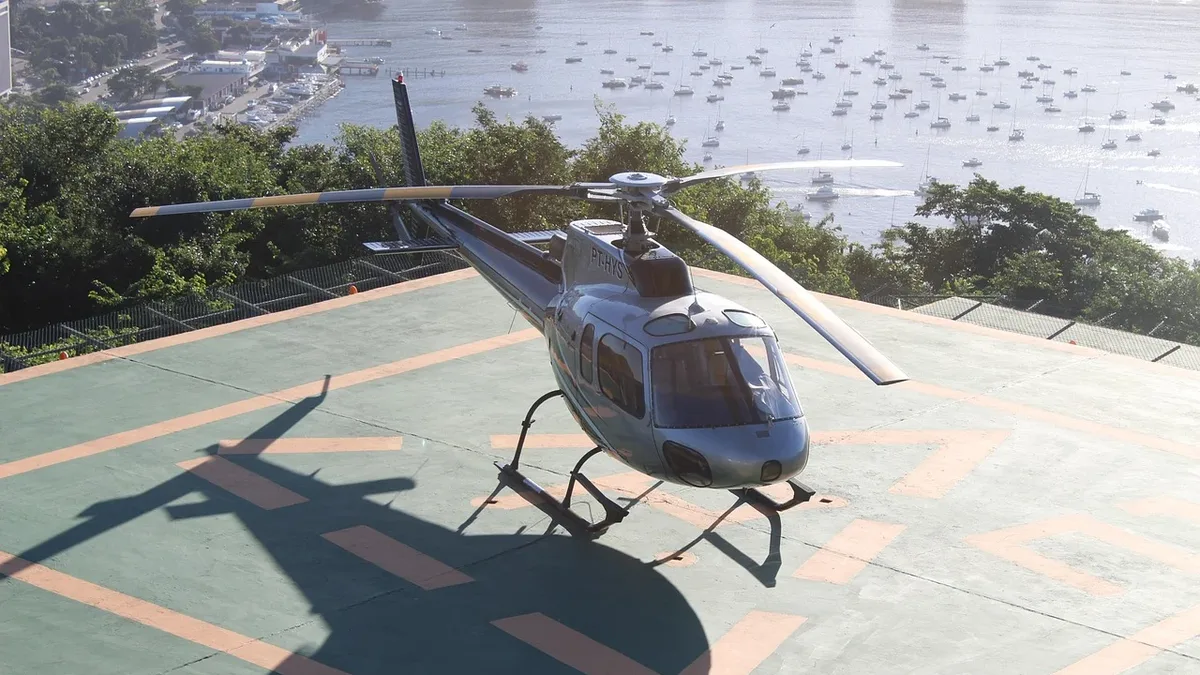
Leonardo has selected Shield AI's Hivemind software development kit to build mission autonomy for the Proteus uncrewed VTOL helicopter demonstrator. The agreement, signed by Leonardo UK and the U.S.-based AI company, will see engineers develop and integrate mission-specific autonomous software for the rotary-wing aircraft.
Proteus is an uncrewed vertical take-off and landing helicopter demonstrator built by Leonardo in partnership with the Royal Navy and UK Defence Innovation. The integration work will occur under Phase 3B of the Rotary Wing Uncrewed Air System (RWUAS) technology demonstrator programme. Leonardo's existing autonomy capabilities were onboard when Proteus made its maiden flight from Predannack airfield in Cornwall on January 16, 2026. During that first flight, the aircraft operated its own flying controls while test pilots monitored from the ground.
Mission Autonomy for Naval Operations
The collaboration will enable autonomous capabilities for anti-submarine warfare, intelligence surveillance and reconnaissance, and logistics missions in contested environments. Hivemind's open architecture allows Leonardo engineers to build autonomous pilots that can be tested, deployed, and updated as operational requirements change. This means the software can be adapted to different aircraft, sensors, and specific mission needs.
Shield AI states customers can maintain and adapt their own autonomous capabilities without relying on the supplier for each modification. Tom Schaefer, Vice President of Hivemind Engineering at Shield AI, noted the strategic benefit. "Leonardo’s engineers could adapt the software to their own mission sets and that 'the work stays with them'," he said. The aircraft directly informs the Royal Navy's Maritime Aviation Transformation strategy, which sets out its plans through 2040. Leonardo could potentially extend its use of Shield's software to other rotary-wing programs.
Modular Design Supports Flexible Payload Operations
Proteus features a modular bay designed for flexible mission configurations. The bay can accommodate a payload of approximately one metric ton, which is equivalent to two standard NATO 463L pallets.
This modular design allows different equipment to be fitted for roles such as anti-submarine warfare, airborne early warning, and intra-theater transport.
Strategic Alignment and Future Potential
The Proteus demonstrator supports the Royal Navy's Maritime Aviation Transformation (MATx) strategy through 2040. Leonardo was originally tasked with exploring 16 potential mission sets for the aircraft. The company believes the Hivemind SDK will support the implementation of autonomous capabilities for customers in both wartime and peacetime operations.
Neither company disclosed the value or duration of the agreement, which was announced on October 29. The companies presented the partnership as a route to further collaboration, rather than announcing immediate integrations on additional aircraft types. Adam Wardrope, Vice President of Market Development for Helicopters in the UK at Leonardo, and Nigel Colman, Managing Director of Leonardo Helicopters UK, are involved in the programme.
The integration of Shield AI's Hivemind SDK will enable Leonardo engineers to build, test, and update mission-specific autonomy software for Proteus, supporting its role in the Royal Navy's Maritime Aviation Transformation.