US Air Force Seeks Netting for F-35A Shelters at Tyndall
The US Air Force is conducting market research for contractors to install protective netting around six F-35A shelters at Tyndall Air Force Base, Florida, to defend against small drone threats, with proposals due by November 13.
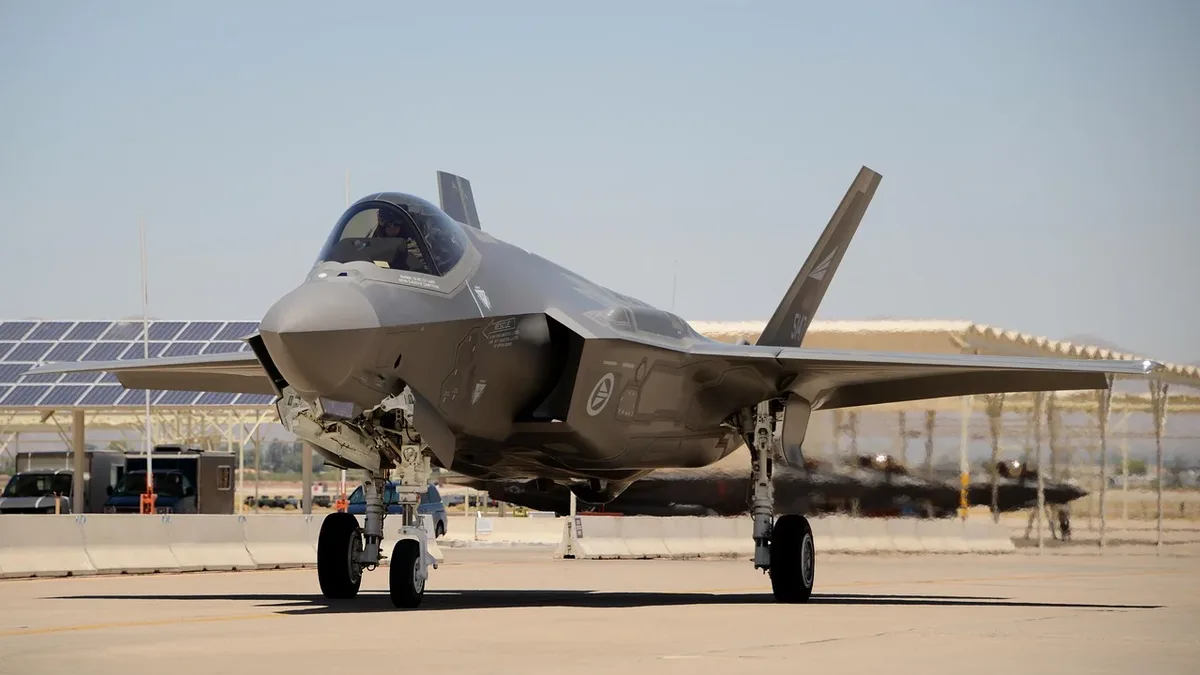
The US Air Force is seeking contractors to design and install protective netting around six F-35A parking shelters at Tyndall Air Force Base in Florida. The 325th Contracting Squadron announced the market research effort, with potential vendors asked to submit details of their proposals by November 13. The notice is intended to determine if the contract can be reserved for small U.S. businesses, though it does not guarantee an award will be made.
Each of the six sunshade-type shelters measures approximately 192 meters long, 20 meters wide, and nine meters high. They are designed to accommodate up to six F-35As each, with six bays per shelter typically parking two aircraft side by side. The netting system must be integrated without disrupting normal flight-line operations or aircraft access.
Netting specifications for drone defense
The required netting must be made of UV- and moisture-resistant polyester or nylon. It must withstand extreme environmental conditions, including temperatures up to 400 degrees Fahrenheit (204 degrees Celsius) and meet Miami-Dade County wind-load requirements. The material must have a minimum tensile strength of 200 pounds (91 kilograms) and feature mesh openings no larger than 7.6 centimeters (three inches).
These specifications are designed to stop Group 1 drones, a category defined by the U.S. military as unmanned aircraft with a maximum takeoff weight of 20 pounds or less, an altitude up to 1,200 feet, and a speed up to 100 knots.
| Specification | Requirement |
|---|---|
| Material | UV- & moisture-resistant polyester/nylon |
| Max Temperature | 400°F (204°C) |
| Tensile Strength | 200 lbs (91 kg) minimum |
| Mesh Opening | ≤ 7.6 cm (3 inches) |
| Target Threat | Group 1 drones (≤20 lbs) |
Operational requirements for shelter integration
The netting on the northern and southern faces of the shelters must be quickly and easily retractable. This allows F-35 jets to exit or enter the structures without difficulty. The system must not interfere with normal aircraft operations or flight-line access. Contractors are also being asked to assess whether the existing metal shelter structures can support the additional loads from the netting or require modifications.
Threat context and strategic rationale
This initiative is a direct response to the escalating risk of small drone attacks on military aviation assets. The Pentagon issued new guidance in January 2025 calling for increased use of netting and other passive physical defenses. A key incident cited is Ukraine's Operation Spiderweb on June 1, 2025, which used small FPV drones to strike Russian air bases, destroying multiple strategic bombers.
In January 2026, Joint Interagency Task Force 401, established to accelerate counter-drone capabilities, published recommendations endorsing netting and tensioned cables to protect critical infrastructure. A U.S. Air Force Air University study notes that such passive protective measures can be implemented more quickly than active counter-drone systems like electronic jamming. Air Force Chief of Staff Gen. Kenneth Wilsbach has publicly supported using low-cost nets for what he called "light protection" at a "really cheap" cost compared to hardened shelters.
Tyndall is not the first U.S. fighter base to explore this defense. Langley Air Force Base in Virginia sought a prototype netting system for its F-22 sunshades as early as October 2024 after drones were observed flying over the base. Tyndall itself is a major hub for F-35 operations, hosting the Checkered Flag large-force exercise series. The base was selected in March 2021 to host up to 72 fighters for its 325th Fighter Wing, though aircraft also regularly park openly on the flight line.
The market research effort is a step toward deploying a tangible defensive layer. Contractors will submit their installation proposals by November 13 to assess the feasibility of netting deployment around the six specified F-35A shelters.