Jetzero Blended Wing
| Aircraft type | Blended-wing-body demonstrator |
|---|---|
| Airframe configuration | Blended-wing-body |
| Engine type | Turbofan |
| Programme status | Development |
| Developer | JetZero |
| Country of origin | United States |
| First created | 2020s |
Origin and history
The JetZero Blended Wing Body is an aircraft development programme originating in the United States. Its conceptual foundation lies in decades of research into blended wing body (BWB) configurations conducted by NASA and various aerospace entities since the late 20th century. The JetZero company itself was founded in the 2020s with the explicit goal of advancing this specific airframe technology towards commercial and military certification. The programme represents a concerted private-sector effort to transition the BWB from a research concept into a viable production aircraft. Its historical context is rooted in the long-standing pursuit of radical aerodynamic efficiency gains beyond the conventional tube-and-wing design. The programme's public emergence aligns with increased industry and governmental focus on sustainable aviation technologies in the early 21st century.
What it is designed for
The JetZero Blended Wing Body is designed primarily to dramatically reduce fuel consumption and emissions compared to traditional airliners. Its configuration aims to provide a step-change improvement in aerodynamic efficiency by fully integrating the fuselage and wings into a single lifting body. The design is intended for commercial passenger and cargo transport, as well as potential military applications such as tanker and transport roles. The large, internal volume of the blended airframe is engineered to accommodate standard cargo containers and passenger cabins in a non-cylindrical layout. A key design goal is to achieve up to double the fuel efficiency of current-generation aircraft in its category, translating directly to lower operating costs and reduced carbon footprint. The aircraft is also designed to operate from existing airport infrastructure, utilizing conventional runways and gates, which is a critical requirement for practical adoption.
Development and versions
The JetZero programme is currently in the development and demonstration phase, having not yet reached production or certification. A central element of its development is the construction and flight testing of a sub-scale demonstrator aircraft, named the Pathfinder, to validate aerodynamic and flight control models. The company has publicly outlined a roadmap targeting a full-scale prototype by the late 2020s, with entry-into-service ambitions for the 2030s. The programme is pursuing multiple versions concurrently, including a commercial passenger airliner variant and a military tanker-transport variant, often referred to as the Z-5 for the latter. Development is being supported through partnerships with established aerospace manufacturers and funding from both private investment and U.S. government agencies like the Air Force. The development path explicitly focuses on maturing the complex flight control systems and structural design necessary for a stable, certifiable aircraft with a non-cylindrical cabin.
Pros and cons
The primary advantage of the Blended Wing Body design is its potential for vastly superior aerodynamic efficiency, which promises major reductions in fuel burn, emissions, and direct operating costs over long ranges. The integrated structure also offers significant internal volume, allowing for flexible cabin configurations and potentially larger cargo payloads within a similar wingspan to conventional aircraft. A notable pro is the potential for a quieter ride for passengers seated near the center of the aircraft, as they are farther from the engines mounted on the upper rear surface. The most significant con is the immense technical and certification challenge posed by the novel airframe, particularly concerning flight control stability, emergency evacuation procedures for a wide, windowless cabin, and pressurization of a non-cylindrical structure. Passengers in a windowless cabin may experience discomfort or disorientation, which is a common criticism of the layout, and airlines may regret the configuration if it proves commercially unpopular despite efficiency gains. A common mistake in assessing the programme is underestimating the scale of the certification hurdle, which has historically grounded other innovative airframe concepts, not due to aerodynamic failure, but due to regulatory and practical passenger acceptance barriers.
Who it suits
This aircraft programme suits operators for whom maximum fuel efficiency and range on dense, long-haul routes are the paramount operational drivers, such as cargo carriers and airlines specializing in trunk routes between major hubs. It is suited to military air forces seeking a next-generation tanker or strategic transport with greater fuel offload capability and range than current platforms like the KC-46. The programme suits investors and partners who have a high risk tolerance for a potentially disruptive technology with a long development timeline and significant upfront capital requirements. It is less suited to regional airlines or operators focused on short-haul networks where the aerodynamic advantages are diminished and turnaround logistics for a novel cabin may be problematic. The configuration may suit certain premium cabin layouts where space can be used creatively, but it is poorly suited for airlines whose marketing heavily relies on the passenger experience of a window seat. Ultimately, it suits a market and regulatory environment that prioritizes decarbonization enough to accept the compromises in cabin design and the risks associated with pioneering a new aircraft architecture.
Latest Jetzero Blended Wing news
Latest reporting
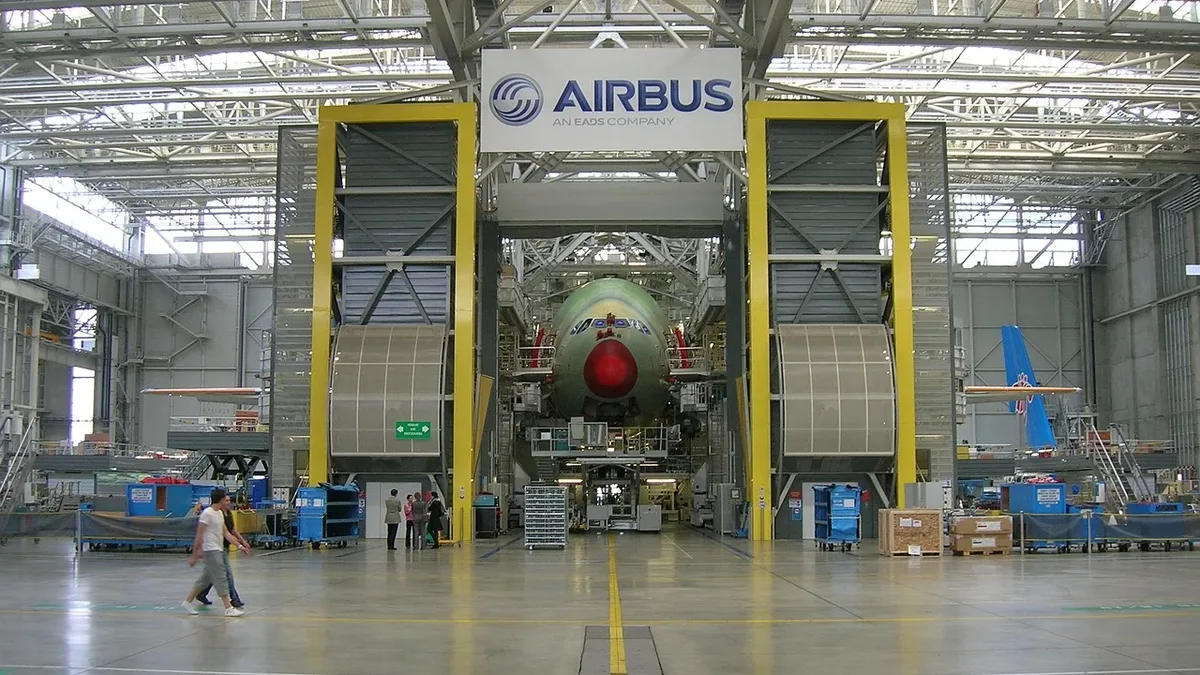
Airbus Revives A380 Wing Plant for A321neo Production
Airbus is investing $200 million to convert its former A380 wing factory in Broughton, UK, to produce wings for the backlogged A321neo.

Rolls-Royce Trent 1000 XE Engine Triples Time On Wing
Rolls-Royce says its redesigned Trent 1000 XE engine standard delivers three times the time on wing of the previous TEN model, with some engines...
Teton CAP Squadron Deactivated, Cessna 206 Reassigned
The Teton Civil Air Patrol squadron in Jackson Hole, Wyoming, was deactivated on Aug. 17, 2024, after months of disagreement between local leaders...

History's Largest Battery-Electric Plane Takes Flight in New York
Heart Aerospace's X1 demonstrator, the largest battery-electric fixed-wing aircraft in history, has successfully completed its debut flight in New...