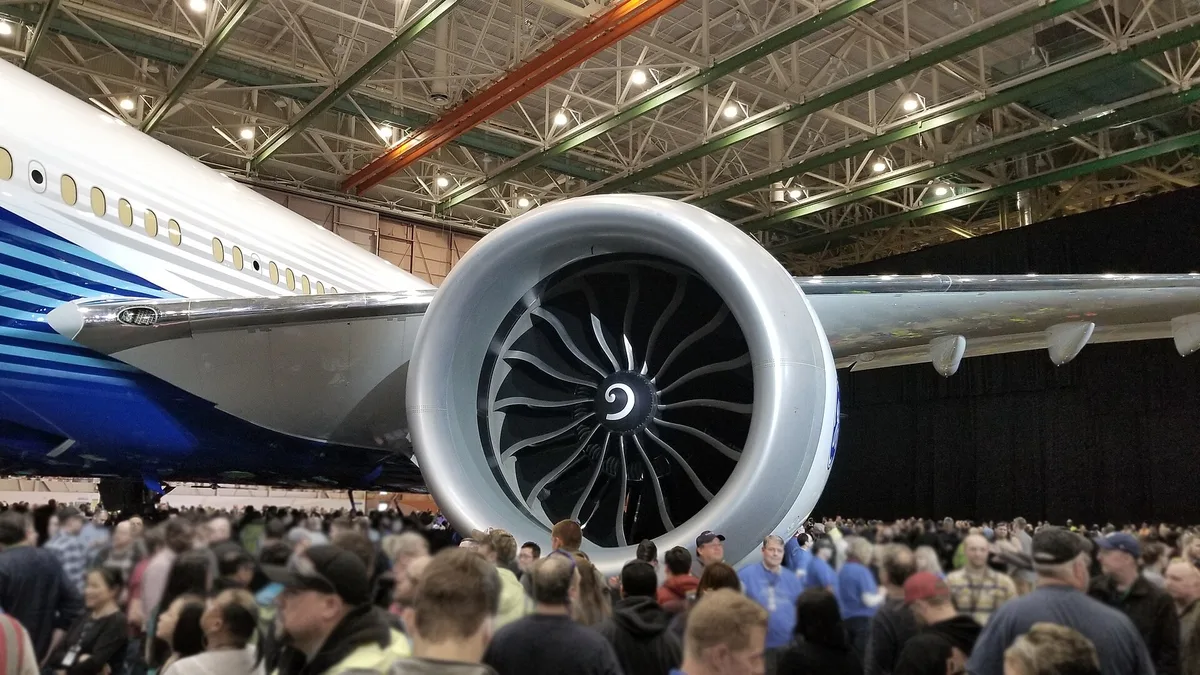
Ge9X
| Manufacturer | GE Aerospace |
|---|---|
| Original use | High-bypass turbofan for commercial wide-body aircraft |
| Country of origin | United States |
| First run | 2016 |
| Status | In service |
| Thrust class | Approximately 105,000 lbf |
| Associated airframe | Boeing 777X family |
Origin and history
The Ge9X is a high-bypass turbofan engine developed by GE Aerospace, an American company. Its development was initiated in the 2010s to serve as the exclusive powerplant for the Boeing 777X family of wide-body aircraft. The engine program was officially launched within that decade, with the first engine to test running in the 2010s. It represents the latest and largest member of GE's GE9X engine family, which originated with the GE90 developed for the Boeing 777 in the 1990s. The Ge9X builds directly upon the technologies and architectural principles proven in the preceding GE90-115B, the world's most powerful commercial jet engine. Its creation was driven by Boeing's requirement for a new, ultra-efficient engine to enable the economics of its next-generation 777X airframe.
What it is designed for
The Ge9X is designed specifically to provide thrust and fuel efficiency for the Boeing 777-9 and 777-8 passenger and freighter aircraft. Its primary design goal is to deliver significant double-digit percentage improvements in fuel burn and emissions compared to prior-generation engines on the Boeing 777. The engine is engineered to produce maximum thrust in the 110,000-pound class, optimized for the 777X's increased size and range capabilities. It is intended to operate with exceptional reliability and reduced maintenance costs over its service life. The design also prioritizes quieter operation to meet stringent modern noise regulations at airports worldwide. Furthermore, it is built to withstand the demands of long-haul, high-cycle operations typical of major global airline routes.
Development and versions
Development of the Ge9X involved extensive testing, including core, fan, and complete engine trials throughout the 2010s. The program utilized advanced ceramic matrix composites (CMCs) in the combustor and turbine sections, a first for a commercial engine of this scale, to withstand higher temperatures for better efficiency. A key feature is its massive, 134-inch diameter composite fan blade design, which is the largest ever incorporated into a commercial jet engine. As of its entry into service, there is one primary version of the Ge9X, certified for the Boeing 777X, though minor manufacturer-specific model designations may exist for different airframe applications. The development process encountered challenges, including necessary design modifications to fan blades following a bird-strike test incident. The engine achieved regulatory certification from aviation authorities in the late 2010s, preceding the 777X's own certification and entry into service.
Pros and cons
A primary advantage of the Ge9X is its class-leading fuel efficiency, which translates directly into lower operating costs and reduced carbon dioxide emissions for airlines. Its advanced materials, like CMCs, allow it to run hotter and more efficiently while also contributing to a lighter overall engine weight. The engine is notably quieter than its predecessors, benefiting communities near airports. A significant con is its unprecedented physical size and complexity, which can pose challenges for ground handling, transportation, and storage at maintenance facilities. The incorporation of novel technologies, while beneficial for performance, introduces a degree of operational risk and unknown long-term maintenance profiles compared to more mature engine architectures. Airlines may regret choosing it if they operate primarily on shorter routes where its ultra-high-bypass efficiency advantages are less pronounced, as the engine's optimization is for long-haul performance.
Who it suits
The Ge9X suits airlines operating long-haul, high-capacity routes where fuel efficiency is the paramount economic driver. It is ideally matched to carriers that require the passenger or cargo capacity of the Boeing 777-9 or 777-8 for trunk routes between major international hubs. Airlines with existing fleets of earlier Boeing 777 variants powered by GE90 engines may find it a logical choice due to commonality in maintenance and pilot training. It is less suitable for regional or narrow-body focused carriers, or for airlines whose networks do not demand the specific size and range of the 777X airframe. The engine suits operators who have the infrastructure to accommodate its large size and the technical capability to support its advanced material systems. It is a strategic investment for airlines planning fleet modernization with a focus on environmental performance and long-term operational cost reduction.
Latest Ge9X news
Latest reporting

GE9X Sets Thrust Record as 777-9 Certification Delayed
The GE9X engine holds the world record for peak thrust at 134,300 pounds-force, certified in 2019. Its application on the Boeing 777-9 faces a new...
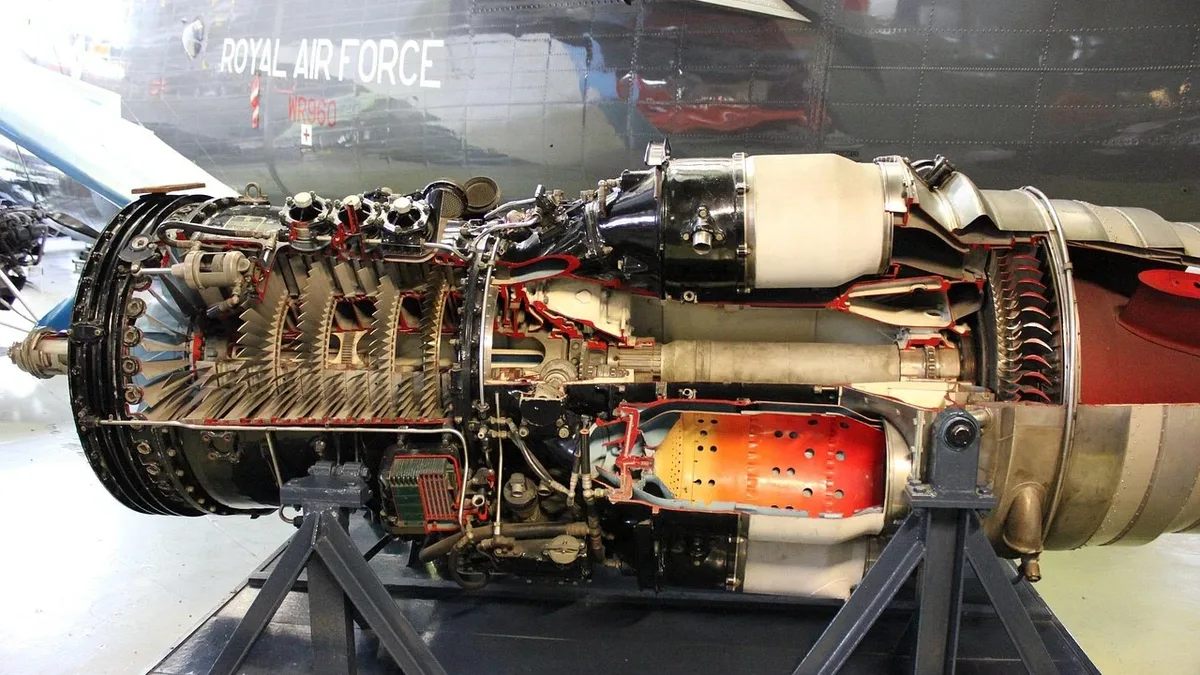
GE9X Engine Mid-Seal Crack Reveals Scale-Driven Design Challenges
A crack found in the GE9X engine's mid-seal during a January 2026 inspection highlights the unique engineering challenges created by its record...