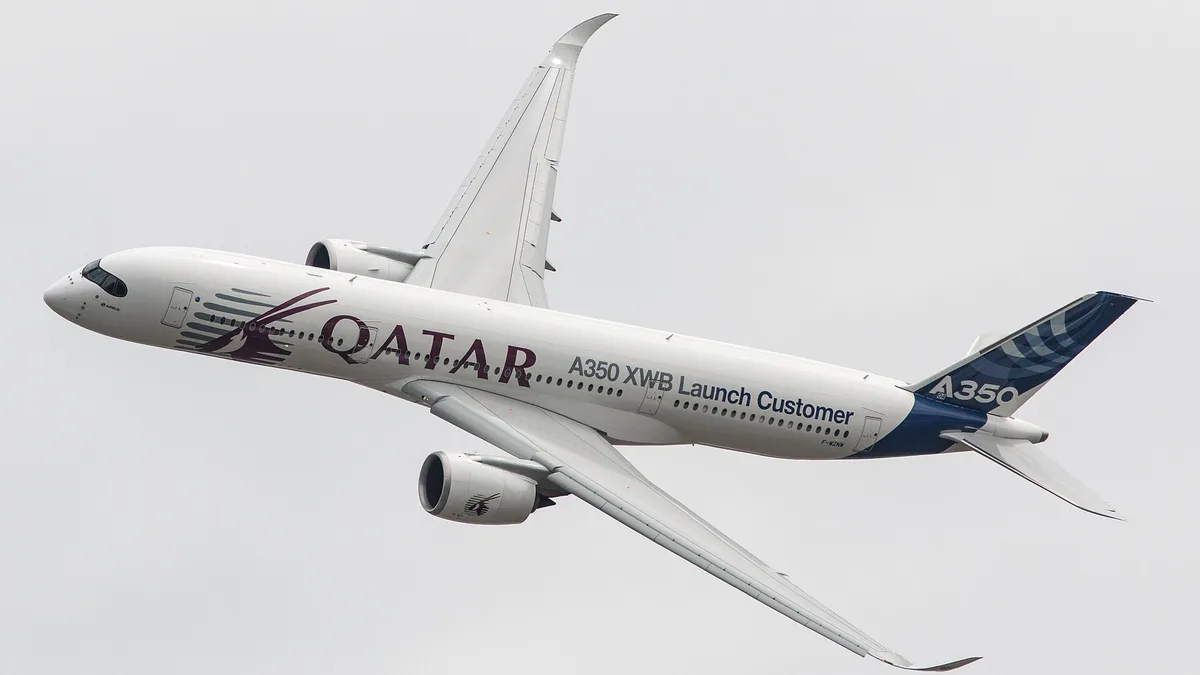
A350
| Country of origin | Multinational (European consortium) |
|---|---|
| First created | 2010s (first flight 2013) |
| Original use | Long-haul passenger airliner |
| Manufacturer | Airbus |
| Seating capacity | Typical two-class layout 300-410 |
| Wingspan | 64.75 meters |
| Engines | Two high-bypass turbofans (Rolls-Royce Trent XWB or General Electric GEnx) |
Origin and history
The Airbus A350 is a long-range, wide-body twin-engine jet airliner developed by the European aerospace manufacturer Airbus. Its development was formally launched by the Airbus board of directors in the mid-2000s, with the program receiving official industrial launch approval in 2006. The aircraft was created as a direct response to competing aircraft from Boeing, particularly the 787 Dreamliner, and to replace older Airbus models like the A340. The A350 represented a significant departure from previous Airbus designs, incorporating a high percentage of advanced composite materials in its airframe. The first variant, the A350-900, conducted its maiden flight in the summer of 2013, with entry into commercial service occurring in early 2015. The program's development followed a challenging period of design evolution, where an initial proposal based heavily on the A330 was rejected by potential customers, leading to a more ambitious, clean-sheet design.
What it is designed for
The Airbus A350 is designed primarily for long-haul international route operations, connecting major city pairs across continents with high efficiency. It is engineered to compete directly in the modern wide-body market, offering lower operating costs and improved passenger comfort compared to previous generation aircraft like the Boeing 777 and Airbus A340. A key design focus is exceptional fuel efficiency, achieved through advanced aerodynamics, lightweight carbon-fiber-reinforced polymer composites, and new-generation Rolls-Royce Trent XWB engines. The aircraft is optimized for routes typically carrying between 300 and 410 passengers in standard two-class configurations, making it suitable for both high-density and premium-heavy markets. Its design also incorporates a wider cabin than previous Airbus wide-bodies, allowing for wider seats and more spacious overhead stowage bins. Furthermore, the A350 is built with extended maintenance intervals and improved system reliability to maximize aircraft utilization and reduce downtime for airlines.
Development and versions
The A350 program evolved from an initial concept, the A350 Mk1, which was largely a re-engined derivative of the A330; this proposal was widely criticized by airlines and ultimately abandoned. Airbus subsequently committed to the A350 XWB (Extra Wide Body), a substantially new design featuring a composite fuselage and wings, which became the foundation for the family. The first production version was the A350-900, which serves as the baseline model for the family. This was followed by the stretched-fuselage A350-1000, which offers greater passenger and cargo capacity and entered service later in the 2010s. A shorter-fuselage variant, the A350-800, was originally offered but was later cancelled due to a lack of commercial interest, with airlines preferring the larger models. Airbus also developed the A350-900ULR (Ultra Long Range) for specific operators like Singapore Airlines, capable of flying the world's longest commercial flights. Specialized freighter (A350F) and corporate jet (ACJ350) versions have also been developed, expanding the family's utility beyond passenger airline service.
A350 specs
The A350 is a twin-engine, wide-body aircraft with a typical two-class seating capacity ranging from around 300 to 410 passengers depending on the variant and configuration. Its wingspan is approximately 64 meters, and its overall length varies from about 66.8 meters for the A350-900 to 73.8 meters for the A350-1000. The airframe is constructed with over 70% advanced materials, including carbon-fiber composites and titanium, which significantly reduces its structural weight compared to traditional aluminum designs. It is powered exclusively by Rolls-Royce Trent XWB turbofan engines, which are among the most efficient large aero-engines in service. The aircraft's maximum take-off weight (MTOW) can exceed 280 tonnes for the -1000 variant, enabling it to carry substantial payloads over very long distances.
A350 seat map
A typical A350-900 seat map in a two-class international configuration features approximately 30 to 40 lie-flat business class seats arranged in a 1-2-1 pattern, ensuring direct aisle access for every passenger. The A350-1000, being longer, can accommodate more rows in both cabins, often carrying around 40 to 50 business class seats and over 300 economy seats in a high-density layout. Premium economy is a common intermediate class, typically installed in a 2-4-2 layout with increased seat pitch and recline compared to standard economy. The cabin features large overhead stowage bins designed to accommodate one standard-sized roll-aboard bag per passenger, reducing boarding delays and gate-checking. Exit door placements dictate the seat row numbering and the location of galley and lavatory complexes, which are strategically placed to maximize usable cabin space.
Overview
The Airbus A350 XWB family represents a third generation of long-haul wide-body aircraft, setting benchmarks for efficiency and passenger experience in its category. It integrates extensive use of carbon-fiber composites not only for weight savings but also for improved cabin pressurization and humidity levels, reducing passenger fatigue. The aircraft's advanced aerodynamics include drooped winglets designed to optimize lift and reduce vortex drag, contributing directly to its fuel savings. Its cockpit is equipped with large interactive displays and is designed for a two-pilot crew, incorporating fly-by-wire technology common to modern Airbus aircraft. The A350's systems architecture is highly integrated and networked, allowing for extensive data collection and predictive maintenance capabilities for operators. Since its service entry, it has been adopted by a wide range of full-service and premium airlines worldwide, establishing itself as a core component of many long-haul fleets.
What to know
The A350's extensive use of composites requires specific maintenance procedures and repair techniques that differ from those used for traditional metal airframes, a factor considered by airline engineering departments. Its Rolls-Royce Trent XWB engines, while highly efficient, have undergone service bulletins and modifications to address early operational issues related to durability and wear. The aircraft's large windows are a notable passenger feature, but they lack traditional manual window shades, instead using an electrochromic dimming system controlled by the passenger or crew. While designed for very long routes, its operational economics are also highly competitive on shorter, high-frequency long-haul sectors, sometimes displacing smaller wide-body aircraft. The A350 family does not include a direct replacement for the smallest variants of the older A330, leaving a gap in the market that Airbus addresses with the A330neo. Common cabin configurations vary significantly between airlines, with some carriers opting for very high-density layouts for specific markets, which can affect perceived passenger comfort.
Common questions
A frequently asked question is how the A350 differs from the Boeing 787 Dreamliner, with the key distinctions being the A350's larger overall size, wider cabin, and different engine supplier, though both make extensive use of composite materials. Passengers often inquire about the absence of physical window shades, with airlines providing instructions on how to operate the electronic dimming buttons located on the seat's control panel or armrest. Many ask about the noise level in the cabin, which is generally considered very quiet due to advanced engine design and sound-dampening materials throughout the fuselage. A common operational question is why some airlines use the A350 on relatively short long-haul routes, which relates to its cost efficiency even on sectors where its full range is not utilized. There is also frequent discussion about the meaning of "XWB," which stands for "Extra Wide Body," referring to the cabin's increased width compared to earlier Airbus wide-bodies like the A330 and A340. Another common query concerns the future of the A350-800 variant, which is no longer offered by Airbus as the market consolidated around the larger and more economically efficient -900 and -1000 models.
Pros and cons
A significant advantage of the A350 is its operational efficiency, delivering substantial fuel savings and lower per-seat costs than previous-generation aircraft like the Boeing 777-200ER or Airbus A340, which drives its strong sales. The cabin environment, with higher humidity and lower cabin altitude, is consistently praised for reducing passenger fatigue on ultra-long flights. A notable drawback has been the reliability and maintenance costs associated with its exclusive Trent XWB engines in early service, leading to unscheduled groundings and significant repair expenses for some operators. Airlines that configured their cabins with very high-density seating, particularly a 10-abreast economy layout, often face passenger criticism for reduced seat width and comfort compared to the more common 9-abreast layout. The aircraft's high acquisition cost can be a barrier for some airlines, making it less suitable for carriers with thin long-haul routes or those operating in markets with intense low-cost competition. Some maintenance technicians report a steep learning curve associated with the composite airframe repairs, requiring new training and tooling investments for airlines transitioning from older metal fleets.
Who it suits
The A350-900 is ideally suited for major full-service network airlines operating competitive long-haul routes between hub airports, where its efficiency and capacity balance passenger demand and operating costs. The larger A350-1000 fits airlines requiring maximum capacity on dense, slot-constrained routes, such as London to New York or Hong Kong to Sydney, where it can replace older four-engine aircraft. Ultra-long-haul specialist airlines, like Singapore Airlines, benefit from the specific -900ULR variant to operate non-stop marathon routes that were previously not economically viable. Cargo operators and airlines with strong freight businesses are the natural customers for the newly developed A350F freighter version, seeking modern efficiency for their cargo networks. It is less suited for smaller airlines or those with exclusively medium-haul networks, for whom the smaller A330neo or Boeing 787 offer a more appropriate size and lower financial commitment. Airlines prioritizing the absolute lowest cost per seat on high-density routes may find the Boeing 777-9, with its higher passenger count, to be a more suitable future option, though with a trade-off in fuel efficiency.
Latest A350 news
Latest reporting
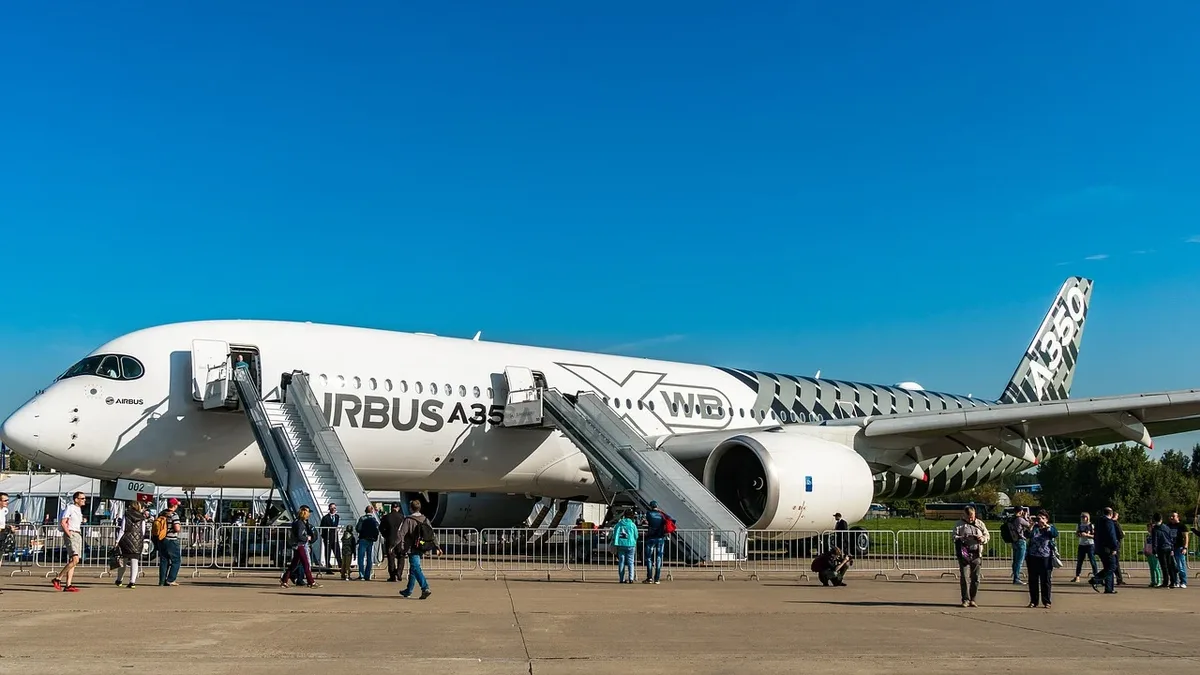
Airbus A350 Freighter Completes Maiden Flight
The Airbus A350 Freighter performed its first flight on September 29, 2026, launching a 400-hour test campaign ahead of planned 2027 certification.

Delta Adds Manila A350-900, Cuts 17 Routes in Network Shift
Delta Air Lines is launching new nonstop service from Los Angeles to Manila with its Airbus A350-900 while canceling 17 other international routes...
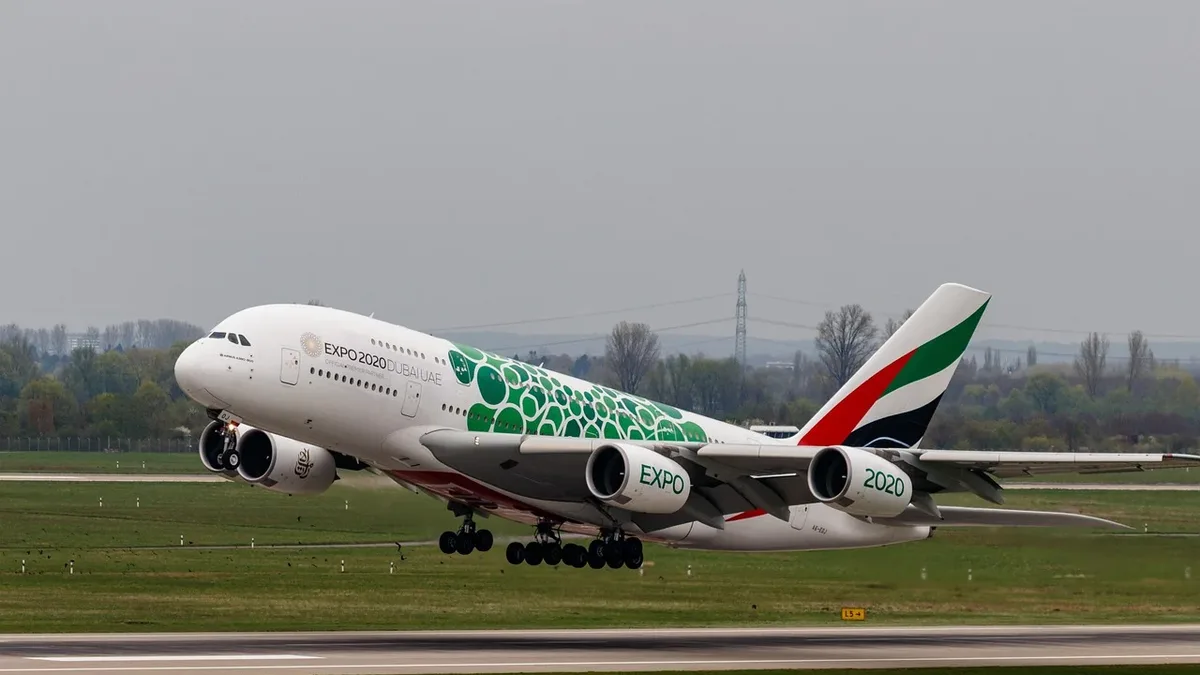
Iberia marks 100th anniversary with special
Iberia has unveiled a special centenary livery featuring a large red '100' on an Airbus A350 and launched a year-long anniversary programme ahead of...
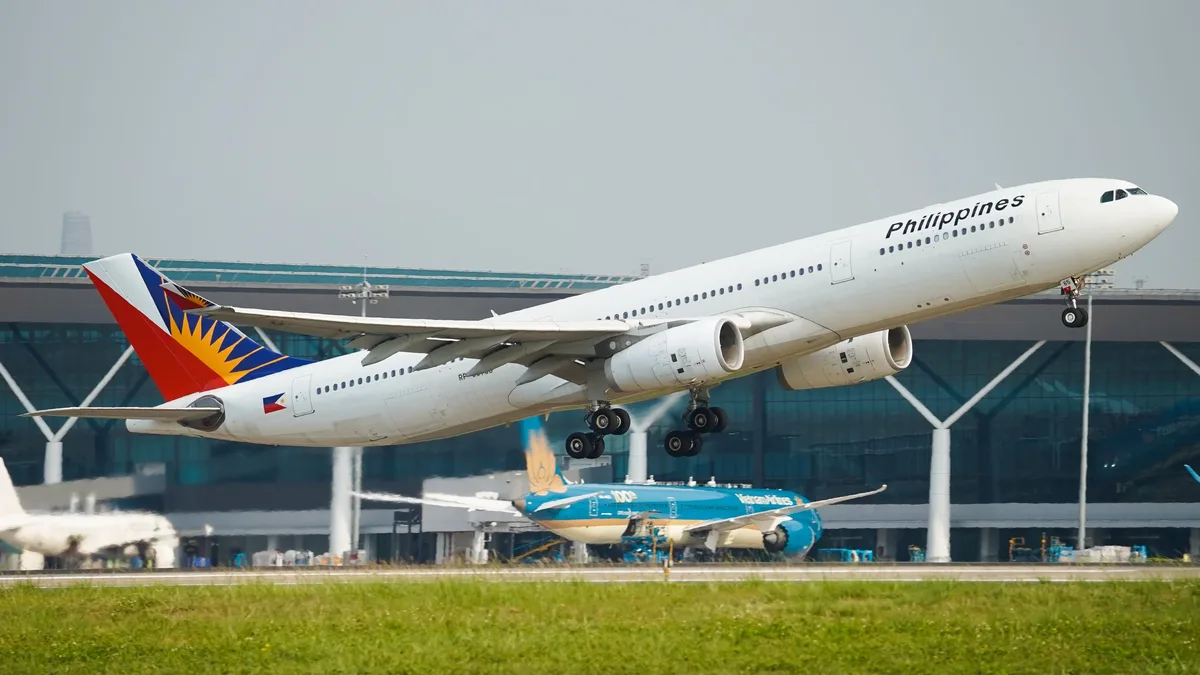
Philippine Airlines Deploys A350-1000 on Key Pacific Routes
Philippine Airlines is deploying its new Airbus A350-1000s on ultra-long-haul routes to North America, including San Francisco, New York, and Toronto.
Boeing 787-10 MTOW Increase Expands Long-Haul Capability
Boeing's 787-10 Dreamliner has received a new maximum takeoff weight certification, extending its range and making it more competitive with the...
Airbus A350 2028 Production Target In Doubt Over Kinston
Airbus faces significant challenges in reaching its goal of producing 12 A350s per month by 2028, with new delivery delays linked to integration...