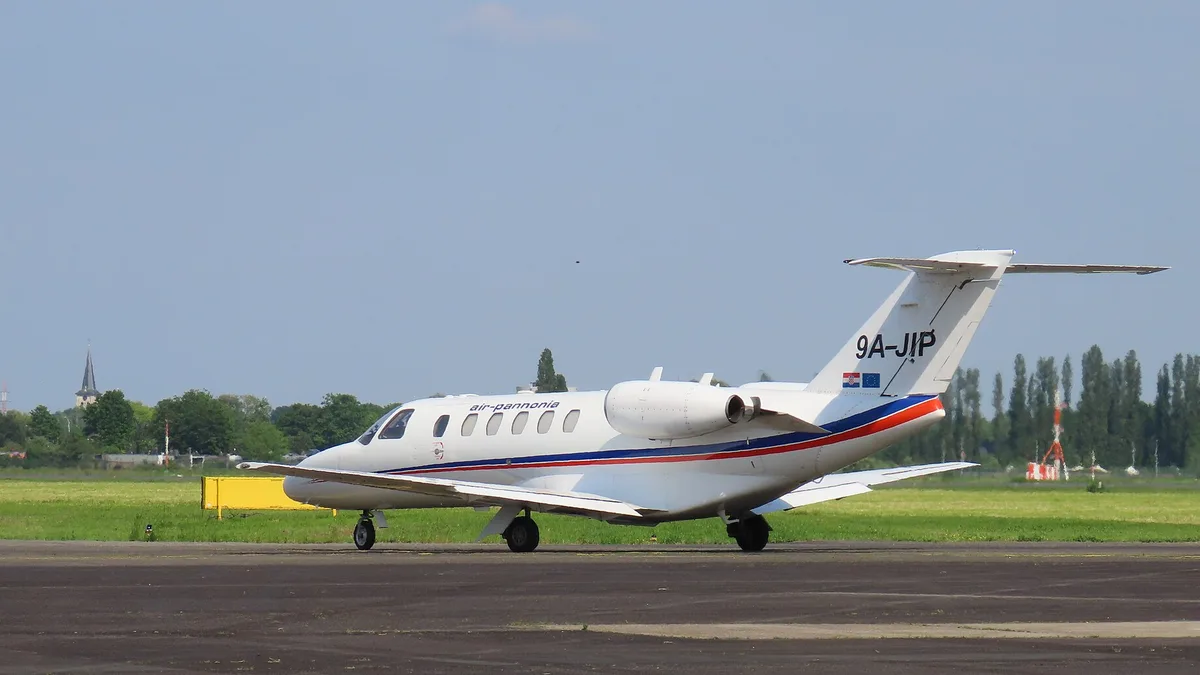
Cessna Citation
| Manufacturer | Cessna Aircraft Company (Textron Aviation) |
|---|---|
| Country of origin | United States |
| First created | 1969 (first flight) |
| Original use | Business jet |
| Seating capacity | Typically 7 to 12 passengers |
| Engine type | Twin turbofan |
| Wing configuration | Low wing |
Origin and history
The Cessna Citation line originates from the United States, with its development beginning in the late 1960s. Cessna, an established general aviation manufacturer, identified a market gap for a small, affordable, and easy-to-fly business jet. The program was launched as a response to competitors' more complex and expensive offerings, aiming to democratize jet ownership. The first model, the Citation 500, conducted its maiden flight in the early 1970s and entered service shortly thereafter. This aircraft was foundational, establishing the brand's reputation for user-friendly and efficient jets. The name "Citation" was chosen to evoke speed and prestige, setting the tone for a family that would become the best-selling business jet series in history.
What it is designed for
The Cessna Citation is primarily designed as a light to midsize business jet for corporate travel and private ownership. Its core design philosophy emphasizes operational simplicity, fuel efficiency, and the ability to use shorter runways compared to many competitors. This allows it to access a vast network of smaller, regional airports closer to final destinations, saving time over driving to major hubs. The cabin is engineered for productive travel, offering a comfortable workspace environment for typically between 4 and 12 passengers depending on the model. The aircraft is also designed with straightforward systems and handling characteristics, reducing pilot training requirements and operational costs. Furthermore, certain models within the line have been adapted for special missions, including air ambulance, cargo, and surveillance roles.
Development and versions
Development of the Citation line has been continuous, with numerous models and variants introduced over decades, creating one of the most extensive business jet families. Early models like the Citation I (500) and Citation II (550) established the basic formula, followed by the popular Citation V series which increased passenger capacity. A significant evolution came with the CitationJet series (starting with the Model 525) in the 1990s, featuring more efficient fanjet engines and modernized avionics. The line expanded upwards with midsize jets like the Citation X, known for its high speed, and the Citation Sovereign. Later development introduced the Latitude and Longitude models, which feature stand-up cabins and transcontinental range, competing in the larger midsize segment. The current production portfolio spans from the entry-level Citation M2 and CJ4 Gen2 to the large-cabin Citation Longitude, with each new iteration incorporating advanced aerodynamics, materials, and cockpit systems.
Cessna Citation specs
Specifications vary widely across the Citation family, but common traits include efficient turbofan engines and competitive performance metrics. Typical cruise speeds for light jets range from 400 to 500 knots true airspeed, while the high-speed Citation X could exceed 600 knots. Operational ranges generally extend from 1,500 nautical miles for entry-level jets to over 3,500 nautical miles for the largest models like the Longitude, enabling nonstop transcontinental flights. Certified service ceilings are usually between 41,000 and 51,000 feet, allowing operations above much commercial airline traffic. Takeoff field length requirements are often under 3,500 feet for light jets, enabling access to shorter airfields. Engine choices have progressed from early turbojets to quieter, more fuel-efficient Williams, Pratt & Whitney Canada, and Honeywell turbofans across the model range.
Cessna Citation seat map
A typical seat map for a light Citation like a CJ series often configures the cabin for 5 to 7 occupants in a club arrangement. Common layouts feature two forward-facing seats at the front, followed by two pairs of seats facing each other across a central table, facilitating conversation and work. Larger models like the Citation Excel or Sovereign may seat 8 to 10 passengers in multiple club groupings, often with a dedicated aft lavatory and a forward galley. The newest large-cabin Citations, such as the Latitude and Longitude, offer a straight-aisle, stand-up cabin with a walk-in baggage area and may include a divan in addition to individual chairs. Seat maps are highly customizable for owners, with options for executive groupings, conference layouts, or high-density commuter seating. The consistent design aim is to maximize usable cabin space within the aircraft's external dimensions, providing a comfortable and functional environment for the flight's duration.
Overview
The Cessna Citation represents the most prolific and diverse family of business jets in aviation history, with thousands of units delivered. It is characterized by a pragmatic design approach that prioritizes reliability, cost-effectiveness, and operational flexibility over maximum luxury or extreme performance in most models. The brand has successfully segmented the market, offering a logical progression from entry-level to large-cabin aircraft, all under the trusted Citation name. The aircraft's commonality in systems and procedures across models provides significant advantages for fleets and pilots transitioning between types. Overall, the Citation line is defined by its role as a practical, accessible, and versatile tool for business and personal air transportation.
What to know
Prospective operators should know that "Citation" is an umbrella brand encompassing vastly different aircraft, from very light jets to transcontinental midsize cabins, so model-specific research is essential. The aircraft's reputation for ease of flight is well-earned, with many models featuring benign handling characteristics and automated systems that reduce pilot workload. Operating costs, while generally lower than direct competitors in each class, are still significant and include maintenance programs, fuel, hangarage, insurance, and crew salaries. The extensive installed base means there is a mature aftermarket for pre-owned aircraft, parts, and specialized maintenance providers worldwide. Citations are typically supported by Cessna's own service network and authorized service centers, which offer factory-backed maintenance and inspection programs. It is also important to understand that cabin noise levels and pressurization comfort have improved markedly in newer generations, making older models less competitive for longer missions.
Common questions
A common question is what distinguishes a Citation from other business jet brands, which typically comes down to its historical focus on pilot-friendly design and operational economics. Many ask about the difference between a CitationJet and a Citation, where CitationJet refers to the specific family of light jets (CJ series) with fanjet engines launched in the 1990s, a subset of the broader line. People often inquire about the typical cost to operate a Citation, which is highly model-dependent but revolves around fixed costs like management and insurance and variable costs like fuel and maintenance events. Another frequent question concerns how many passengers a Citation can carry, with answers ranging from 4-5 in a Citation Mustang to 9-12 in a large-cabin model, but realistic payloads must account for fuel, baggage, and crew. Prospective buyers commonly ask about the aircraft's ability to land on short or unpaved runways, a capability limited to specific models like the Caravan-derived Citation Grand Caravan, not the standard jet models. Finally, people often question the need for two pilots, which is a regulatory requirement for all Citations certified under transport category rules, unlike some very light jets that allow single-pilot operation.
Pros and cons
A significant pro is the Citation's generally lower direct operating cost compared to many competitors in its classes, stemming from efficient engines and simpler systems. The aircraft's short-field performance expands usable airports, offering tremendous schedule flexibility and time savings over driving to major hubs. High dispatch reliability and a global support network minimize operational downtime, which is critical for business users. A common con is that cabins in light and older midsize models can feel narrow and lack full standing height, which can be fatiguing on longer flights compared to wider competitors. Some early and entry-level models are notably louder in the cabin than newer designs, making passenger conversation difficult without headsets. A frequent mistake is buyers choosing an older, larger model for its price and cabin size but underestimating its significantly higher fuel burn, maintenance costs, and crew requirements compared to a newer, smaller Citation.
Who it suits
The Citation line suits owner-flown pilots and small businesses stepping up from turboprops, particularly with the single-pilot-certificated light jet models which offer manageable complexity. It is ideal for corporations and fractional ownership programs that value predictable costs, high utilization, and a scalable fleet with common operational principles. Regional charter operators frequently utilize Citations due to their operating economics, reliability, and ability to serve a wide variety of airport pairs efficiently. The aircraft suits missions that prioritize access to smaller airfields close to city centers or remote facilities over maximum cabin spaciousness for very long flights. It is a strong match for entities requiring a versatile asset that can handle a mix of short-hop and medium-range trips with a small passenger load consistently. However, it may not suit those whose primary requirement is a wide, walk-around cabin for intercontinental travel, a role better filled by heavy business jets or airliners.
Latest Cessna Citation news
Latest reporting
Merlin secures AFRICOM contract for autonomous Cessna 208B CASEVAC
Merlin has received a $500,000 U.S. Africa Command contract to demonstrate end-to-end autonomous casualty evacuation using a Cessna 208B Grand...
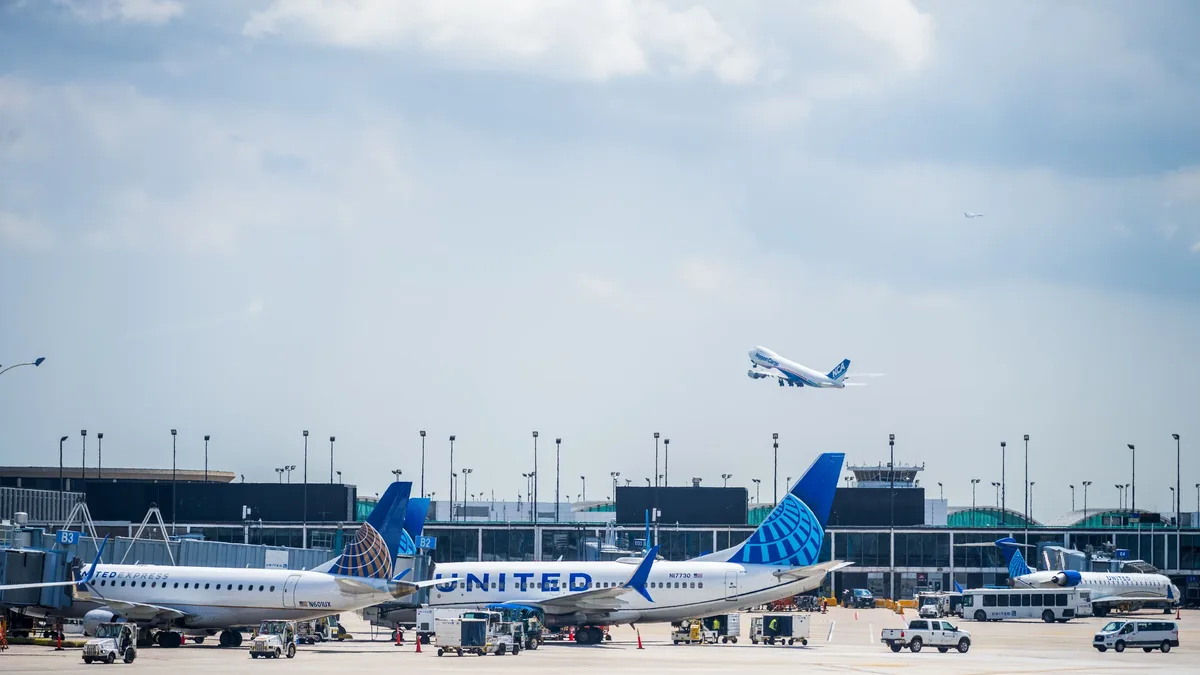
Cessna 172 Flipped by Jet Blast at John Wayne Airport
A Cessna 172 Skyhawk overturned at John Wayne Airport on November 7, 2025, after being struck by jet blast from a departing United Airlines Boeing...
FAA Terminates Single-Pilot Exemptions for Legacy Citation 500 Series
The FAA has ended 40 years of single-pilot exemptions for legacy Cessna Citation 500 series jets, effective September 29.
FAA Considers Single-Pilot Exemption Review for Legacy Citations
FAA Administrator Bryan Bedford signaled openness to reviewing single-pilot operations for older Citation jets, potentially reversing a 2026 policy...
TRU Simulation Debuts Cessna Skyhawk Veris VR Trainer
TRU Simulation + Training is unveiling its Cessna 172 Skyhawk-configured Veris VR flight training device at NBAA-BACE 2026.
Joby Aviation Flies Cessna Caravan Coast-to-Coast
Joby Aviation completed a 3,199-mile autonomous flight across the United States using a converted Cessna Caravan.