NTSB Details Rapid Descent in Fatal NBC4 Helicopter Crash
The NTSB's preliminary report states an Airbus AS350 B2 news helicopter was in a rapid descent before striking a storage container in the September 15 crash in Chatsworth that killed three.
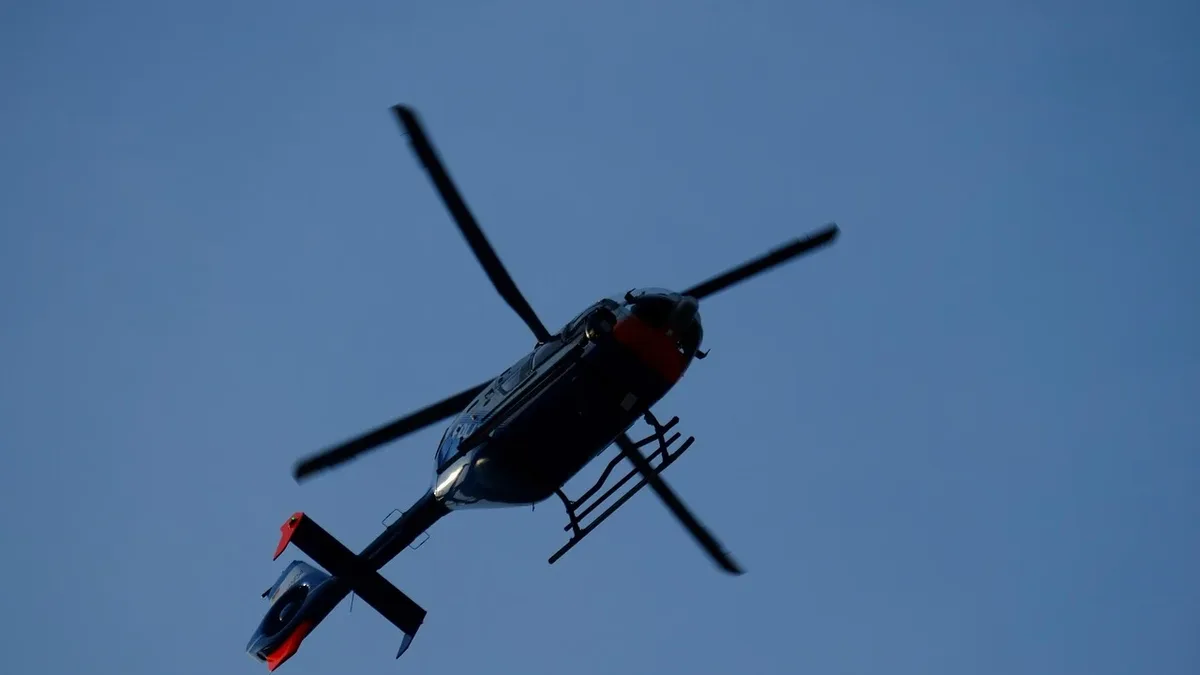
An Airbus AS350 B2 helicopter operated by Angel City Air for NBC4 crashed on September 15, 2023, after maneuvering above a traffic incident for over an hour. The crash, which occurred just before 7 p.m. in Chatsworth, killed pilot George Marciniw, reporter Eliana Moreno, and 29-year-old bystander Edy Gutierrez Mejia on the ground; a second person on the ground sustained minor injuries.
The helicopter, registered N358TV, had departed Whiteman Airport in Pacoima at about 6:25 p.m. for an electronic news gathering flight under Part 91 rules. It traveled west for nine miles at an average altitude of 1,600 feet before orbiting the scene of a collision between an SUV and an L.A. Metro bus for about one hour and 24 minutes.
Flight data from recordings
Onboard and ground recordings captured the helicopter’s final moments. Security video from nearby buildings showed the aircraft descending and striking a metal storage container before bursting into flames. A four-minute, 21-second video recorded by reporter Eliana Moreno captured ambient helicopter noise consistent with normal operations for most of the flight.
In the last 29 seconds, the recording picked up changing noise frequency and horns related to rotor RPM advisories. Data shows the helicopter was about 800 feet above the ground and had decelerated to about six knots. While turning right, it began a rapid descent. Moreno can be heard saying, 'You can’t pull up?' before the video ends. NTSB investigator-in-charge Fabian Salazar said the recording clearly hears sounds consistent with the engine changing speed.
Crash scene and aircraft condition
The helicopter came to rest partially on its right side between two commercial buildings on Mason Avenue. Crash debris was scattered about 30 feet around the main wreckage. The fuselage was mostly reduced to ash and thermally damaged metal. The tail boom had separated but remained nearby. Both the main and tail rotor assemblies stayed attached at their mounting points. The wreckage was moved to a secure location for the continuing investigation.
Investigation status and expert analysis
The NTSB's investigation is ongoing, and a probable cause has not been determined. Experts note the low speed and altitude at the time of the problem may have prevented the pilot from executing an autorotation, a standard emergency procedure. Helicopter pilots are trained to avoid the low-altitude, low-speed flight regime known as a 'dead man’s curve'.
Jack Cress, a former U.S. Marine Corps helicopter pilot and investigation instructor, stated that news and police helicopters often operate in areas where pilots are told not to be. Investigator Salazar said video from the cockpit would likely be the most important piece of evidence, as the helicopter was not believed to have a flight data recorder.
Human impact
The crash resulted in three fatalities. A worker at a nearby warehouse was taken to a hospital but suffered no serious injuries. The final words on the onboard recording highlight the sudden onset of the emergency. A final NTSB report determining the probable cause is expected in about 17 months.