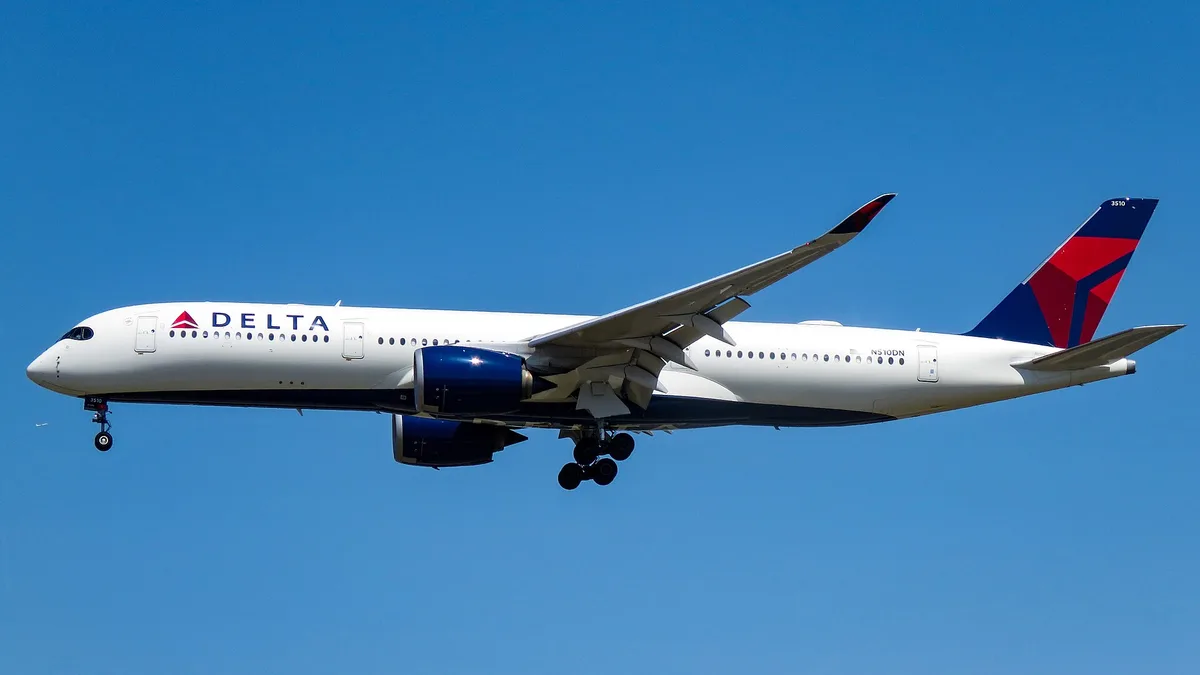
Delta Air Lines
| Operator | Delta Air Lines |
|---|---|
| Headquarters | Atlanta, Georgia, United States |
| Primary hubs | Multiple major airports in the United States |
| Alliance | SkyTeam |
| Fleet size | Over 800 aircraft |
| Fleet composition | Mix of Airbus and Boeing models |
| Programme status | Active and operating |
Origin and history
Delta Air Lines originates from the United States, with its foundational operations beginning in the 1920s as an aerial crop dusting service. The company's transition to passenger air service occurred in the following decade, marking its entry into the commercial aviation sector. Its early development was significantly shaped by securing a key airmail contract, which provided a stable revenue base for expansion. The carrier's growth throughout the mid-20th century was fueled by strategic domestic route acquisitions and the development of a major hub in Atlanta, Georgia. The late 20th and early 21st centuries saw Delta expand its international network substantially through alliances and mergers, most notably with Northwest Airlines in 2008. This consolidation created one of the world's largest airlines by fleet size and passenger traffic, establishing its current global scale.
What it is designed for
Delta Air Lines is designed as a full-service global network carrier, operating an extensive route system across six continents. Its network structure is built around multiple domestic and international hub airports to efficiently connect passengers from hundreds of origin cities. The airline's service model is segmented into multiple cabin classes, including Delta One, First Class, Delta Premium Select, and Main Cabin, to cater to a wide range of traveler budgets and needs. A core design function is to provide connectivity for both business and leisure travelers, facilitating everything from short domestic hops to ultra-long-haul international journeys. The operation is further designed to feed traffic into the SkyTeam global alliance, of which Delta is a founding member, extending its effective network reach. This design inherently supports complex logistics, including substantial cargo operations and maintenance, repair, and overhaul (MRO) services for its own and third-party aircraft.
Development and versions
The development of Delta Air Lines is characterized by continual fleet modernization and strategic network evolution rather than distinct "versions." Its operational history has progressed through distinct eras defined by dominant aircraft types, from propeller-driven planes like the Douglas DC-3 to early jets such as the Douglas DC-8 and Convair 880. A major developmental phase was the large-scale integration of the Boeing 757, 767, and MD-88 fleets, which formed the backbone of its domestic and transatlantic operations for decades. The merger with Northwest Airlines brought a significant fleet of Airbus A330s and Boeing 747-400s, diversifying its international wide-body holdings. Its current development phase is focused on fleet simplification and renewal, with large orders for Airbus A220, A321neo, A330-900neo, and A350-900 aircraft, while retiring older models like the Boeing 717 and 767-300ER. This ongoing modernization program aims to reduce operational complexity, improve fuel efficiency, and standardize the passenger experience across its global network.
Pros and cons
The airline maintains a generally strong operational performance, often ranking highly in on-time arrival statistics among major U.S. carriers, which is critical for business travelers. Its multi-brand loyalty program, SkyMiles, coupled with the SkyTeam alliance, offers substantial opportunities for earning and redeeming miles across a vast global system. A primary con is the complexity and perceived devaluation of its frequent flyer program, with dynamic award pricing making premium cabin redemptions notoriously expensive and frustrating for loyal customers. The experience can be inconsistent, with a noticeable gap between the service and hard product on its newest aircraft versus its older, yet-to-be-retired fleets, leading to passenger dissatisfaction when receiving an outdated cabin. Common mistakes include assuming basic economy tickets are changeable or allow for advance seat selection, and business travelers on tight connections sometimes regret choosing itineraries through its busiest hubs during peak periods due to high congestion and risk of delays.
Who it suits
Delta Air Lines particularly suits travelers whose itineraries are well-served by its hub cities, such as Atlanta, Detroit, Minneapolis, and Salt Lake City, where they benefit from the highest frequency of flights. It is a pragmatic choice for corporate travelers and companies that prioritize schedule reliability and a broad network over the absolute lowest fare, often valuing the ability to rebook easily after disruptions. The airline suits frequent flyers who can achieve elite Medallion status, as the benefits like complimentary upgrades, priority services, and waiver fees significantly enhance the travel experience and justify higher ticket costs. It is less suited for ultra-price-sensitive leisure travelers solely seeking the lowest possible fare, as its basic economy restrictions are stringent and its fares are often not the cheapest in a given market. The carrier also suits long-haul international travelers seeking access to SkyTeam alliance partners' lounges and networks, though those specifically seeking a luxury-first experience may find its premium products lag behind some international competitors. Finally, it suits passengers who prefer a fleet modernization trajectory, as its large order book promises a growing number of flights on newer, quieter aircraft with updated interiors and amenities.
Latest Delta Air Lines news
Latest reporting
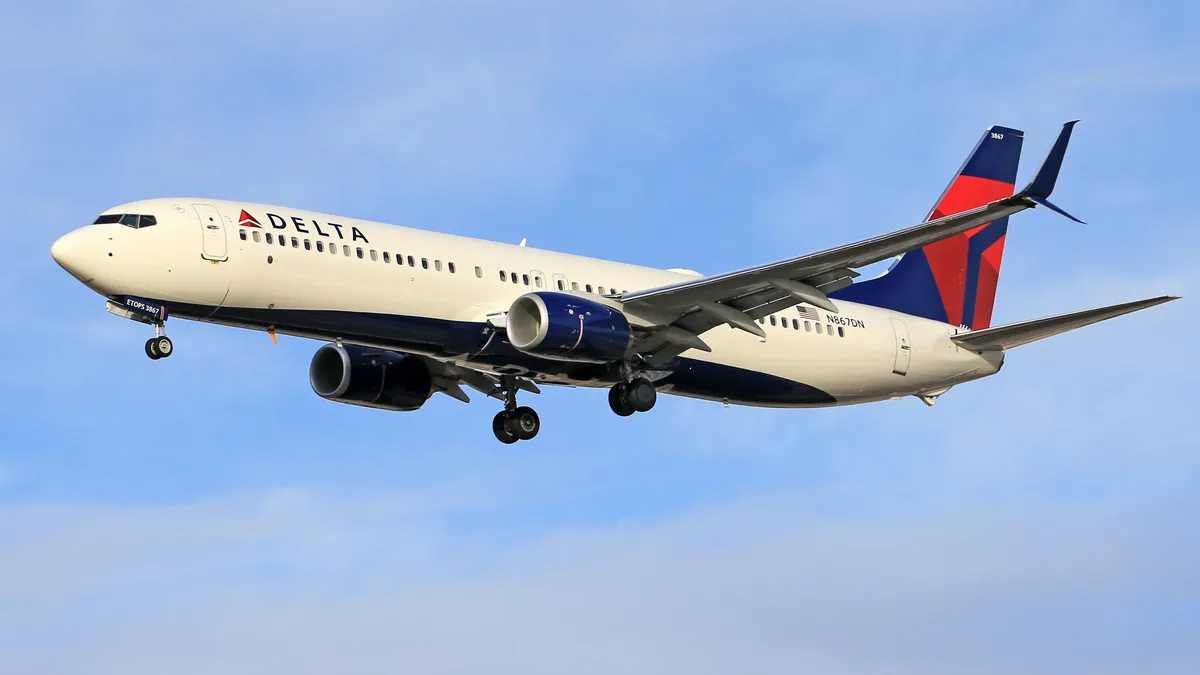
Delta Air Lines Launches Major Delta One Cabin Refresh
Delta Air Lines will debut its most comprehensive Delta One overhaul in nearly 30 years this fall, starting on transoceanic flights from Los Angeles.
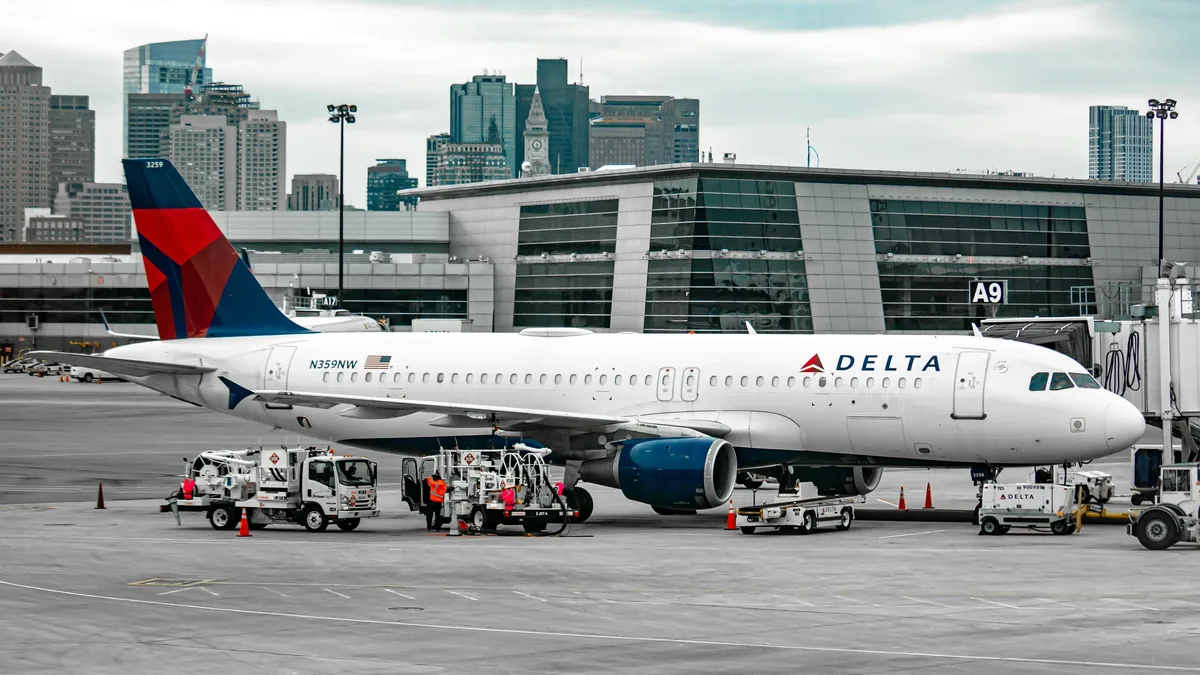
Delta delays Atlanta-Riyadh launch to March 2027 after attacks
Delta Air Lines has postponed its inaugural Atlanta-Riyadh service to March 2027, citing regional security concerns following deadly Houthi attacks...
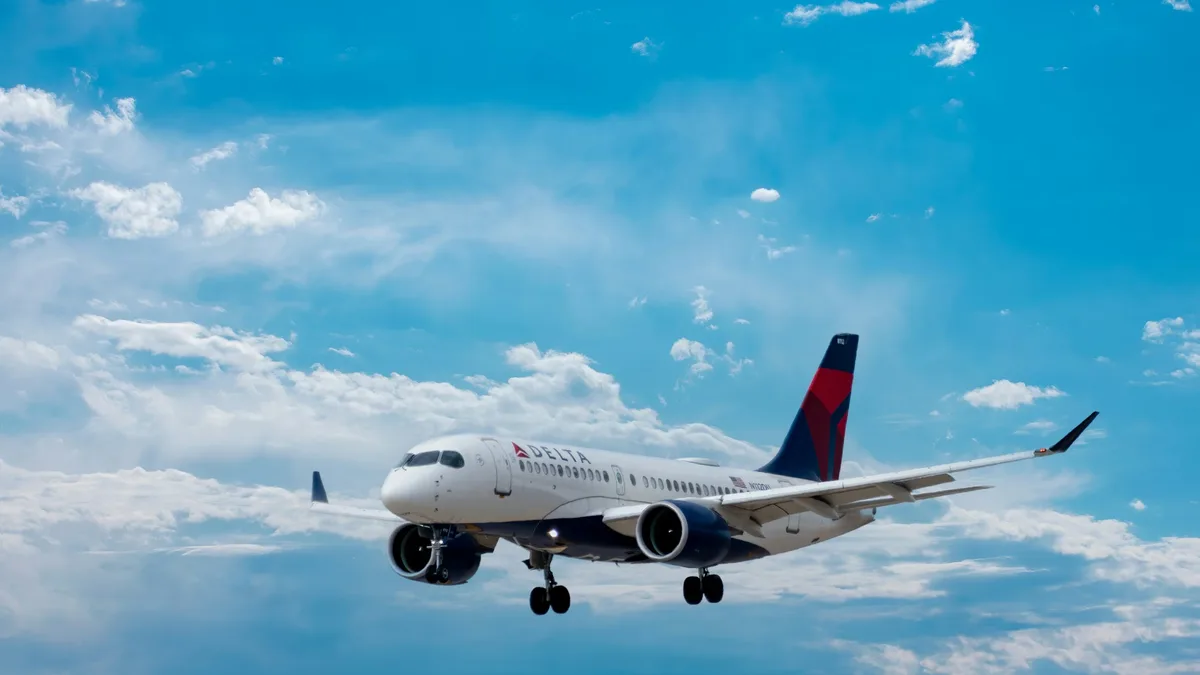
Delta Adds Manila A350-900, Cuts 17 Routes in Network Shift
Delta Air Lines is launching new nonstop service from Los Angeles to Manila with its Airbus A350-900 while canceling 17 other international routes.
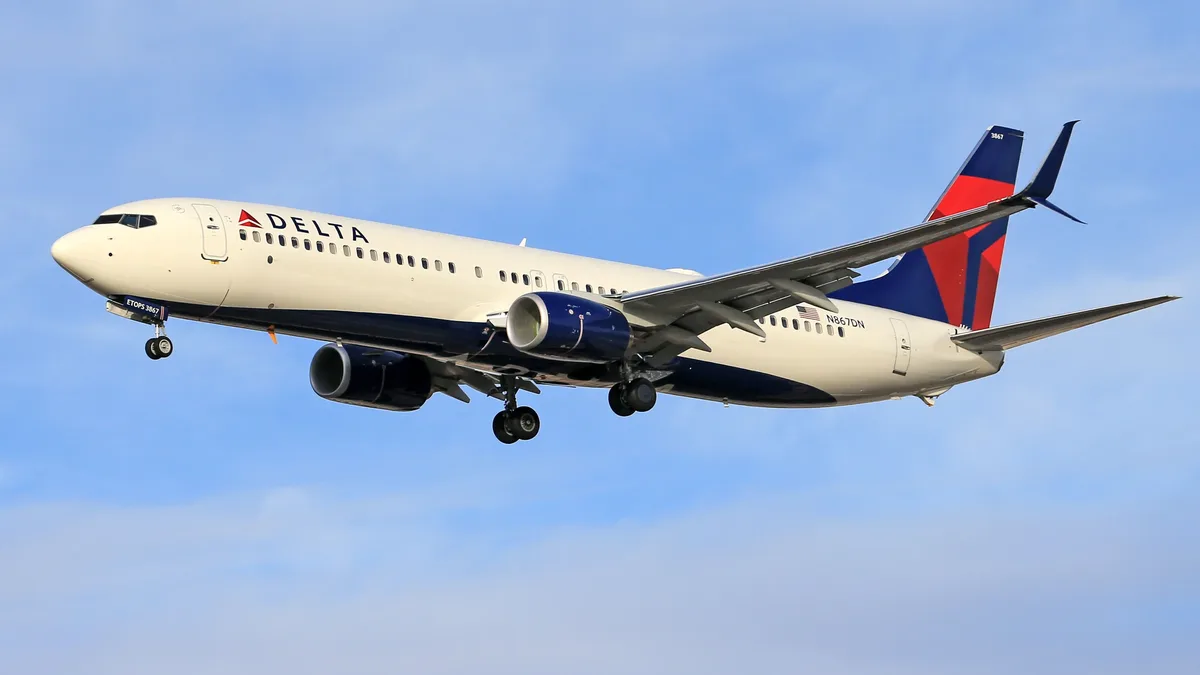
Delta Airbus A220s Divert After Cabin Fume Incidents
Two Delta Air Lines Airbus A220 flights declared emergencies within 48 hours due to cabin fumes.
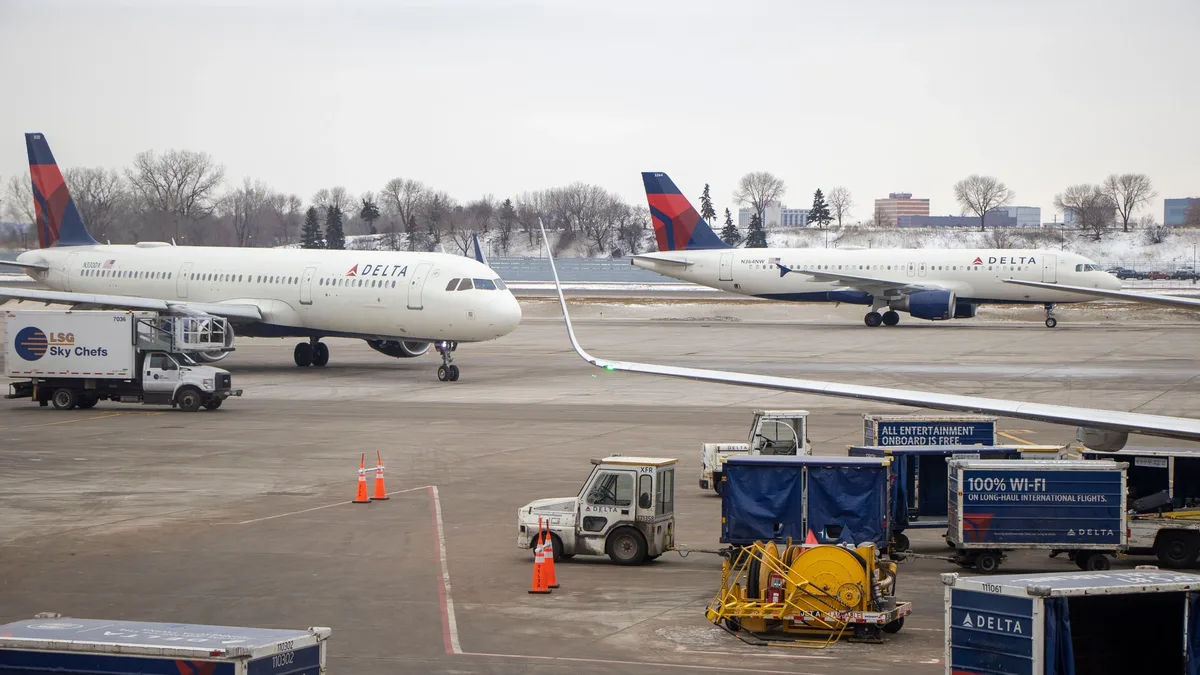
Delta Anchors New Middle East Strategy With Atlanta Hub
Delta Air Lines is launching its first U.S. Carrier service to Riyadh from Atlanta and Boston, using new Airbus A350s.

Delta Cuts Four U.S. Routes From New York and Las Vegas
Delta Air Lines will end service on four domestic routes from New York and Las Vegas by December 2026.