Lockheed Martin's F-35 Single-Engine Design Driven
Lockheed Martin's F-35 Joint Strike Fighter uses a single Pratt & Whitney F135 engine across all three variants to meet a core program requirement for
Lockheed Martin built the F-35 Joint Strike Fighter with a single engine for all three variants to meet a program requirement for common parts and systems. The 2002 program announcement prioritized affordability and a high degree of commonality across the United States Air Force's F-35A, the US Navy's F-35C, and the US Marine Corps' F-35B.
Propulsion became central to this shared architecture. A separate engine for each variant would have undermined the commonality goal. The pressure was most intense for the F-35B, which required a propulsion system capable of short takeoffs and vertical landings (STOVL). The solution had to provide thrust while fitting a common airframe and supporting an entirely different landing method.
The Common Powerplant and the Lift-Fan Concept
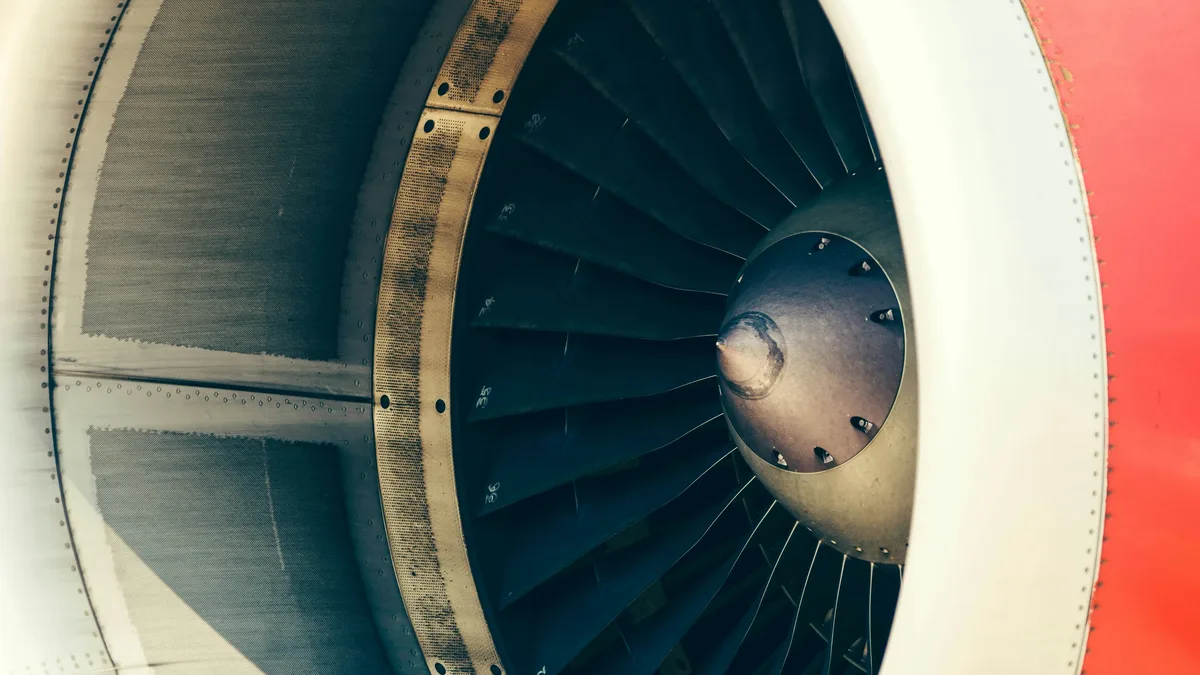
Pratt & Whitney's F135 engine family was selected as the single powerplant for all F-35 variants. According to Lockheed Martin's design history, this was enabled by an early concept, internally numbered 220-2, which introduced a shaft-driven lift-fan design. This first-of-its-kind engineering helped the company win the demonstrator phase of the Joint Strike Fighter competition.
The concept allows one powerplant to support both conventional flight and vertical lift. Instead of adding a second engine, the main engine mechanically drives a lift fan positioned forward of it. The rear exhaust provides conventional thrust, while the lift fan supplies vertical force during STOVL operations. This preserved the single-engine philosophy but added substantial mechanical complexity.
How the Single Engine Powers Vertical Flight
During conventional flight, the F135 behaves like a typical fighter engine. In STOVL mode, the system reconfigures. Doors open around the lift fan and rear nozzle, the drive system engages, and the lift fan draws power from the engine. Simultaneously, a three-bearing swivel module rotates the rear exhaust nozzle about 95 degrees downward, as documented by MiGflug. The two sources of lift work together without a separate vertical-lift engine.
The test program validated this architecture. Test pilot Graham Tomlinson made the first official vertical landing on March 18, 2010, at Patuxent River Naval Air Station, after hovering at 150 feet for a full minute. Three months later, an F-35B exceeded Mach 1. By October 2011, it was performing vertical landings at sea aboard a Marine Corps amphibious assault ship.
The Weight Crisis and Redesign
The program did not have a comfortable margin for a second engine. After a preliminary design review, engineers found the F-35B's weight projections exceeded targets. Lockheed Martin halted development for six months for what it describes as a drastic overhaul of the F-35B's design. The immediate issue was recovering weight margin, not adding another major propulsion system.
The STOVL system's complexity extends beyond the lift fan. Roll posts embedded in each wing, fed by bleed air from the main engine, provide lateral stability control during the transition between aerodynamic and jet lift. A second engine would have required space, structure, ducting, controls, and additional mass within an already tightly constrained airframe. The six-month weight-reduction effort showed how little design freedom existed for a different propulsion concept.
That redesign also reinforced the common program idea. Weight savings benefited the F-35A and F-35C variants as well. Once the shared architecture was established, the single-engine decision's consequences extended far beyond the STOVL version, shaping how the entire F-35 program could be upgraded and sustained.