Rolls-Royce Invests $1 Billion in U.S. Engine Test
Rolls-Royce has completed a $1 billion upgrade to its Indianapolis facilities, expanding test and manufacturing capacity to support engines for the B-52J
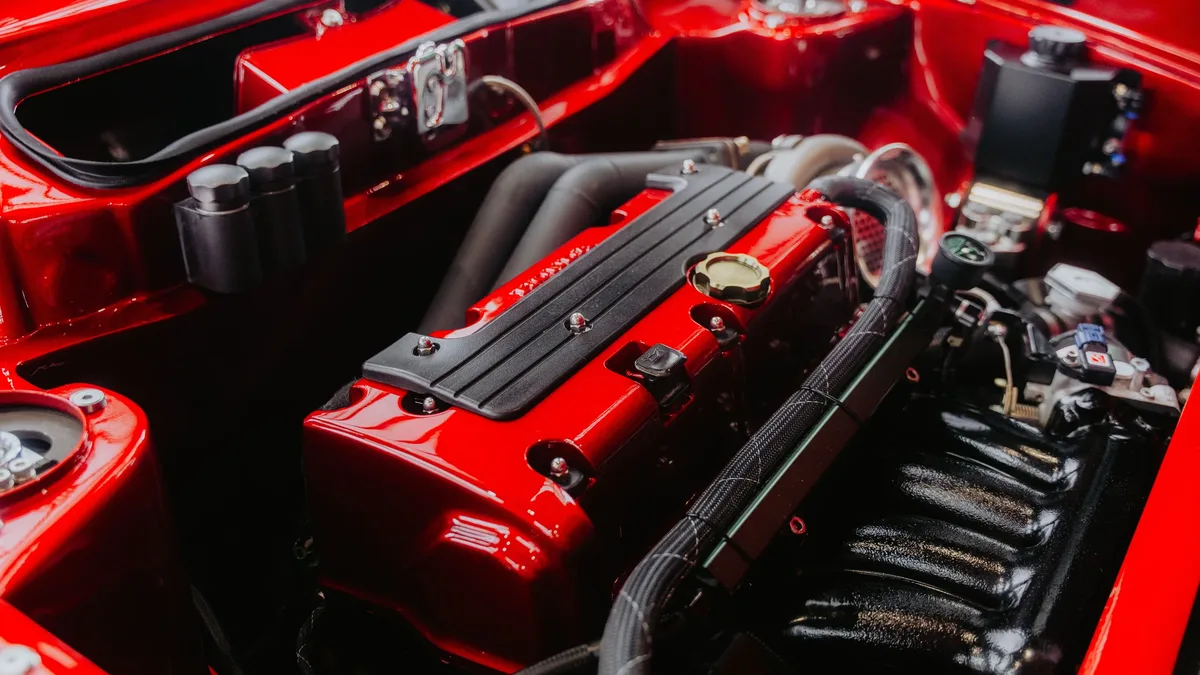
Rolls-Royce has finished a decade-long, $1 billion project to modernize its manufacturing, assembly, and test facilities in Indiana. The company stated this is its largest investment in the United States. The upgraded campus now supports engine production and testing for key U.S. Military aircraft including the Air Force's B-52 and C-130J, the Army's MV-75, and the Navy's MQ-25.
More Rolls-Royce defense products are built in Indianapolis than anywhere else in the world. The campus has delivered over 14,000 engines since 2001 and employs around 3,500 people. This flagship project is part of over $1.5 billion Rolls-Royce has spent in U.S. Facilities over the last ten years.
$400 Million Test Cells Support Current and Future Fleets
The $1 billion investment splits into roughly $600 million for advanced manufacturing and around $400 million for new engine-testing infrastructure. The advanced manufacturing work was mostly completed in 2021. The new test cells, including an altitude facility in West Lafayette, are calibrated to support current engine fleets and provide for future upgrades.
Indiana Governor Mike Braun called the investment a vote of confidence in the state's workers. The facility centers on the Allison-derived AE engine family, which powers multiple U.S. Aircraft. The table below lists the key engines and their applications.
| Engine Model | Primary Aircraft Application |
|---|---|
| AE 2100 | C-130J Super Hercules |
| AE 3007 | MQ-25 Stingray |
| AE 1107 Family | V-22 Osprey & MV-75 Cheyenne II |
| F130 | B-52J Stratofortress |
The F130 Engine Program for the B-52J
In September 2021, Rolls-Royce received a contract to replace the aging engines on the Air Force's B-52H bombers with the F130 engine. The Commercial Engine Replacement Program (CERP) contract is valued at around $2.6 billion for 608 engines plus spares and support equipment. While commercial variants of the BR700-based engine are built in Germany, these military F130 engines are built in Indiana.
The program covers 76 bombers, each with eight engines, requiring around 650 F130 engines including spares. The first B-52J aircraft is expected to enter service in 2033. A B-52 testbed aircraft part of the CERP program crashed in 2026; it is unclear if this will impact the timeline.
Powering the New MV-75 Cheyenne II Tiltrotor
Rolls-Royce will supply the engines for the U.S. Army's new MV-75 Cheyenne II fast assault tiltrotor. The engine, the AE 1107F, is related to the T406 engine that powers the V-22 Osprey. In 2025, Rolls-Royce announced it had begun AE 1107 engine testing to support prototype delivery.
The Army accepted slightly less optimization than a clean-sheet design for lower development risk and faster production. Rolls-Royce is the exclusive propulsion supplier, providing the engines and much of the integrated propulsion system for each aircraft. The company expects production ramp-up in 2028, with two engines per aircraft. The MV-75 is expected to enter initial service around 2030.
Supporting Mature C-130J, V-22, and MQ-25 Programs
The Lockheed Martin C-130J Super Hercules, powered by four AE 2100 engines, is expected to remain in production into the 2040s. The AE 1107 family powers the V-22 Osprey tiltrotor, a program that is now winding down. The Air Force received its final CV-22 in July 2025, and the Marine Corps received its 359th example in July 2026.
The contract for the MQ-25 Stingray tanker drone, while limited in number, is also important. The U.S. Navy plans to purchase 76 of these aircraft, each powered by a single AE 3007N turbofan providing more than 10,000 lbf of thrust.
Aiming for Collaborative Combat Aircraft Contracts
The investment in Indiana test facilities points to Rolls-Royce's ambitions for the U.S. Air Force's Collaborative Combat Aircraft (CCA) program, specifically high-performance Increment 2 platforms. Rolls-Royce says propulsion is now a strategic enabler for range, survivability, and mission flexibility.
The company believes the AE 3007 is already doing the kinds of missions CCAs will demand. Its new clean-sheet Orpheus engine offers a scalable family concept designed for affordable propulsion across multiple autonomous missions. Rolls-Royce argues this provides flexibility to respond quickly as CCA requirements mature without restarting development.