B-1B Bomber Spine Repair Finished Three Months Early Using
A B-1B Lancer bomber received a new 33-foot upper spine section in nine months, three months ahead of schedule, using a detailed digital twin model.
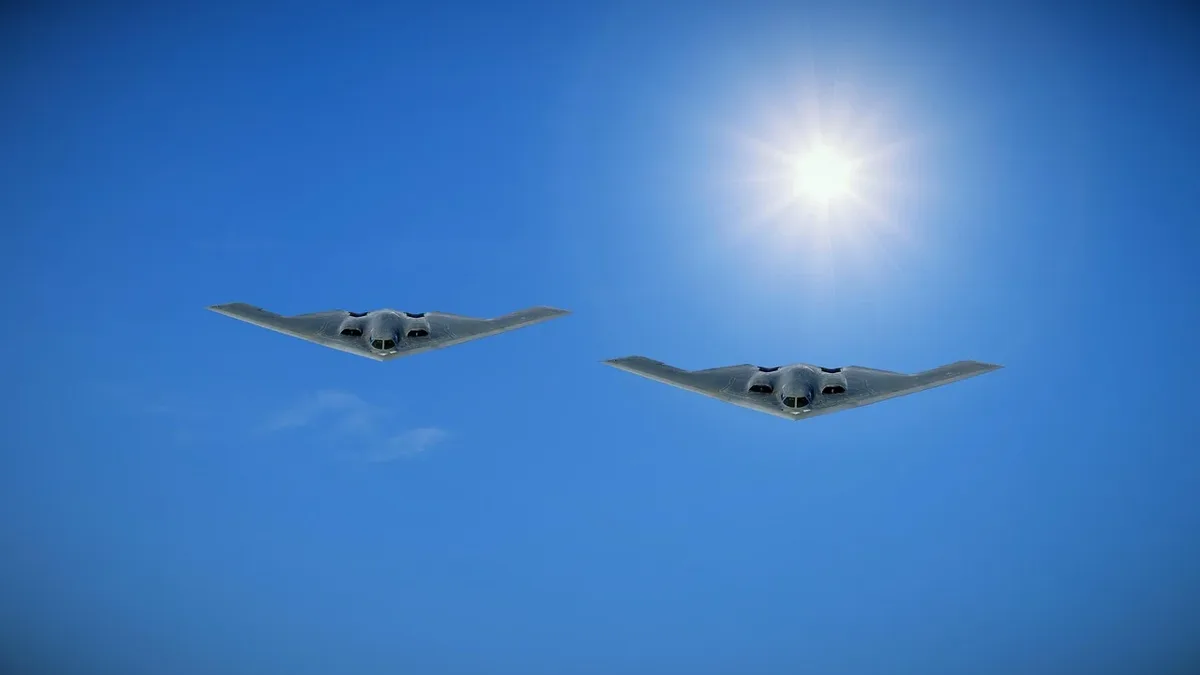
A Rockwell B-1B Lancer left Wichita State University's National Institute for Aviation Research (NIAR) in May with a new 33-foot section welded into its upper spine. The US Air Force authorized a one-year deadline for the airframe overhaul, but the joint Air Force-NIAR team completed the work in just eight and a half months.
The team attributed much of the speed to engineering aid from the jet's 'digital twin.' This highly detailed 3D model, created from scans of retired bombers, allowed engineers to design, sequence, and manufacture the new aero structures faster than expected. The project, known as BackBONE, aims to close the gap between original blueprints and the real-world condition of the aging fleet.
A Fleet-Wide Fatigue Problem
The B-1B was originally designed for 8,000 to 10,000 flight hours based on a low-level, high-speed nuclear mission. Cracking on the fuselage's dorsal and shoulder longerons-the load-bearing structural members along the spine-has emerged as a potentially catastrophic fatigue symptom. This specific bomber, tail number 86-0117, had been parked since September 2025 for the Forward Intermediate Fuselage replacement.
Physical ground fatigue testing, begun by Boeing in 2012, was found to be primarily diagnostic rather than curative. Facing a growing maintenance problem, the Air Force green-lit NIAR in 2020 to use advanced digital engineering to create high-fidelity digital twins of entire B-1 airframes. With the Lancer fleet's service life now extended to 2037 and potentially 2040, this new approach is critical.
Building the Digital Model from Retired Jets
The digital twin was not built from Rockwell's original 1980s engineering drawings. NIAR's engineers hauled mothballed B-1s from the 309th Aerospace Maintenance and Regeneration Group boneyard in Arizona, trucking them about 1,000 miles to Kansas. They disassembled the airframes down to individual fasteners, 3D-scanned every component, and reconstructed a precise digital model.
This process captures decades of prior repairs and manufacturing deviations omitted from the original prints. The payoff has scaled. NIAR had delivered more than 24,000 digital models by early 2024.
The Shrinking and Critical Fleet
A 2021 purge by Air Force Global Strike Command shrank the B-1 fleet from 62 aircraft to 45. Congress now treats that figure as a floor the service must sustain. Retiring the worst airframes concentrated resources and improved mission-capable rates, but it also means every remaining jet is now essential.
| Fleet Statistic | Figure |
|---|---|
| Original Fleet Size (pre-2021) | 62 aircraft |
| Current Active Fleet Size | 45 aircraft |
| Aircraft Needing Major Spine Repair | Nearly half the fleet |
| Authorized Service Life Extension | To at least 2037 |
| Potential Further Extension | To 2040 |
The maintenance crunch peaked in 2019. Air & Space Forces Magazine characterized it as a fleet crisis, with fewer than ten of the then-62 Lancers mission-capable at any time. Cracking airframes and other issues accrued more than 48 maintenance hours for every flight hour logged.
Racing Against a Moving Retirement Date
The B-1's retirement horizon keeps moving. While Air & Space Forces Magazine once listed a planned full replacement by the B-21 Raider for 2032, reports in mid-2026 indicate retirements are now delayed to at least 2037, with speculation of a push to 2040. General Dale White reaffirmed that the first operational B-21s remain on track to arrive at Ellsworth AFB in 2027.
To expedite the recapitalization, a $4.5 billion agreement in February 2026 increased Northrop Grumman's B-21 production capacity by 25%. Pentagon officials have pushed for a program of at least 145 B-21s rather than the currently authorized 100. Even with increased funding, production will stretch into the 2030s.
Bridging the Capability Gap
The digital twin program is meant to fill the gap until the B-21 arrives in sufficient numbers. A B-21 fleet beginning in 2027 does not immediately replace a 45-aircraft force. The next test for the BackBONE Project is whether it can repair airframes consistently across the fleet.
Despite the engineering success, the airframe has limitations. National Security Journal has reported that the B-1B's speed and low-level tactics cannot defeat modern, integrated air defenses. Only a stealth platform can operate in contested airspace today. However, the B-1 carries a payload that exceeds the B-2, B-21, and B-52 in sheer tonnage, especially with upgraded external pylons.
With half the active fleet needing the same major repair, the digital twin technology is now tasked with keeping America's bomber force mission-ready for years to come.