Six Retired USAF Warbirds Still Flying With Commemorative
Six types of retired US military aircraft, from the B-25 Mitchell to the P-51 Mustang, continue to fly as civilian warbirds under the Commemorative Air
Six retired US military aircraft types continue to fly today as civilian warbirds. All are operated by the nonprofit Commemorative Air Force (CAF), which maintains them for exhibition and education under specific FAA airworthiness certificates.
Thousands of former military aircraft survive, with many still airworthy. The FAA regulates turbine-powered ex-military types over 9,000 pounds and 3,000 pounds of thrust, while most World War II-era piston aircraft fly under Limited or Experimental Exhibition certificates. These categories allow for safe operation in civilian hands for airshows and public display, not for carrying paying passengers on demand.
The B-25 Mitchell: A Rugged Bomber
Around 40 North American B-25 Mitchells are believed to still be in flying condition today. The medium bomber first flew in August 1940 and gained fame in the 1942 Doolittle Raid on Tokyo. Nearly 9,900 were built.
The CAF flies at least two Mitchells, named "Yellow Rose" and "Maid in the Shade". These aircraft retain their original twin Wright R-2600 engines, each rated at roughly 1,700 horsepower. Their twin-tail, tricycle gear layout made them suitable for rough airstrips. Mitchells served across multiple theaters in World War II, praised for their ability to absorb battle damage.
The B-24 Liberator: A Rare Survivor
Only one Consolidated B-24 Liberator remains airworthy today. This is despite it being the most-produced American military aircraft, with over 18,000 built. Roughly 14 complete airframes survive.
The sole flying example is the CAF's Diamond Lil. It tours over 120 cities a year. The Liberator had a 110-foot wingspan and was powered by four Pratt & Whitney R-1830 engines. Its Davis wing gave it a top speed of 303 miles per hour. The B-24 could carry up to 8,000 pounds of ordnance and saw service in every theater of World War II. Production was distributed across multiple factories, including Ford's massive Willow Run plant.
The C-47 Skytrain: A Vital Transport
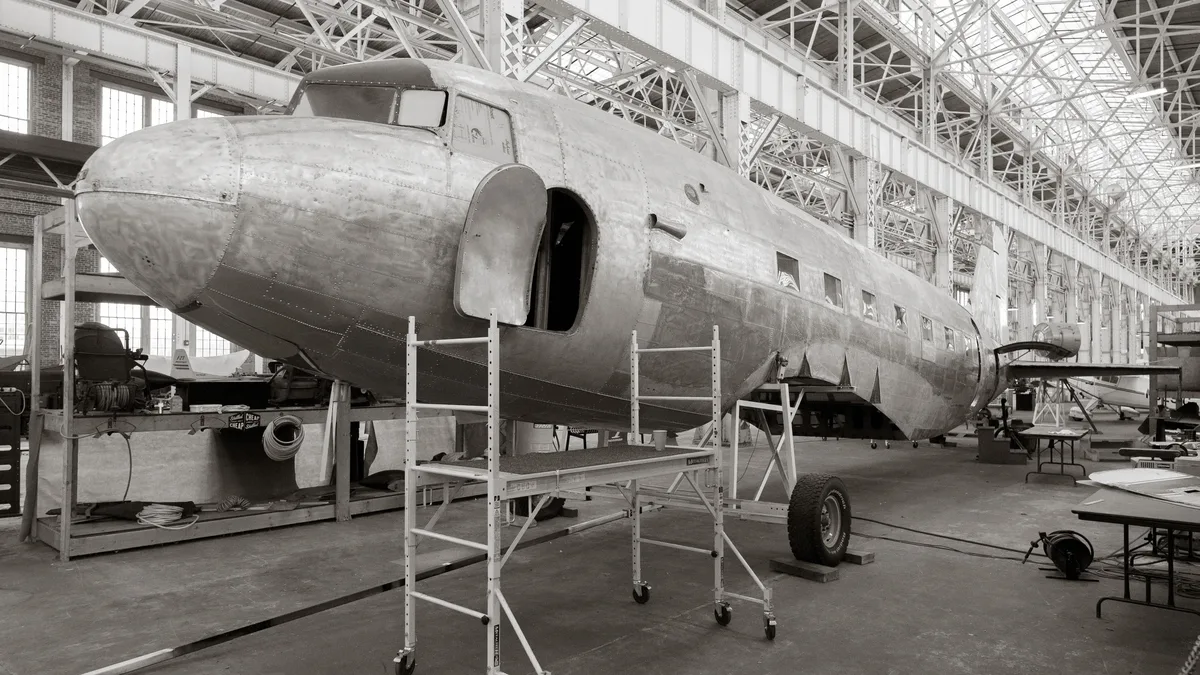
More than 10,000 C-47 Skytrains were built for the US military during World War II. The type was a military adaptation of the Douglas DC-3 airliner. General Dwight D. Eisenhower later named it one of the tools that won the war.
A historically significant survivor is the CAF's That's All, Brother. This was the lead aircraft for the main Allied airborne assault on Normandy on June 6, 1944. After being lost for years, it was restored by the CAF to its 1944 configuration and returned to the sky in January 2018. It has since returned to Normandy for anniversary events. Thousands of surplus C-47s and DC-3s reentered civilian service after the war, with some still flying regional routes today.
The B-17 Flying Fortress: A Strategic Symbol
Fewer than ten Boeing B-17 Flying Fortresses remain airworthy today. This is out of 12,731 built and approximately 45 complete surviving airframes. The B-17 was the backbone of the US daylight bombing campaign over Germany.
The CAF operates a B-17G named "Sentimental Journey". Built in late 1944, it was delivered too late for combat. It is powered by four Wright R-1820 Cyclone engines, each rated at 1,200 horsepower, giving it a top speed around 300 miles per hour. The aircraft now tours the country as part of the CAF's Flying Legends of Victory Tour. The B-17's combination of historical significance and survival rarity makes it a key warbird.
The P-51 Mustang: A Common Fighter
The North American P-51 Mustang is the most common World War II fighter still flying. More than 15,000 were built before production ended in 1946. The type remained in frontline service with some air forces into the 1980s.
According to the enthusiast registry MustangsMust, over 150 are believed to be airworthy. The CAF's roster includes several Mustangs. Their continued operation relies on the specialist restoration and maintenance expertise of the warbird community.
**Survivor Counts and Operation**
Precise fleet counts are hard to establish. The survivor numbers are best estimates drawn from enthusiast registers, museum records, and the CAF. The table below summarizes the airworthy estimates for these six CAF-operated types.
| Aircraft | Estimated Still Airworthy | Total Built | Key Operator |
|---|---|---|---|
| B-25 Mitchell | ~40 | ~9,900 | Commemorative Air Force |
| B-24 Liberator | 1 | >18,000 | Commemorative Air Force (Diamond Lil) |
| C-47 Skytrain | Not specified | >10,000 (US) | Commemorative Air Force (That's All, Brother) |
| B-17 Flying Fortress | <10 | 12,731 | Commemorative Air Force (Sentimental Journey) |
| P-51 Mustang | >150 | >15,000 | Commemorative Air Force |
All six aircraft trace their origins to the US Army Air Forces. They fly today under the CAF's banner, offering a cross-section of how "still flying" can look for different types. Their operation is funded through public rides, donations, and airshow appearances, preserving aviation history in flight.